
Quote Stories
A Board for Every Hour
Pema learns that keeping time can mean listening first.

The clock’s minute hand dropped with a tiny metallic sigh.
Pema looked up from the spring she was polishing. Above the market square, the great round clock had frozen at 2:17. Around her, the covered market continued its noisy morning: baskets thumped onto tables, knives tapped against cutting boards, and a boy shouted that the first delivery cart was coming up the hill.
“Tell me you saw that,” called Aunt Lhamo from the repair kiosk.
“I saw it,” Pema said. “I can fix it.”
The weekly trading day began at different hours for different people, but everyone used the central clock to settle arguments. The spice sellers opened before sunrise. The fish carriers arrived when the river mist lifted. The bakers waited until their second batch cooled. If the clock stayed stopped, nobody knew whose morning came first.
Pema climbed the maintenance ladder with her tool pouch between her teeth. She removed the clock’s brass cover, studied the gears, and found the problem: a worn tooth on the escape wheel.
Aunt Lhamo passed up a small tin of spare parts. “Choose carefully.”
Pema chose the brightest piece.
It fit for exactly three minutes.
Then the clock gave a cough, spun its hands wildly, and stopped at 11:62.
Below, the market groaned.
“Eleven sixty-two is not a time!” called the tea seller.
“It is if the clock says so,” replied the mango merchant.
By noon, three vendors had shifted their stalls, two delivery drivers had missed one another, and a basket of buns had gone cold while its owner waited for a bell that never rang. Pema sat beneath the clock with the failed part in her palm. She had wanted to prove she could repair what Aunt Lhamo repaired. Instead, she had made the square even more confusing.
Aunt Lhamo did not scold her. “What does the clock do for the market?” she asked.
“It tells everyone the time.”
“Does everyone need the same thing from it?”
Pema glanced around. The pepper seller marked the sun’s shadow with a stick. The soup cook watched the lentils soften. The flower vendor listened for the hill mynahs that nested near her stall. The porter knew the delivery hour by the ache in his shoulders after the first climb.
Pema fetched a sheet of packing paper.
She began asking questions.
“When do you need the square clear?”
“When the second bell at the shrine sounds,” said the rice seller.
“When should the carts come?”
“After the shadows reach the drain,” said the porter.
“When do you need help carrying crates?”
“Before my youngest wakes from his nap,” said the flower vendor.
Pema drew a board divided not into numbers, but into signs: a bell, a long shadow, a steaming pot, a flock of birds, and a painted orange sun. Beside each symbol she wrote the task connected to it. Aunt Lhamo found scraps of blue wood for the frame. The tea seller donated a little brass bell. The mango merchant supplied bright yellow paint, though he insisted his sun needed more rays.
By late afternoon, the board hung beneath the silent clock.
At first, people crowded around it suspiciously. Then the shrine bell rang. The rice seller moved her baskets. The porter checked the shadow. The soup cook lifted the lid of her pot and laughed when three helpers arrived at precisely the right moment.
The next morning, the clock still showed 2:17. Pema had not repaired it yet. But the market opened smoothly. Carts arrived after the marked shadow. The flower seller’s crates were carried before the nap. The baker rang the little brass bell when warm buns were ready.
Aunt Lhamo examined the broken escape wheel. “You’ll fix the clock,” she said. “But you’ve already fixed the argument around it.”
Pema looked at the board, crowded with new symbols and notes. “Maybe the clock can tell the time,” she said. “The board can tell what the time is for.”
A week later, after Pema replaced the worn tooth and set the hands moving again, nobody took down the board. The clock returned to the center of the square, but it no longer had to speak alone.
Related Quote Stories

When Desks Learned to Bend
Nera’s first folding desk collapsed under the weight of a single book. Hiding the failure would be easy; inviting others to inspect it would be harder—and far more useful.
Read Story →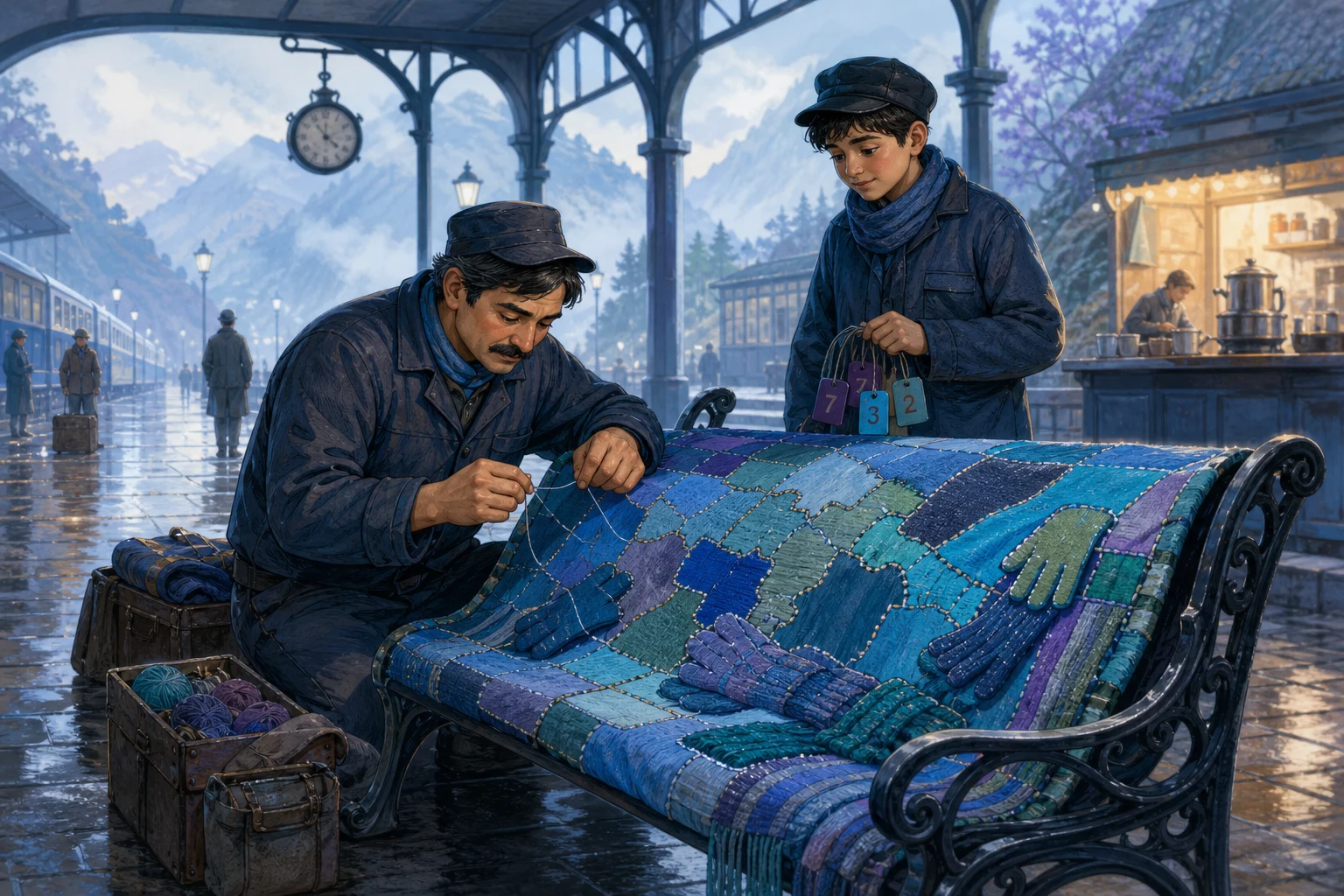
A Map Woven in Blue
Ilya’s patchwork bench covers began with lost gloves and ended as a map everyone could help complete.
Read Story →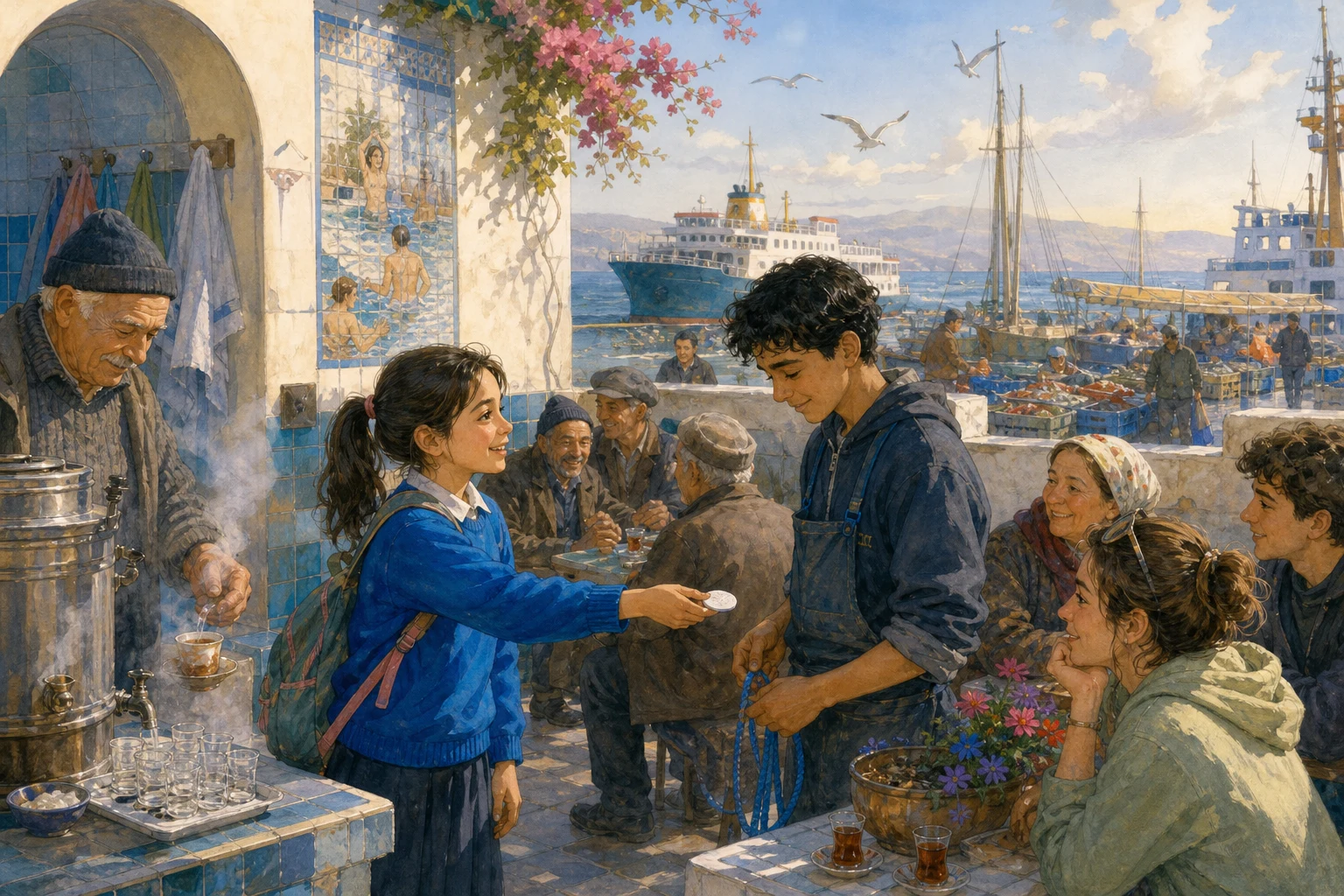
The Hour Nobody Owned
Mina’s first community hour is lively, crowded, and almost entirely controlled by the loudest guests. A ferry cleaner, a brass token, and one patient adjustment teach her what true hospitality requires.
Read Story →