
Quote Stories
A Box, Then a Door
Some messages find their destination by changing the people who carry them.

The box had a brass clasp, three dead moths inside, and no useful label.
Elia found it beneath a shelf in the old post office storeroom while helping the cemetery office sort records. Her supervisor, Mr. Vale, had sent her to collect discarded forms for a school history project. Instead, she returned carrying forty-three envelopes tied with faded blue thread.
“Those aren’t cemetery records,” Mr. Vale said.
“I noticed.”
The archive keeper, Mrs. Senn, examined the box. The envelopes were undelivered: some had incomplete addresses, some only a first name, and one was addressed simply to “the woman who makes the plum bread.”
Elia wanted to catalog them quickly. She numbered each envelope, recorded its condition, and made a neat column for possible clues. She did not open anything. Mrs. Senn allowed her to copy names and phrases visible through torn paper, but the letters themselves remained sealed.
The clues led her down steep streets toward the harbor. A baker remembered an old plum-bread recipe but not the woman who had used it. A retired ferry mechanic recognized a surname and pointed Elia toward a yellow house with blue shutters. A university gardener knew that “Mina” had once traded seeds near the cemetery wall, though there were four Minas in the neighborhood.
Most searches ended in uncertainty. One recipient had moved away. Another name appeared in three family trees. A letter addressed to “Tom, wherever the tide puts you” turned out to have no date, no surname, and a drawing of a crooked little boat.
Elia began keeping a second notebook—not for answers, but for stories. She wrote down the baker’s recipe, the mechanic’s memories of winter crossings, and the gardener’s description of Mina’s seed envelopes. Conversations lasted longer than records did. People often began by saying they could not help and ended by remembering someone else.
Then Elia made a mistake. She pinned a list of unidentified first names to the archive’s public noticeboard, hoping someone would recognize one. By lunchtime, Mrs. Senn had taken it down.
“Names are not puzzles for everyone to solve,” she said gently. “Some belong to people who may not want to be found.”
Elia felt the heat rise in her face. She had treated uncertainty as permission.
That evening, she returned to the post office and drew a line through half her notes. The next morning, she asked Mrs. Senn what could be shared. Together they wrote a new notice: no names, no copied phrases, no private details—only an invitation for residents to bring memories of correspondence, recipes, and messages they had never sent.
They set a folding table beside the harbor clock. Elia placed blank cards, pencils, and a small sign on it:
WRITE TO SOMEONE.
You do not have to mail it.
At first, people only glanced over. Then the baker wrote to her sister in another province. The ferry mechanic wrote three lines to his former deckhand. A child drew a letter to a dog she had once known. Someone left a card addressed to “the person I should have thanked sooner.”
The original box yielded only nine plausible matches, and just three letters reached their likely recipients. The rest returned to the archive, carefully logged and sealed.
But the table stayed. On rainy days, it moved beneath the arcade. On bright days, it faced the water. Elia learned to offer people a chair before offering them a question.
Months later, while preparing her history project, she placed a photograph of the brass-clasped box beside a stack of new cards. Her catalog was unfinished. It no longer bothered her.
Somewhere between the first envelope and the first blank card, she had learned that a message did not become meaningless simply because it arrived late. Sometimes it changed direction. Sometimes it opened a door that had not been there before.
Related Quote Stories
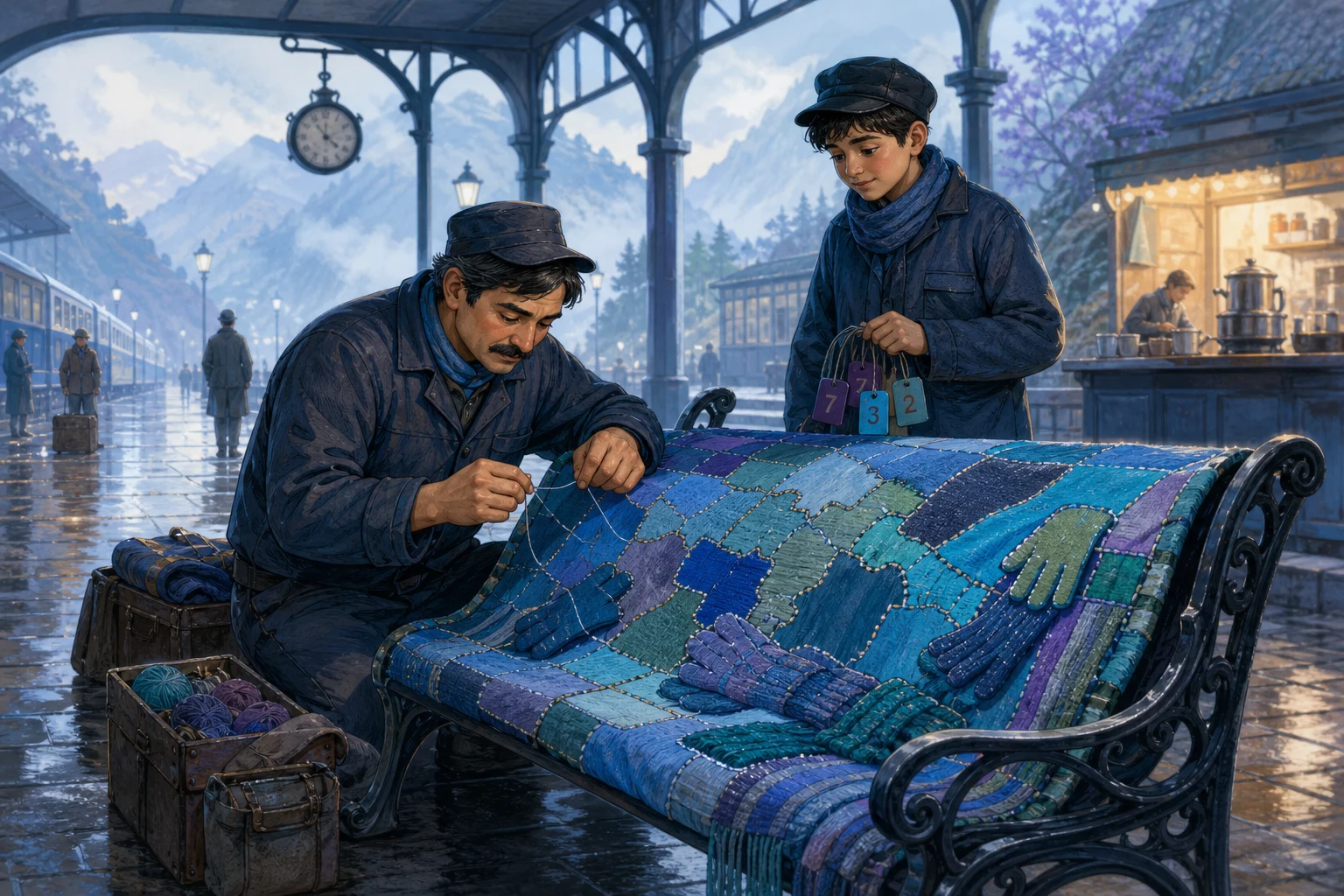
A Map Woven in Blue
Ilya’s patchwork bench covers began with lost gloves and ended as a map everyone could help complete.
Read Story →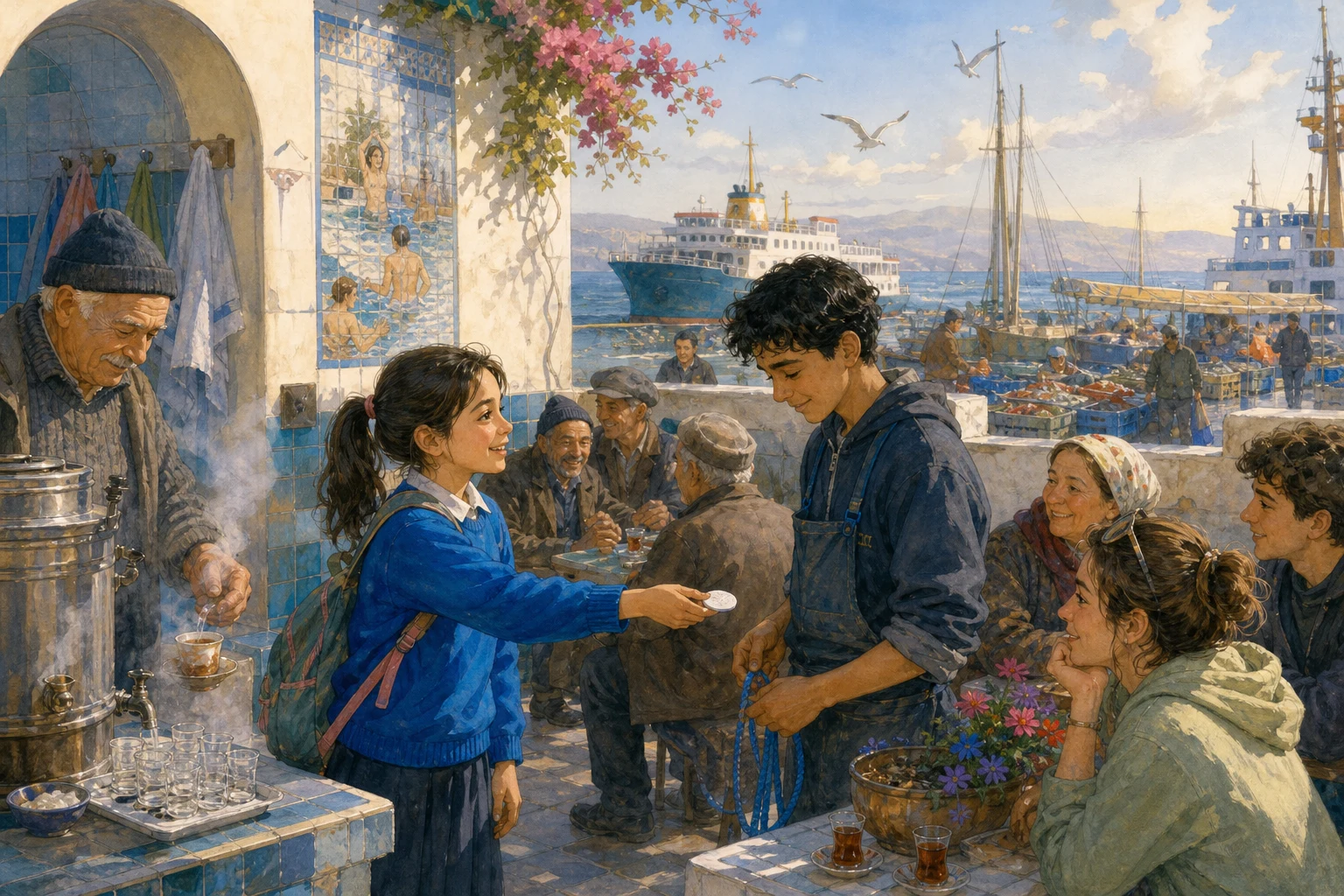
The Hour Nobody Owned
Mina’s first community hour is lively, crowded, and almost entirely controlled by the loudest guests. A ferry cleaner, a brass token, and one patient adjustment teach her what true hospitality requires.
Read Story →
Tabs in the Wind
Kito’s first calendar was neat, accurate, and almost useless. The second one belonged to everyone.
Read Story →