
Quote Stories
A Weather of Questions
Curiosity rises higher than certainty

The balloon came down before it went up.
It struck the observatory roof with a soft, apologetic slap, bounced once, and dragged its string through a row of carefully labeled paper flags. One flag read WIND SPEED. Another read LIFT. The last, written in Nadezhda Arin’s neatest lettering, read SUCCESS.
The children stared upward.
Nadezhda, who had spent thirty-eight years telling listeners whether to expect sunshine, dust, or rain, cleared her throat. “That was an unexpected change in atmospheric behavior.”
“Mrs. Arin,” said eleven-year-old Timur, “you mean it failed.”
“I mean,” she replied, “that the atmosphere has declined to cooperate.”
The science club had been meeting in a spare room beneath the town observatory, where the walls trembled whenever the wind farms turned their blades. The children had joined because they disliked memorizing facts. Nadezhda had joined because retirement had left her evenings too quiet and because she still knew how to make a sentence sound certain.
Their exhibition was three days away. The balloon was meant to carry a tiny thermometer above the school rooftop and return with a record of changing temperatures. Instead, the homemade basket had twisted sideways, the balloon had tangled in a weather vane, and the thermometer had landed in a bucket of roof tar.
“We can build another,” said Saida, who had already gathered the string.
“We can,” Nadezhda said. “But what would we ask it?”
The children looked at her.
Nadezhda took the exhibition poster from the wall. Beneath a painted picture of a soaring balloon were the words: PROVE WHAT YOU KNOW.
She turned the poster over and wrote three words on the back: WHAT DO WE WONDER?
Timur raised his hand. “Why does dust move in stripes?”
“Good,” said Nadezhda.
“Why do birds fly around the observatory dome but not over the water tower?” asked Saida.
“Also good.”
“Why does the wind make the radio antenna sing only at night?” said quiet Bek.
Nadezhda hesitated. Once, she would have supplied an answer immediately. Wind cooled. Metal contracted. Sound traveled differently after sunset. Any of those might have been right. None of them had been tested.
“I don’t know,” she said.
The admission seemed to loosen something in the room.
By the next afternoon, the club had divided its questions. Saida and Bek taped strips of red cloth to fence posts and measured how they pointed at different hours. Timur dusted black paper with flour, sand, and powdered chalk to see which grains traveled farthest. Two younger children sat beneath the observatory dome with borrowed binoculars, drawing every bird they could identify and several they could not.
Nadezhda supervised with a pencil tucked behind her ear. She corrected their labels at first. Then she stopped correcting and began asking where each observation had come from.
At the community radio booth, she found an old recording of herself announcing a dust warning in a voice as smooth as polished stone. “Visibility will remain low,” her younger voice said. “Travelers are advised to proceed with caution.”
She listened twice. The certainty sounded impressive. It also sounded lonely.
On the morning of the exhibition, a hard wind crossed the steppe. The children’s cloth strips snapped so violently that three tore loose. Timur’s dust patterns blurred. The bird drawings blew across the rooftop and collected against the stairwell door.
For a moment, Nadezhda felt the familiar pressure behind her ribs: the need to make everything orderly before anyone saw it.
“Pack it away,” she said.
Timur held the largest sheet against the wall. It was covered in arrows, smudges, crossed-out guesses, and one enormous question mark.
“What if this is the exhibit?” he asked.
“The failed measurements?”
“The things we still need to find out.”
Nadezhda looked toward the exhibition hall across the schoolyard. Other clubs were carrying polished models: a neat volcano, a working circuit, a miniature greenhouse with automatic lamps. Her own club had a tar-stained thermometer, torn cloth, crooked bird sketches, and a balloon that had never left the roof.
She picked up a fresh sheet of paper.
“What should we call the wall?” she asked.
The children crowded around.
“Questions the Wind Wouldn’t Answer,” suggested Saida.
“Questions We Haven’t Asked Properly Yet,” said Bek.
Timur grinned. “The Last Question on the Chalkboard.”
They carried the wall inside.
Visitors stopped first because it looked unfinished. Then they stayed. A teacher pointed to the dust stripes and suggested comparing them with tire tracks near the grain silos. A mechanic explained why the antenna might hum at night, but added that he had never tested it. A birdkeeper recognized one of the children’s uncertain sketches and promised to bring a field guide.
The judges arrived with clipboards. One asked Nadezhda what conclusion the students had reached.
Nadezhda glanced at the children. Timur was adding a new question in blue chalk: WHY DID THE WIND CHANGE WHEN WE STOPPED WATCHING?
“We have several conclusions,” Nadezhda said. “Most of them are temporary.”
The judge frowned. “But what did the experiment prove?”
Nadezhda smiled—not the polished smile she once used for radio announcements, but a smaller, truer one.
“That our next experiment should be better.”
Outside, the wind moved over the school roof, lifting loose dust into long silver bands. Above the observatory, a flock of birds curved around the dome, changed direction, and vanished toward the water tower.
By closing time, the wall had no empty space left. Questions filled the margins, crossed one another, and climbed beneath the title. Nadezhda added one of her own at the bottom.
What can I learn when I stop pretending to know?
Timur read it, considered the wording, and handed her the blue chalk.
“Leave room,” he said. “Someone might answer it.”
Related Quote Stories

When Desks Learned to Bend
Nera’s first folding desk collapsed under the weight of a single book. Hiding the failure would be easy; inviting others to inspect it would be harder—and far more useful.
Read Story →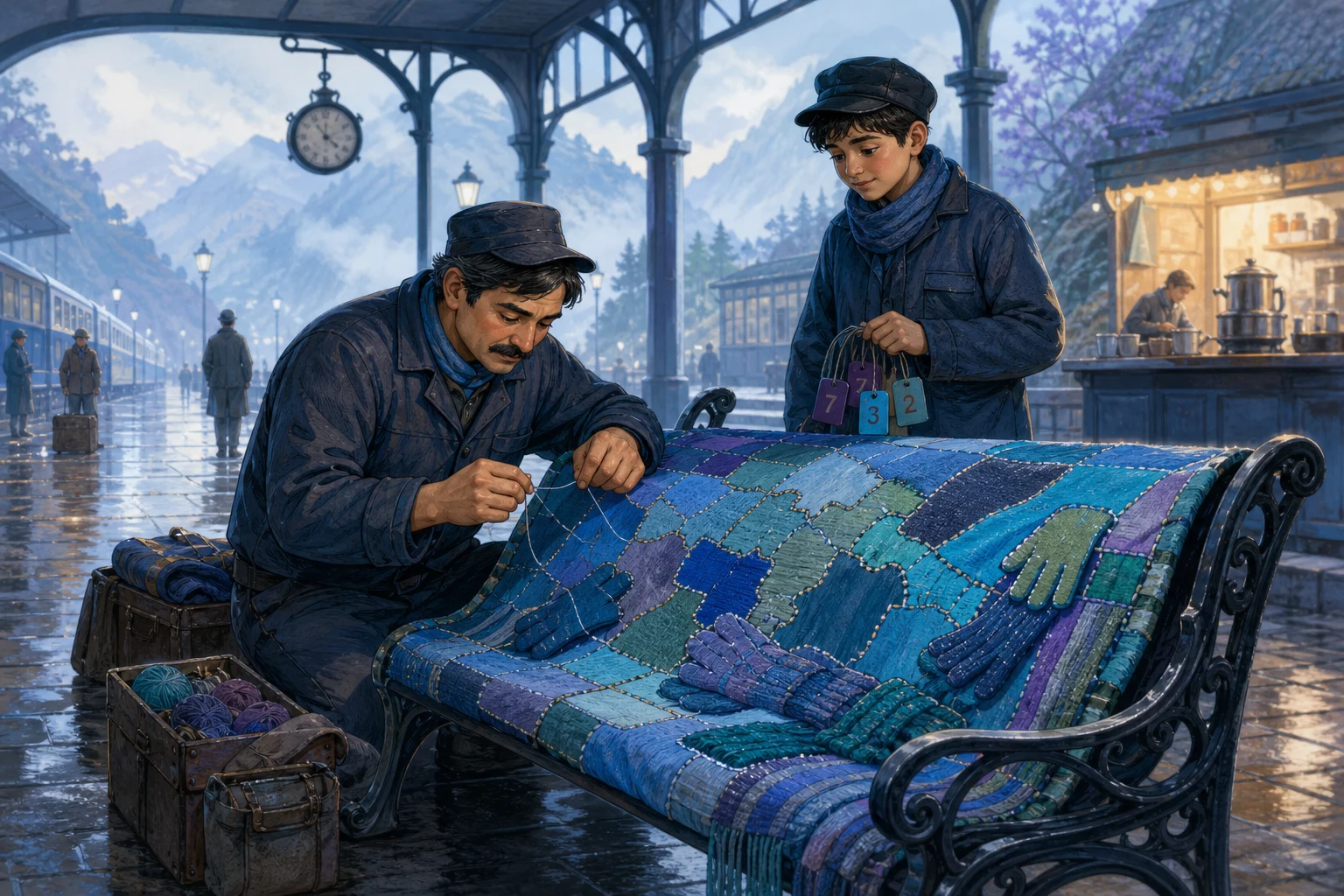
A Map Woven in Blue
Ilya’s patchwork bench covers began with lost gloves and ended as a map everyone could help complete.
Read Story →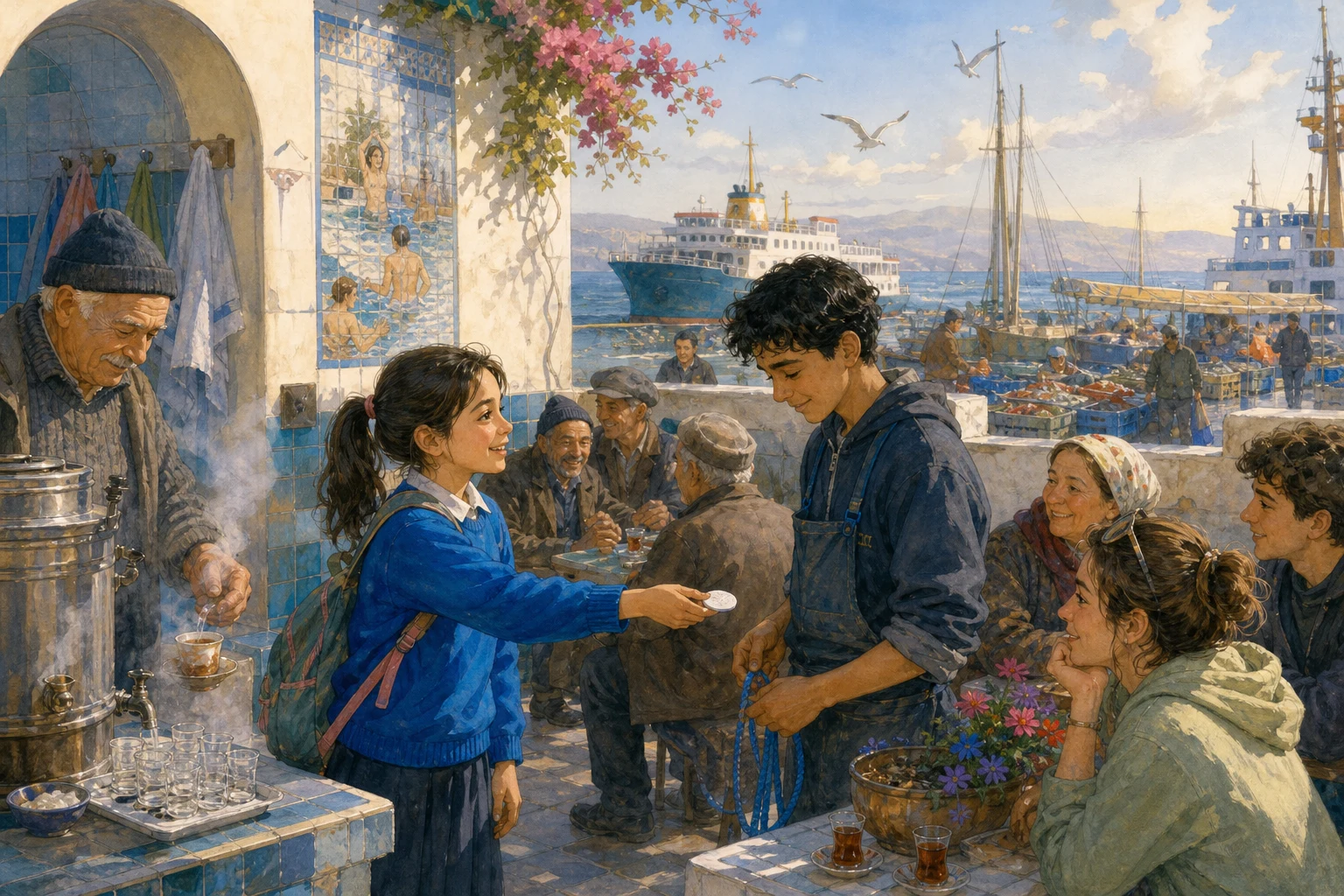
The Hour Nobody Owned
Mina’s first community hour is lively, crowded, and almost entirely controlled by the loudest guests. A ferry cleaner, a brass token, and one patient adjustment teach her what true hospitality requires.
Read Story →