
Quote Stories
A Wheelbarrow Full of Answers
Rafi learns that useful instructions are made together

Rafi’s first repair guide had a picture of a screw wearing a hat. Unfortunately, it was supposed to be a washer.
By sunset, three neighbors had visited the bicycle workshop to ask why their cupboard doors now opened upward, sideways, or not at all. Rafi listened with his ears turning hot.
“I followed your arrows,” said Aunt Salma, holding a loose hinge. “They led me to the wrong planet.”
The workshop’s shade cloth snapped above them. Beyond the alley, dust blurred the water tower and the roofs of the courtyard homes. Inside, bicycles leaned in bright rows while the old ceiling fan clicked at every turn.
Rafi had drawn the guide because he was tired of watching useful things become rubbish. A kettle with a loose handle. A stool missing one peg. A radio that only needed a cleaned contact. The instructions people found in manuals were packed with words such as alignment and compression. Rafi preferred pictures. He had imagined residents praising his cleverness.
Instead, his first guide had created a parade of crooked cupboards.
His mentor, Bashir, took the page from him and studied it.
“You drew what you understood,” Bashir said. “Not what everyone else needed to see.”
Rafi frowned. “The parts are labeled.”
“Labels are not explanations.”
That evening, Rafi placed a wooden crate in front of the workshop and filled it with scrap paper, pencils, old bolts, a broken latch, and three objects whose purposes nobody could identify. He wrote across the side: SHOW ME HOW.
The next morning, a six-year-old named Lina drew a circle around the handle of a watering can. “This is where my hand goes,” she said. “Start there.”
An elderly carpenter demonstrated how to feel for a stripped screw instead of forcing it. A potter explained that a cracked clay lid could be held temporarily with a woven band. A tailor insisted that every diagram show which way fabric folded. Bashir contributed a rule in large letters: TEST IT ONCE BEFORE YOU TEACH IT.
Rafi redrew the guides. This time, the pages had fewer arrows and more hands. A palm pressed here. A thumb turned slowly. A crossed-out step showed what not to do. Under each picture, someone added an explanation in the words they actually used.
Still, Rafi wanted the guides to travel farther than the workshop wall.
He found an abandoned handcart behind the market bakery and repaired its wheel. He fitted a sloping board on top, tied a canvas roof above it, and painted two blue circles on the sides so people could spot it from the far end of an alley. The cart carried tools, blank cards, and a growing stack of tested diagrams.
At the first monthly market, Rafi arranged everything in careful rows. Within minutes, the rows disappeared.
A grandmother brought a jammed window latch. Two children took apart a toy windmill. A vegetable seller demonstrated a way to mend a basket that Rafi had never seen. Someone used his neat card about bicycle chains as a place to list three different names for the same kind of pliers.
Rafi nearly snatched it back. Then he noticed that the new names helped people find the right tool faster.
“Leave room on the cards,” he said.
“For mistakes?” Lina asked.
“For improvements.”
Weeks later, the cart rolled beyond the market road to a settlement near the salt flats. Its residents had been repairing things for years, but few of their methods had been written down. They showed Rafi how to brace a cracked stool with strips from a packing crate, how to shade a water container with layered cloth, and how to quiet a rattling roof panel before the next strong wind.
When Rafi opened his blank card box, the settlement’s children crowded around. One drew a three-legged stand. Another added numbered dots. An older woman corrected the angle and wrote the explanation in her own careful script.
Rafi placed the card at the front of the box.
On the ride home, the cart bumped over the hard ground, its blue circles flashing in the late light. Rafi’s original guide was still tucked beneath the seat, its upside-down arrows and hat-shaped screw preserved as a reminder.
At the workshop, he pinned the newest card beside it. The diagram showed a repair nobody in town had known before. Beneath it, in three different hands, were three different ways to explain the same first step.
Rafi smiled and left the fourth line blank.
Related Quote Stories

When Desks Learned to Bend
Nera’s first folding desk collapsed under the weight of a single book. Hiding the failure would be easy; inviting others to inspect it would be harder—and far more useful.
Read Story →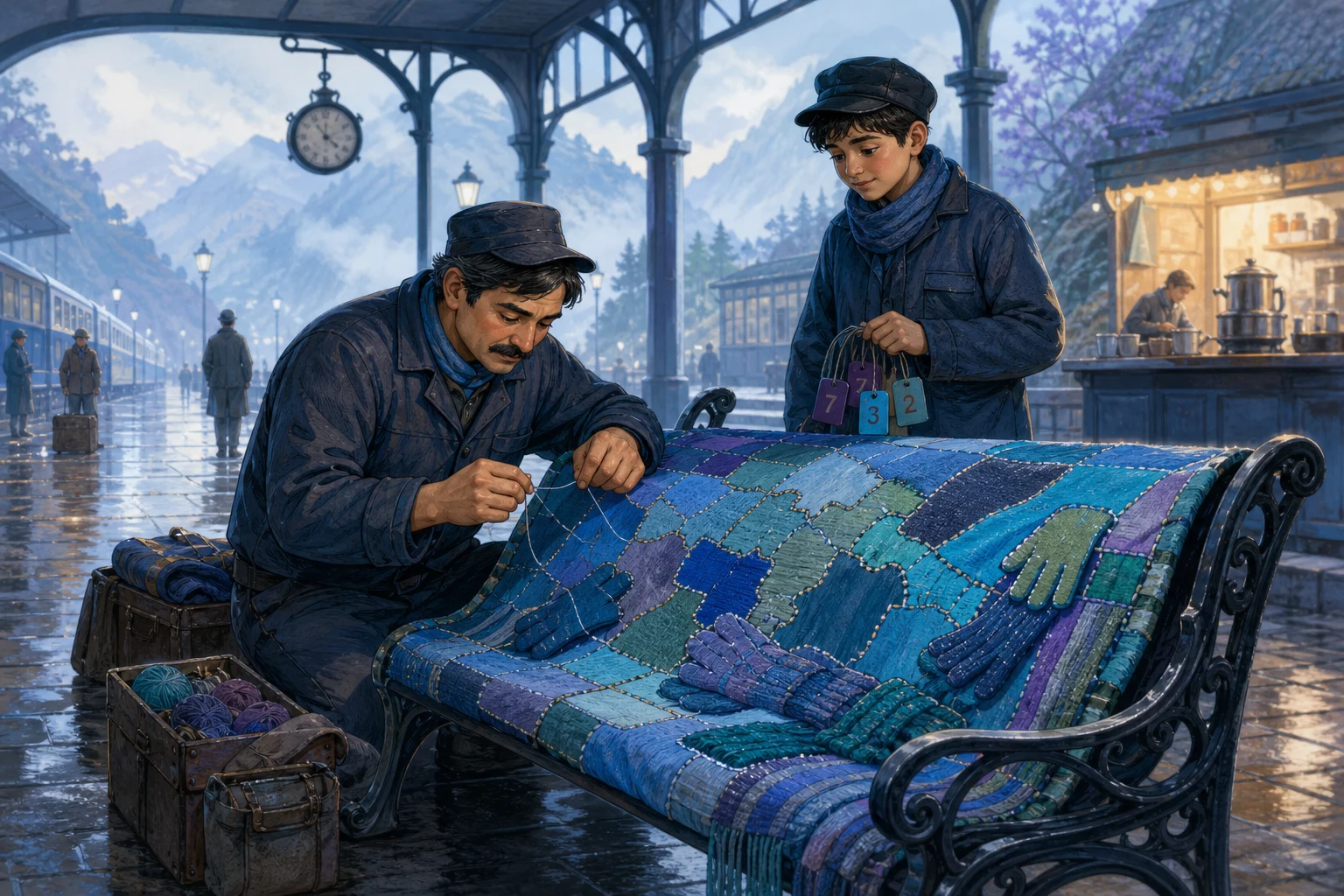
A Map Woven in Blue
Ilya’s patchwork bench covers began with lost gloves and ended as a map everyone could help complete.
Read Story →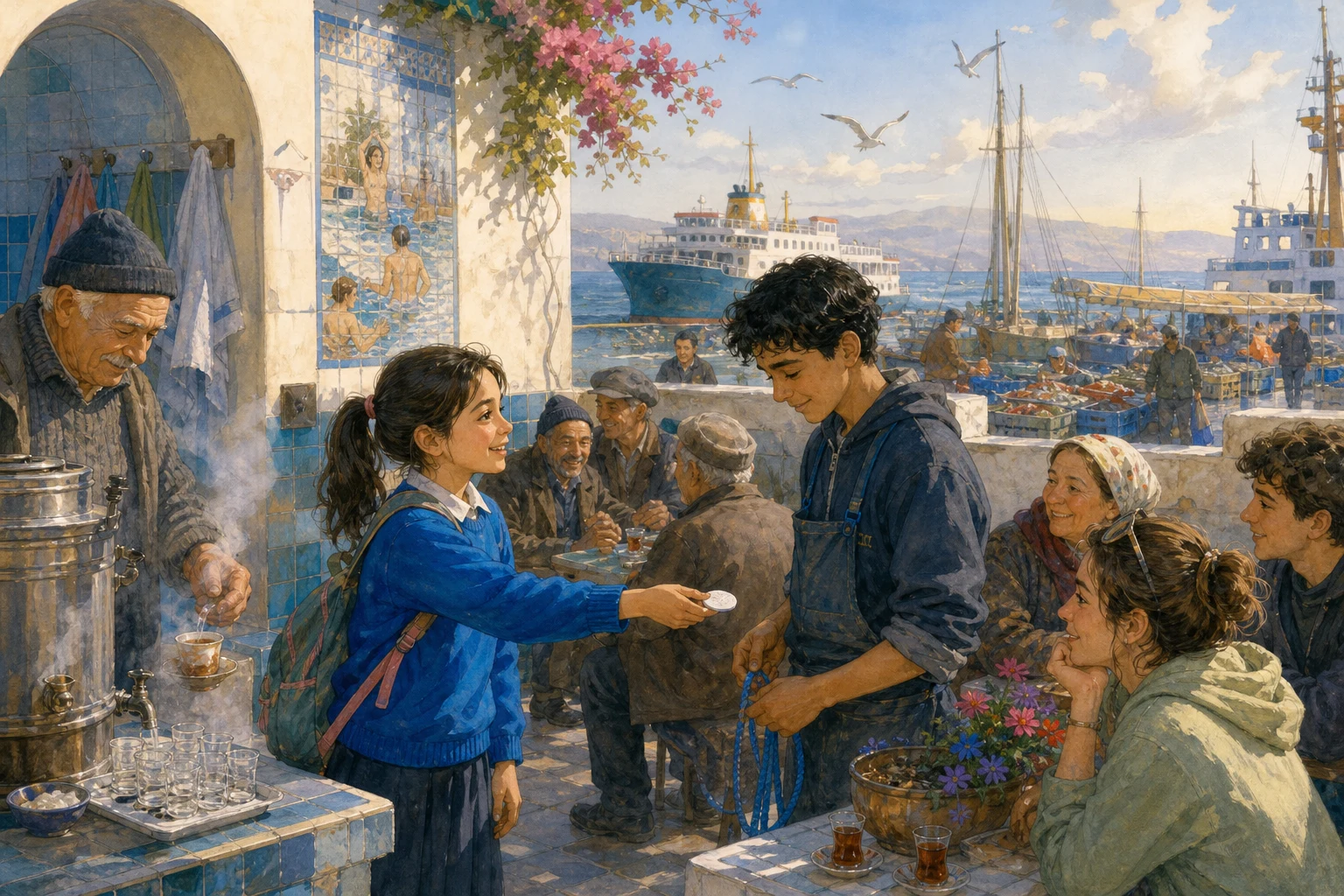
The Hour Nobody Owned
Mina’s first community hour is lively, crowded, and almost entirely controlled by the loudest guests. A ferry cleaner, a brass token, and one patient adjustment teach her what true hospitality requires.
Read Story →