
Quote Stories
After the Last Reel
A projectionist discovers that a tradition shines brightest when everyone can help make it.
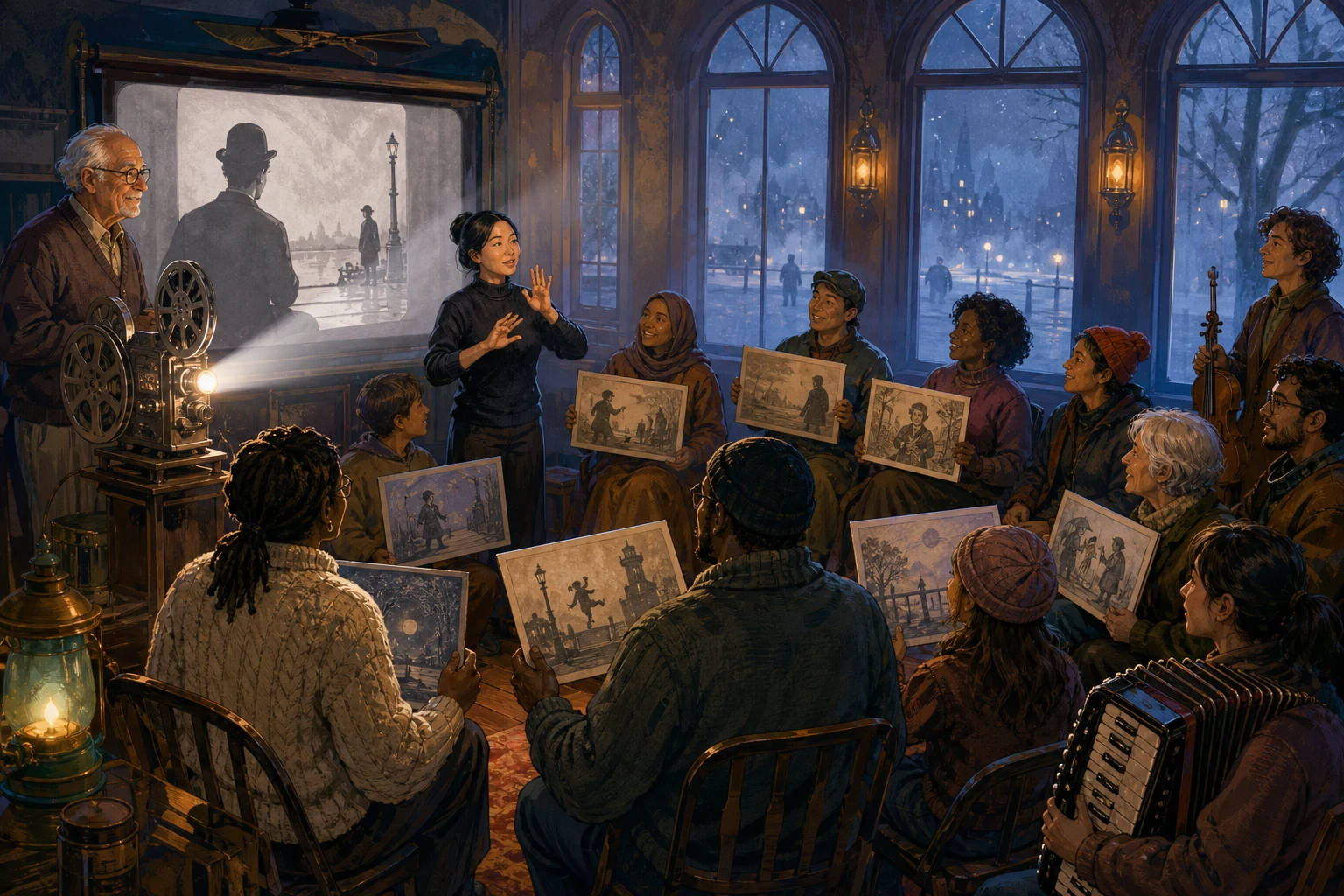
Olek tested the projector bulb three times before admitting the problem was not the machine.
The hall was empty except for four chairs occupied by four people: a baker with flour on his sleeves, a schoolboy swinging his feet, an elderly couple sharing a thermos, and Mila, the sign-language teacher who had suggested the film night in the first place.
On the screen, a celebrated black-and-white drama waited in perfect silence.
“Perhaps they are waiting for a better film,” Olek said.
“They may be waiting for a way in,” Mila replied.
Olek frowned. He had chosen films with care, written thoughtful introductions, and printed programs in a typeface he considered dignified. Yet each Thursday the hall seemed to grow larger and the audience smaller.
Mila pointed toward the blank strip of wall beside the screen. “What if the audience made the evening too?”
Olek nearly laughed. A film night, in his view, required a film, a projector, and people who knew when not to speak.
But the next week he agreed to try something different. He borrowed a violin from the music school, invited the baker to bring his accordion, and asked Mila’s students to create title cards for a program of short silent films. The children drew bold pictures. Shopkeepers added handwritten words. Olek prepared a careful sequence of reels.
The evening began badly.
The violinist entered on the wrong cue. The accordion wheezed. One title card read, “A MYSTERY OF THE MISSING HAT,” though the film contained no hat at all. When the first reel ended, nobody clapped. The silence pressed against Olek’s ears more heavily than the projector’s hum.
He reached for the switch.
Then the schoolboy stood and held up a new card: “WHAT DID YOU NOTICE?”
The baker answered first. He had noticed a woman in the background waving from a window. The elderly couple remembered a similar window in the apartment where they had met. Mila signed a question, and one of her students translated it aloud: “Why did the man keep walking past the door?”
Soon the hall was full of guesses, memories, and small arguments. The violinist played a second piece, this time following the rhythm of the room rather than the reel. Olek found himself pointing out a detail in the lighting, then asking the children what they had seen.
The following Thursday, twelve people came. The week after that, twenty. Some brought music; others brought drawings, snacks, or stories about the first film they had loved. Olek kept the old classics, but he stopped treating them as examinations. A film was no longer something he presented to a silent audience. It was a door everyone could hold open.
One winter evening, the projector lamp flickered during the final scene. Olek froze, expecting groans. Instead, the room lit itself with phone screens, a desk lamp, and a string of small battery lights someone had brought for the title cards.
The film continued in a patchwork glow.
When it ended, the applause was uneven. Some people clapped, some waved, some signed, and the schoolboy drummed on the back of a chair. Olek listened to all of it.
Then he placed a fresh card beside the projector. It read: “NEXT WEEK: YOU CHOOSE.”
Related Quote Stories
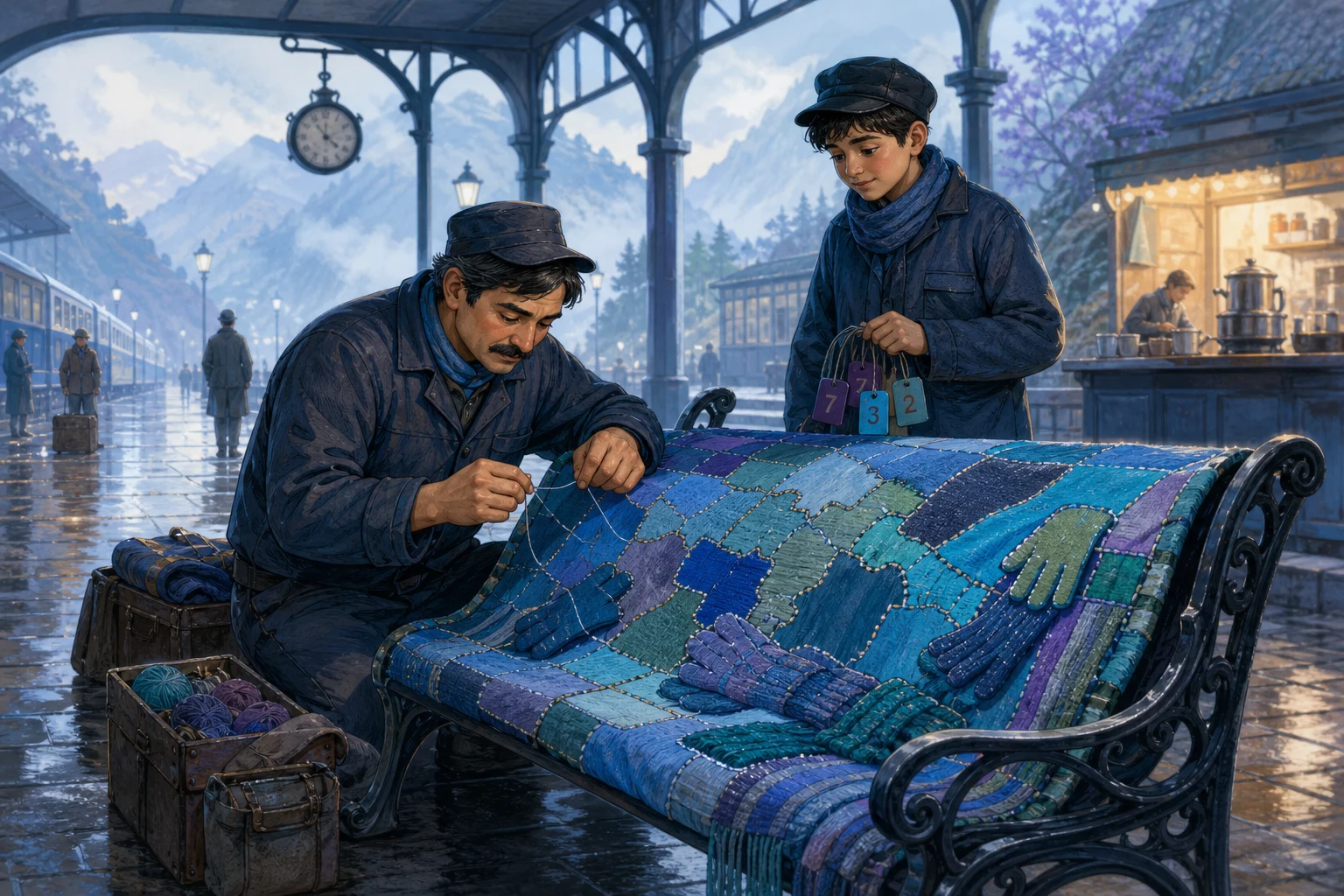
A Map Woven in Blue
Ilya’s patchwork bench covers began with lost gloves and ended as a map everyone could help complete.
Read Story →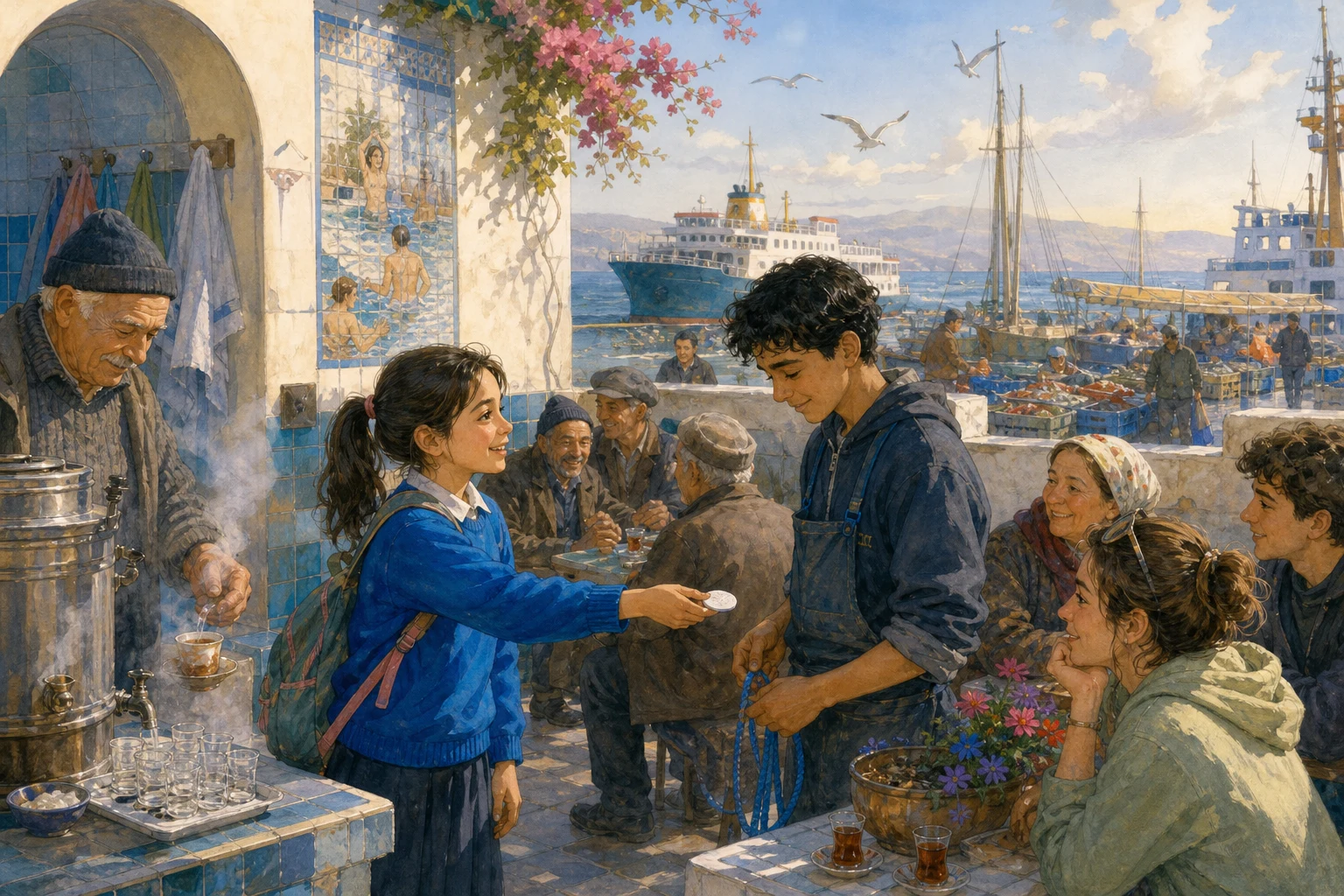
The Hour Nobody Owned
Mina’s first community hour is lively, crowded, and almost entirely controlled by the loudest guests. A ferry cleaner, a brass token, and one patient adjustment teach her what true hospitality requires.
Read Story →
Tabs in the Wind
Kito’s first calendar was neat, accurate, and almost useless. The second one belonged to everyone.
Read Story →