
Quote Stories
Before the Curtain Falls
Ren learns that welcome works best when everyone helps design it.
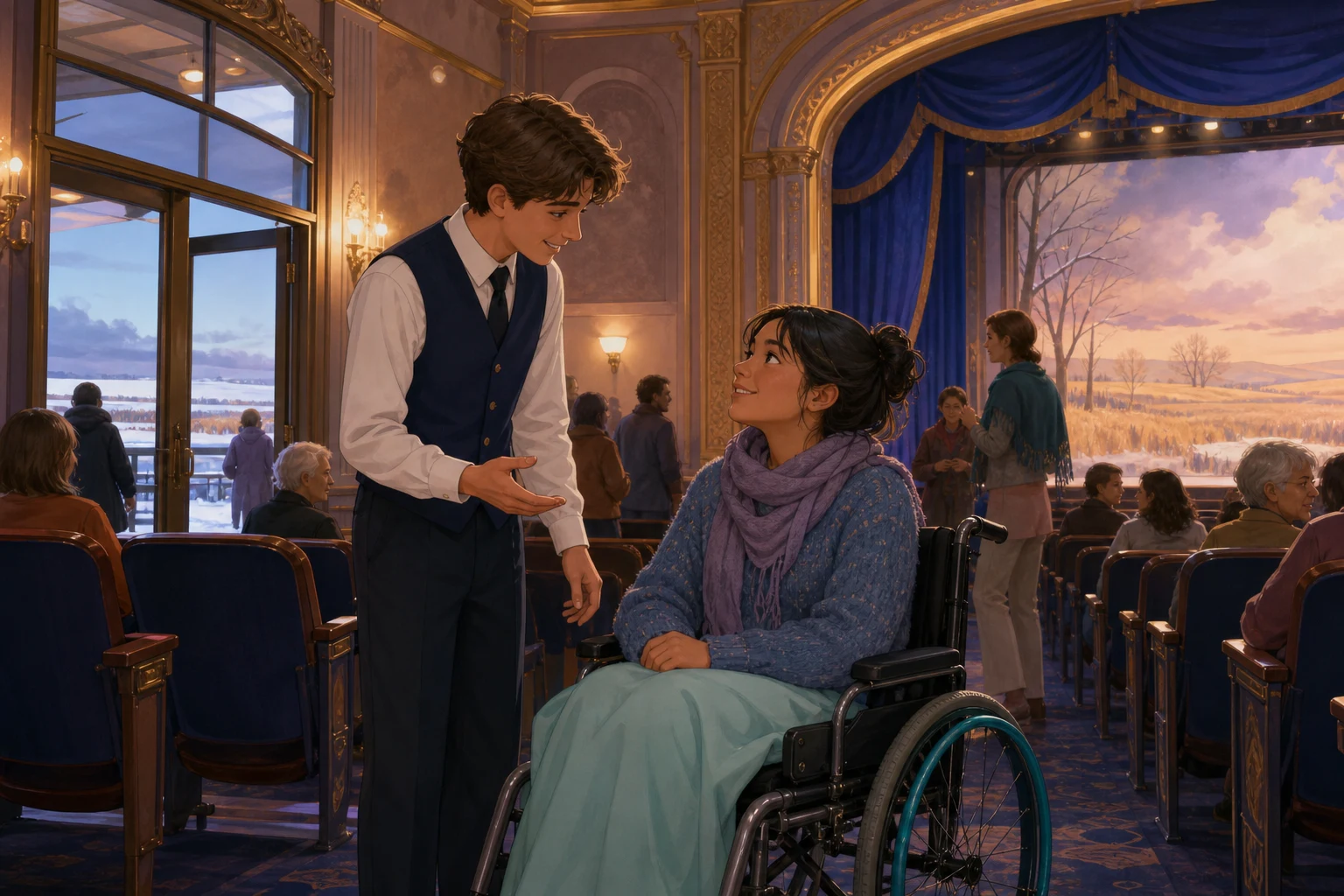
“Row seven is yours tonight,” Ren said, placing a folded program on the seat nearest the aisle.
Mara looked at the program, then at Ren. “Is it?”
Ren glanced toward the lobby, where the old theater’s brass doors rattled in the prairie wind. “I thought you might like more room.”
Mara’s expression tightened. “You thought.”
The words landed harder than Ren expected. She had noticed Mara leaving every performance before the final act, steering her mobility aid through the crowded lobby while people stood for snacks and coats. Ren had decided that a special seat would solve everything.
Instead, Mara pushed the program back. “I don’t need a display seat.”
Ren’s face warmed. “I wasn’t trying to—”
“I know.” Mara looked toward the stage, where painted clouds waited beneath the work lights. “But I’d rather watch the ending than be watched getting to it.”
Ren sat beside her, still holding the program. She asked what made intermission difficult. Mara explained that the aisle narrowed when patrons gathered there, and that sudden movement made it hard to steer safely. The problem was not row seven. It was that the whole theater treated the aisle like an extension of the lobby.
The next afternoon, Ren brought the question to the stage crew. At first, everyone offered quick fixes: a brighter sign, a reserved chair, perhaps an usher stationed nearby. Ren heard herself suggesting another special arrangement, then stopped.
“What would make the route work for you?” she asked Mara.
Together, they walked through the theater before rehearsal. Mara pointed out a coat rack that caught wheels, a loose mat, and a doorway that became nearly impossible to approach when people clustered around it. The crew measured clear paths, moved the rack, secured the mat, and marked a quiet turning space with a strip of gold tape.
They also changed rehearsal etiquette. No one would leave equipment in the aisle. During intermission, ushers would keep one side open without rushing anyone. Patrons could ask for help, but nobody would grab a mobility aid or steer without permission.
The first test was messy. A trumpet case appeared in the new turning space. Someone stacked programs on the accessible route. Ren found herself giving instructions too quickly.
Mara raised an eyebrow. “Ask before you command.”
Ren took a breath. “Would you like me to move this?”
“Yes. And then remind the trumpeter where it belongs.”
By opening night, the theater felt subtly different. Parents with tired children used the wider path. An older patron appreciated the uncluttered entrance. A stagehand carrying scenery no longer had to squeeze past a knot of people. Nobody had been placed on display, yet more people could move comfortably.
Mara stayed through the final act. From the wings, Ren watched her laugh at the comedy, lean forward during the quiet scene, and applaud when the curtain fell.
Afterward, Mara handed Ren the program from row seven. “Keep it,” she said. “You earned the seat.”
Ren smiled. “I think we redesigned the aisle.”
“Exactly,” Mara said. “A seat can welcome one person. A clear way through welcomes everyone.”
Related Quote Stories
A Clearer Way Home
When a new student keeps missing the right train, Omi replaces a perfect timetable with a system built from colors, chimes, and careful listening.
Read Story →
Lines the River Remembers
Elian’s first mural was beautiful, ambitious, and missing nearly everyone who used the lane. The second began with a question.
Read Story →
Lanterns Find Their Light
When glare erases her shadow-puppet show, Nadiya must choose between defending her perfect design and inviting others to remake it with her.
Read Story →