
Quote Stories
Before the Whistle, Joren Changed the Course
A rule-minded teenager discovers that fairness can mean making room for different ways to begin.
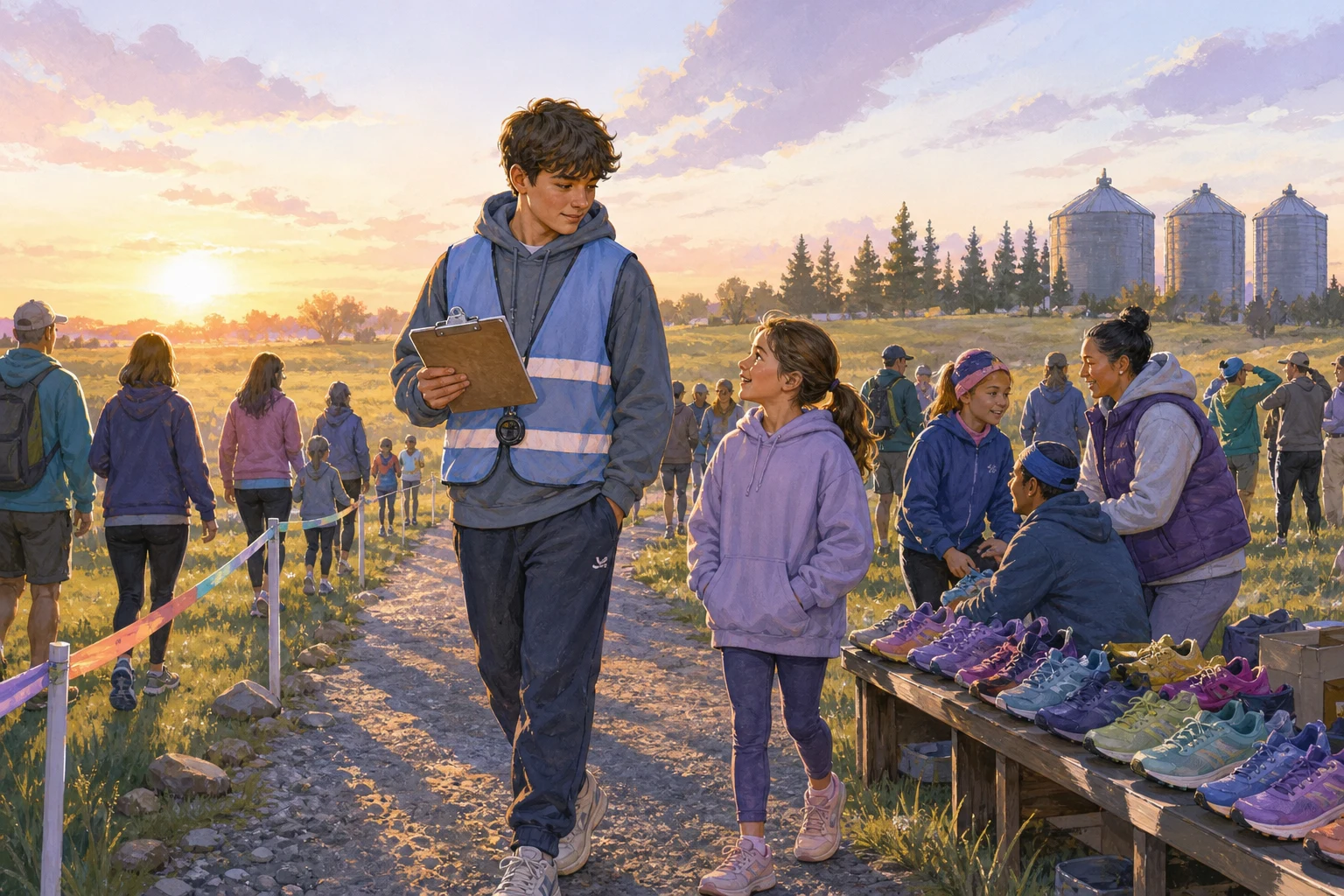
Joren’s clipboard had three columns: bib number, finish time, violation.
By eight o’clock, the school field was bright with September sun. Beyond the running track, grain silos shone above the windbreak, and paper flags snapped along the route of the annual Prairie Loop.
“Shoelaces tied?” Joren called.
Most of the walkers nodded. A few laughed. Joren checked the starting line with the seriousness of a judge at a championship meet. At sixteen, he was the youngest official, and he liked the clean certainty of rules. A course had a distance. A race had a time. Shoes were shoes.
Then Nadiya stepped forward wearing two thick wool socks tucked inside strips of blue canvas.
“Those are not approved footwear,” Joren said.
“They’re what I have,” she replied. “My brother’s shoes split yesterday.”
Joren looked toward the registration table. The organizer, Ms. Vale, was helping a family find missing safety pins. Behind Nadiya stood her younger cousins, one in oversized sandals and another holding a pair of sneakers with a cracked sole.
“The rule says proper athletic shoes,” Joren said.
Nadiya’s face tightened. “Then I guess we’re not walking.”
Joren marked the violation. The whistle blew.
The first group surged forward. Joren watched them pass the banner, but the starting area did not fill. Families lingered beside the fence, some carrying toddlers, some looking down at their shoes. A man with a cane asked whether there was a shorter route. A woman quietly returned her number. Two children began walking home before the course had even opened.
At the finish line, Joren recorded times until the numbers blurred.
“Your cousin was fast,” he told Nadiya’s youngest cousin, who had come to watch. “He might have finished near the front.”
“He couldn’t start,” the boy said. “His shoes hurt.”
That evening, Joren spread the event rules across the kitchen table. The paper smelled faintly of dust and printer ink. He read the footwear clause three times. It was meant to prevent injuries and give competitors equal conditions. Instead, it had treated unequal circumstances as though they were the same.
The next morning, he carried the rules to Ms. Vale’s office.
“I enforced them correctly,” he said. “But the event still failed.”
Ms. Vale leaned back in her chair. “What would you change?”
Joren had prepared a list. He unfolded it.
The next Prairie Loop would have three distances: one kilometer, three kilometers, and the full five. Walkers could enter alone or in teams. The school would collect clean donated shoes in several sizes. Rest stations would offer water and benches. Anyone needing different footwear could be checked by an adult for safety, without being disqualified simply for lacking a standard pair.
“And the fastest time still wins the five-kilometer division,” Joren added. “The shorter routes have their own results. Team groups get recognition for finishing together.”
Ms. Vale studied the page. “You’re willing to rewrite the rules you guarded all summer?”
“I’m willing to write better ones.”
The following weeks were busy. Joren sorted shoes in the equipment room, pairing them by size and taping small notes inside: “wide,” “soft sole,” “good for gravel.” He marked the course with colored arrows so walkers could choose their distance without confusion. When his friend Cal suggested calling the rest stations “slow spots,” Joren shook his head.
“Resting isn’t falling behind,” he said. “It’s part of the course.”
On the next event morning, the starting field looked different. A grandmother joined a team with her two granddaughters. A teacher walked beside a student who tired easily. Nadiya arrived in borrowed running shoes that fit well enough, while her cousins wore mismatched sneakers from the equipment room.
Joren stood beneath the new sign: CHOOSE YOUR ROUTE. FINISH YOUR WAY.
The whistle rose to his lips, but before he blew it, he noticed the youngest cousin staring nervously at the gravel path.
“Want to walk with me to the first marker?” Joren asked.
The boy nodded.
They set off near the back. Joren still carried his clipboard, but its columns had changed. He recorded route choices, team names, rest stops used, and finishers. When someone slowed, he no longer searched for a violation. He looked for a companion.
At the final bend, Nadiya passed them with her cousins, laughing as one of them rang a bicycle bell at the water station. The fastest walkers had already finished, but the field remained full of moving feet.
Joren checked the last name on his sheet. Then he put the clipboard under his arm and joined the final group across the line.
For once, he was not there to judge how they had arrived. He was there to make sure no one arrived alone.
Related Quote Stories
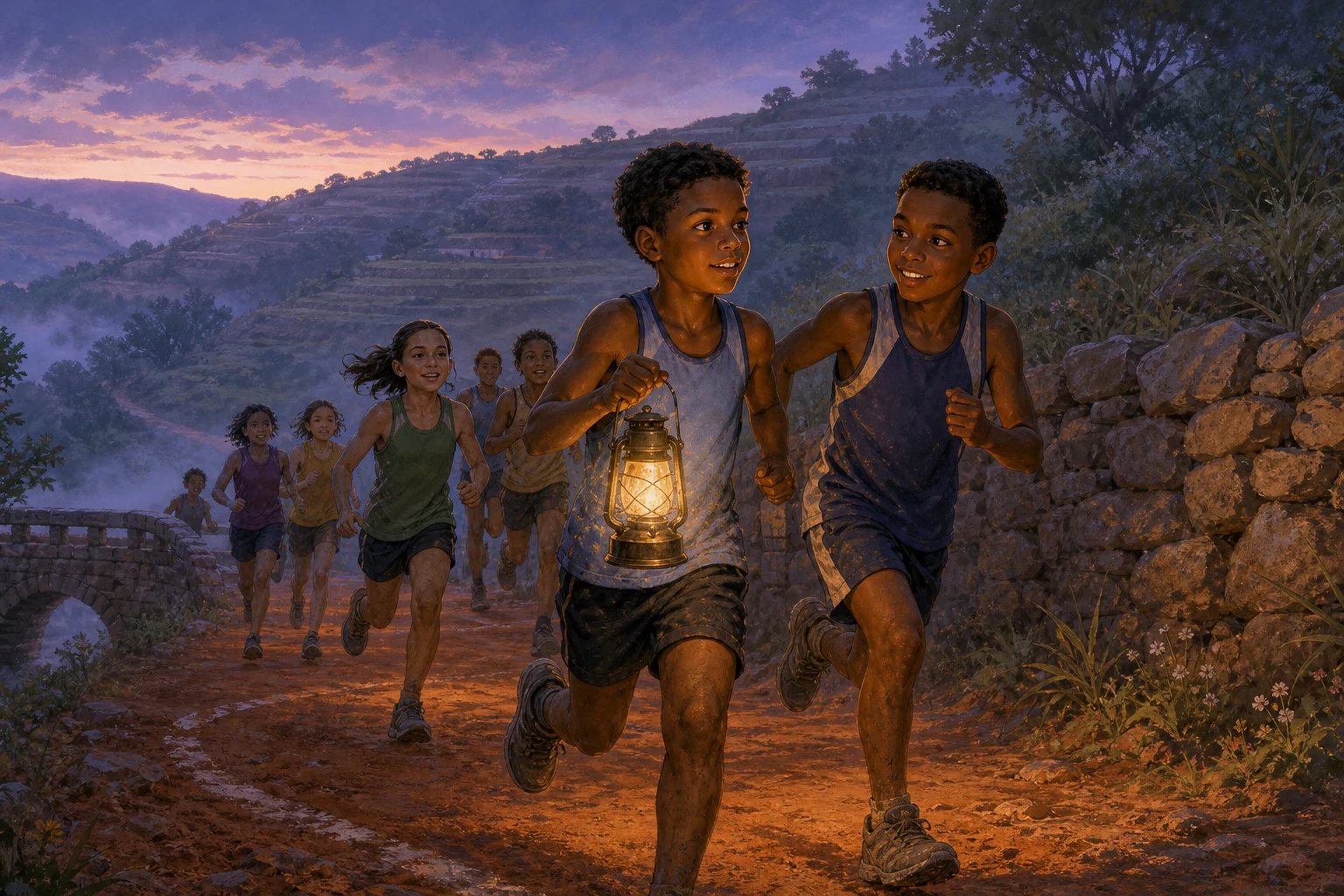
A Lantern for the Last Lap
Sefu was halfway around the track when the last spectator folded a chair and left. He kept running—and began carrying a lantern for everyone still behind him.
Read Story →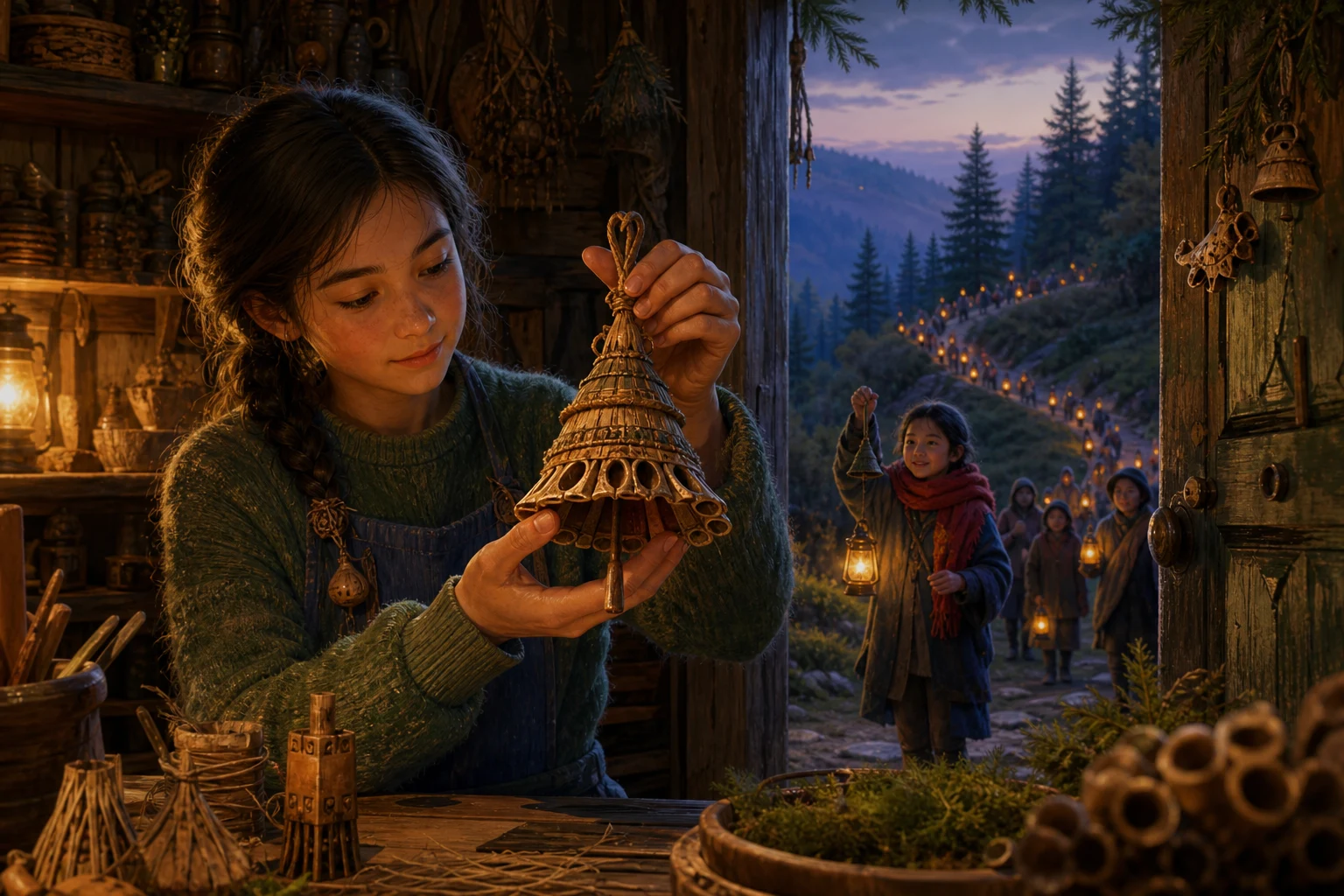
A Bell Made of Many Quiet Things
Toma wanted the guild prize for the loudest bell. Then one child’s empty place at rehearsal made him listen differently.
Read Story →
Chain Reaction
Daro wanted the hill race to prove he was the fastest mechanic in the club. Then his chain snapped, and the finish line began to look different.
Read Story →