
Quote Stories
Between Saffron and Sumac
Nura makes room for a different way of shopping.
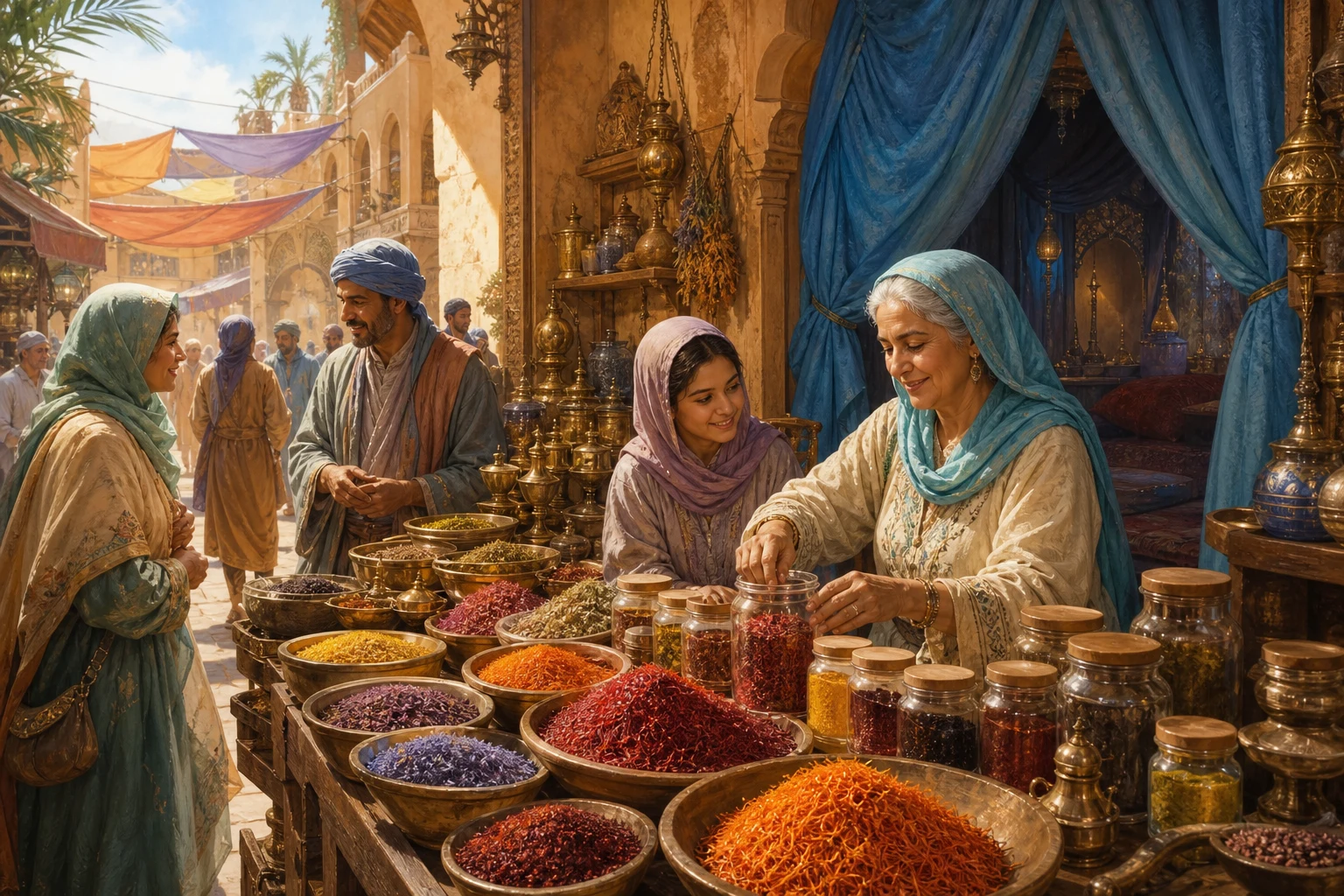
By midmorning, the spice arcade sounded like a hundred brass spoons striking glass.
Vendors called across the passageways. Scooters coughed at the far entrance. A grinder rattled, a baby cried, and the ceiling fans pushed hot air from one crowded stall to the next.
Nura had worked there for thirty-two years. She could measure cumin by scent, recognize a customer by footsteps, and fill an order while answering three questions at once. Speed, she often told her apprentices, was what kept a small business alive.
Then a boy stopped in front of her counter with both hands pressed over his ears.
His grandmother leaned close. “He knows what he wants. He just needs a moment.”
Nura looked at the boy, then at the narrow line behind him. For the first time, she noticed how many customers stood with their shoulders raised: a woman squinting at unlabeled jars, an old man waiting for the noise to settle, a young worker repeatedly asking what had been added to a blend.
“Come with me,” Nura said.
Behind her stall was a storeroom barely large enough for sacks of cardamom and a folding stool. She moved the sacks, swept the floor, and hung a blue curtain across the doorway.
The next morning, she placed a handwritten sign outside: QUIET ORDERS, WHEN NEEDED.
Her neighbor Hamid read it twice. “Quiet orders?”
“People may ask questions without shouting.”
“And when will you sell?”
“I will sell while answering.”
Hamid shook his head. “You are turning a storeroom into a waiting room.”
“Only for people who need it.”
At first, almost nobody used the room. Nura worried Hamid was right. Then a woman came in to compare ingredients for two children with different allergies. A baker asked for a blend to be written down instead of recited. A university student stood silently for five minutes before admitting she had never learned the names of the spices she bought.
Nura began making changes. She wrote large, clear labels in two scripts. She marked common ingredients with colored symbols. Twice each afternoon, she announced a slower service period—not silence, exactly, but fewer calls across the arcade and no grinding near the blue curtain.
The merchants complained that the arrangement was too complicated.
“Customers will think the market is unfriendly,” Hamid said.
“Then we should make it friendlier.”
She invited him, three other stall owners, and her apprentices into the storeroom. Instead of giving instructions, she asked them to shop as if they were unfamiliar with the market. Hamid pretended not to understand the labels. One apprentice wore earplugs. Another tried to remember the ingredients of a blend after hearing them only once.
By the end, everyone had made a mistake.
Hamid removed the earplugs. “I thought the red mark meant hot.”
“It means contains dried pepper,” said Nura.
“That is what I said.”
“No. You said hot.”
He laughed despite himself.
They created a shared ingredient list and agreed that any stall could use the symbols. Nura’s youngest apprentice, seventeen-year-old Laleh, took charge of copying the labels. She was quick with numbers and careful with ink, but she became nervous whenever customers watched her work.
On the busiest afternoon of the month, Laleh placed a pepper symbol on a jar of mild roasted coriander.
A customer bought it for her father, who could not tolerate heat. She returned an hour later, upset and embarrassed. Laleh saw the jar and went pale.
“I’m sorry,” she whispered. “I ruined it.”
Nura felt the old impulse rise in her—the sharp correction, the warning delivered loudly enough for everyone to hear. A mistake could cost trust. Trust could cost a business.
Then she looked at the blue curtain, the large labels, and the people who had helped design them.
“Bring the jar here,” Nura said.
Laleh expected blame. Instead, Nura placed the jar on the table.
“Let us find where the system failed.”
The customer stayed. Hamid came from his stall. So did the baker and two apprentices from the tea shop. They traced the process: Laleh had copied an old symbol sheet, the sheet had no example beside the mark, and the mild coriander jar had been stored beside a pepper blend with nearly identical lids.
“The mistake is yours,” Nura told Laleh, “but the solution belongs to all of us.”
They replaced the symbols with short words and pictures. They added a second check for every newly labeled jar. The merchants formed a training circle that met once a week before opening. Each person brought one task that seemed obvious to them and explained it without assuming anything.
The work took time. It also brought customers back.
Some came during the slower periods. Some used the blue room. Others simply appreciated being able to read what they were buying. Hamid began keeping a copy of the ingredient list at his own counter. The tea sellers added a quiet table near the courtyard fountain.
Months later, Nura found the boy who had covered his ears standing beside his grandmother. He held a small paper packet and read the label aloud.
“Coriander, sesame, lemon peel,” he said.
His grandmother smiled. “He chose it himself.”
Nura looked across the arcade. The market was still noisy. It was still warm, crowded, and full of competing smells. Nothing essential had been lost.
But between the saffron and the sumac, there was now a little more room—for questions, for care, and for people who had once believed the market was not meant for them.
Related Quote Stories
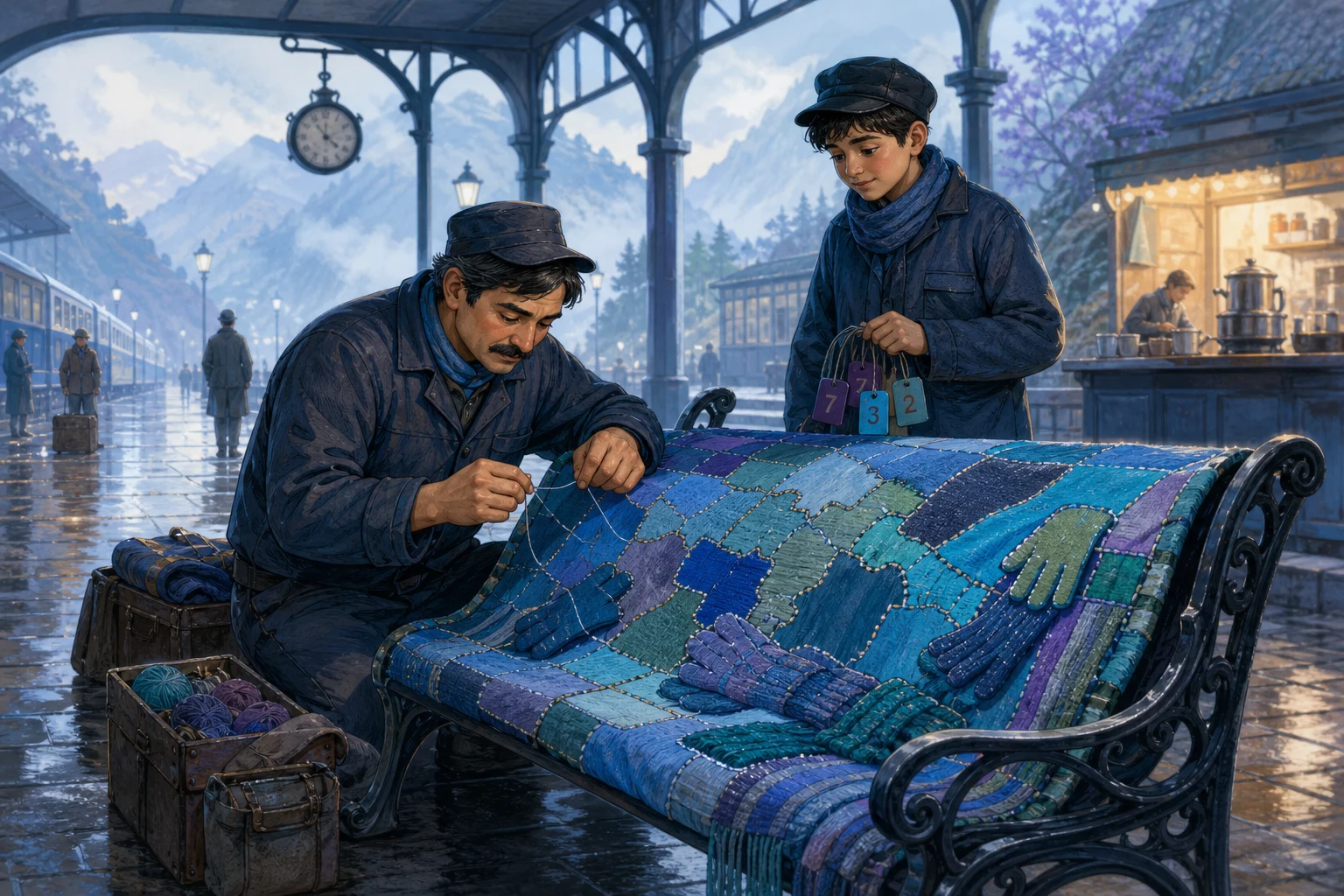
A Map Woven in Blue
Ilya’s patchwork bench covers began with lost gloves and ended as a map everyone could help complete.
Read Story →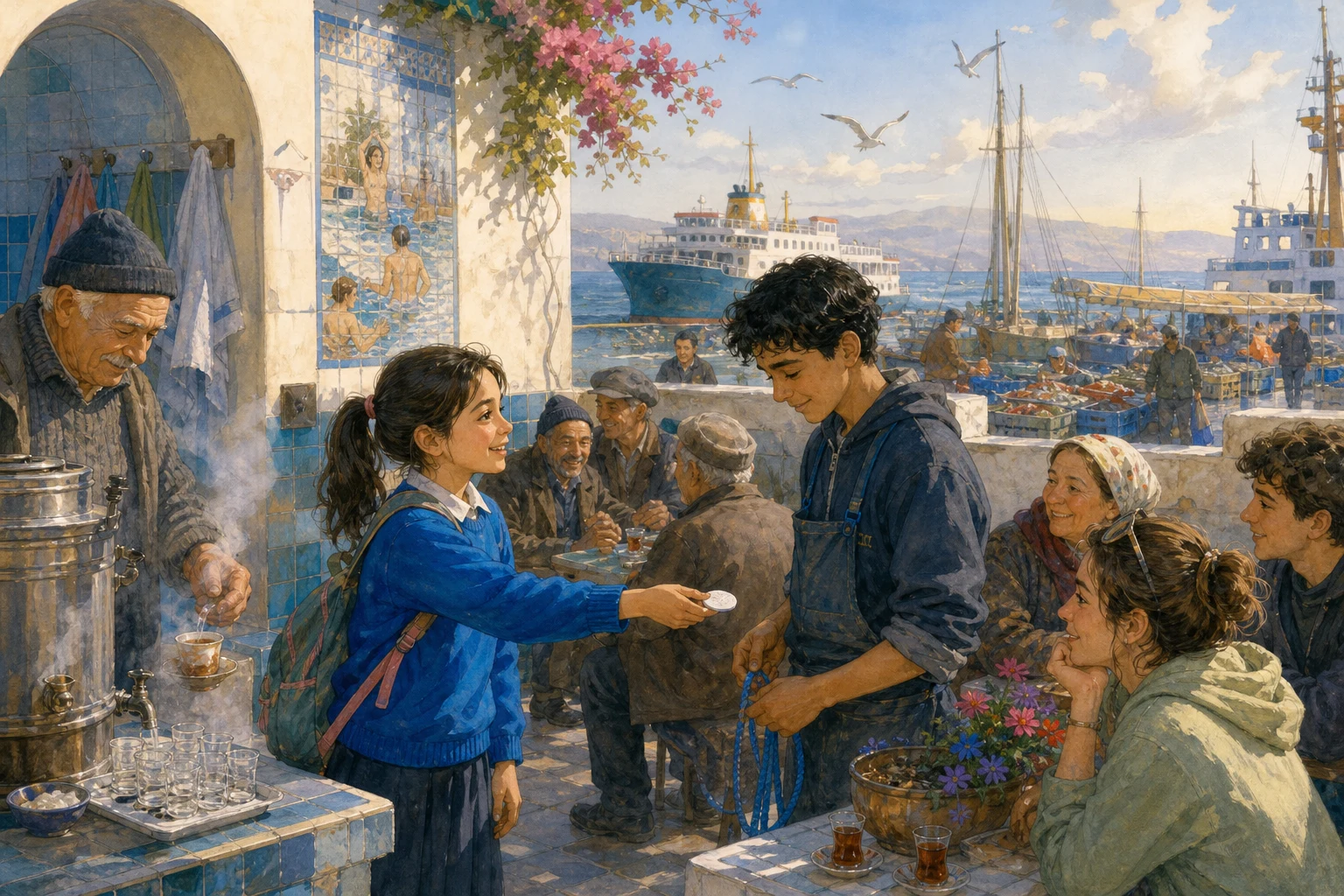
The Hour Nobody Owned
Mina’s first community hour is lively, crowded, and almost entirely controlled by the loudest guests. A ferry cleaner, a brass token, and one patient adjustment teach her what true hospitality requires.
Read Story →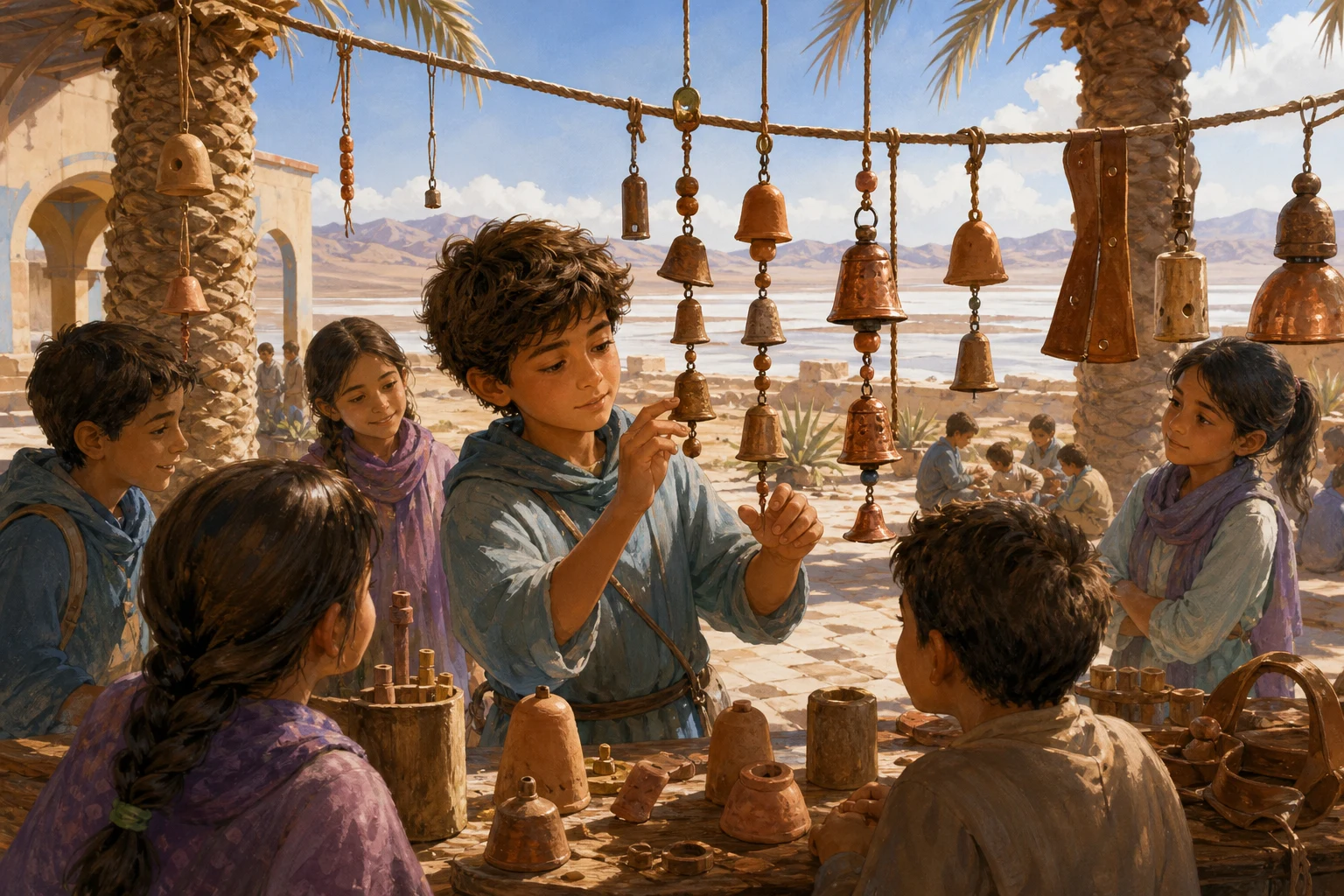
What the Clay Could Hear
When a noisy classroom project leaves Sami on the sidelines, his drawings reveal a quieter way to make the whole school listen.
Read Story →