
Quote Stories
Chalk After Closing
A dependable place to leave help for one another
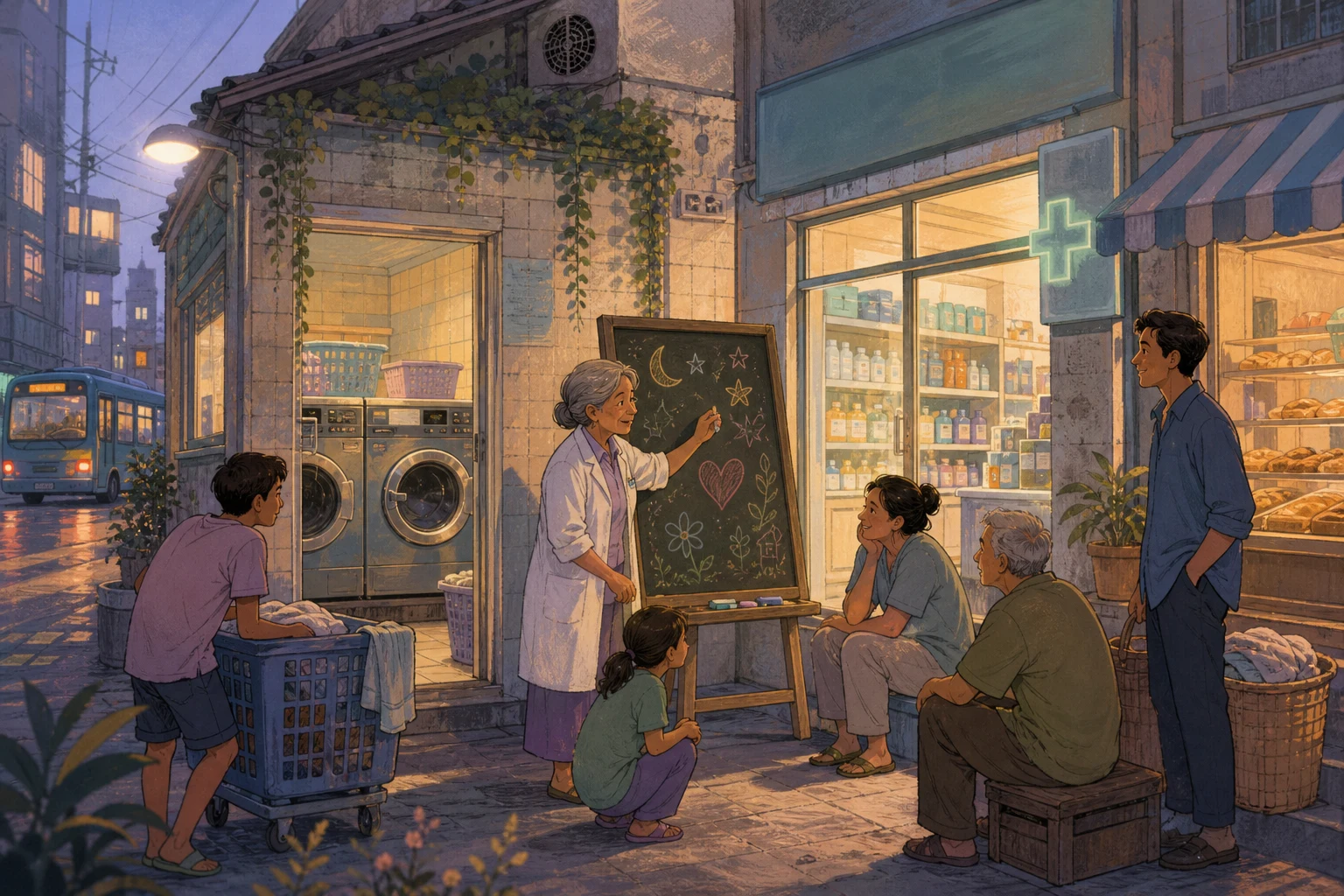
At 10:17 each night, Leila crossed the alley behind the pharmacy and found the laundromat dark.
Through its glass door, she could see three silent machines, a row of empty plastic chairs, and a handwritten notice: CLOSED AT TEN.
That was exactly when the bakery workers, bus conductors, and hospital cleaners began coming home.
Leila knew their hours because she filled their prescriptions. She also knew the smaller troubles that followed late shifts: a broken drying rack, a missed bus, a child’s unfinished mathematics, a sack of clothes too heavy to carry upstairs.
So she brought a piece of slate from the pharmacy’s storeroom and leaned it beside the laundromat door.
NEED A RIDE TO EAST MARKET?
SPARE DRYING RACK AVAILABLE.
WHO CAN EXPLAIN FRACTIONS TOMORROW?
By morning, three replies had appeared. By evening, there were eleven. Someone added a drawing of a bicycle. Someone else wrote an offer in green chalk and crossed it out in red when the offer was taken.
For two days, the board seemed miraculous.
On the third, it became a disaster.
A ride offered for Tuesday was mistaken for a ride offered that night. The drying rack had already gone to a different building. A boy named Sami arrived with a notebook, expecting help with fractions, and found two strangers arguing over who had promised to tutor him.
Leila stood beneath the crooked layers of chalk, feeling the familiar urge to solve everything herself. She could erase the board, write clearer sentences, and return to the pharmacy before anyone asked another question.
Instead, she handed Sami a clean cloth.
“Help me make it honest,” she said.
That evening, Leila invited the people who used the alley most. They sat on overturned laundry baskets while warm air drifted from the bakery next door.
A bus conductor suggested symbols: a wheel for rides, a shirt for clothing, an open book for lessons. A retired sign painter proposed three spaces: OFFER, NEED, and TAKEN. Sami insisted that every message include a date.
“And someone has to erase old ones,” said Mara, who worked the late shift at the bakery. “Not just Leila.”
They chose four stewards, each responsible for one evening a week. On Fridays, everyone would clear the board together. No grand meeting, no speeches—just a bucket of water, fresh chalk, and ten minutes of checking what still mattered.
The new board looked almost plain. That was its strength.
A blue wheel meant a ride was available. A yellow book meant help with homework. A small square around a message meant its writer had confirmed it. When something changed, the old mark disappeared instead of lingering like a promise nobody could keep.
Weeks passed. The laundromat remained closed after ten, but the space beside it stayed awake. A nurse found a replacement uniform button. A widower traded a folding chair for help carrying groceries. Sami began teaching fractions on Tuesdays, using the laundromat’s tiled wall as a makeshift blackboard.
Leila still worked nights. She still crossed the alley with tired feet and a pharmacy key warm in her palm. But now she no longer felt that every unanswered problem was waiting for her alone.
One Friday, she arrived with the bucket and found the board already clean. Across its center, in careful white chalk, Sami had written:
CHECKED TONIGHT.
Leila smiled and added a small circle beneath it—the symbol they used for something dependable.
Then the bakery door opened, the late buses sighed at the corner, and people began leaving messages for one another in colors everyone could understand.
Related Quote Stories
Where the Water Leaves a Mark
Anik believed every parcel could be delivered if its address was written clearly enough. Then the river moved, and the people who knew its moods taught him a better way to find home.
Read Story →
What the Hillside Knew
When her first planting failed, soil surveyor Amara traded certainty for questions—and found the hillside already had teachers.
Read Story →
Light Finds a Way
Beni wanted applause. What he found beneath the hall’s floorboards was something better: a way for many hands to make the evening shine.
Read Story →