
Quote Stories
Flour, Ink, and Other Measures
Pavel learns that a recipe can hold more than numbers.

At 2:13 a.m., Pavel wrote “add flour until ready” in the margin of a recipe and underlined it three times.
The phrase had already defeated two apprentices.
One had added flour until the dough became a stone. Another had stopped too soon, producing loaves that spread across the baking trays like sleepy animals. Both had left the bakery before their first month ended.
Pavel understood why. He liked instructions that behaved. Twenty-six years old and precise about everything from oven temperatures to the angle of his pencil, he decided the bakery needed a better system.
By Thursday, every recipe in the shop had been rewritten.
“Three hundred and eighty grams,” he told Mara, the head baker, pointing to the new card. “No guessing. No family riddles. No ‘until it feels right.’”
Mara read the card, then pressed one finger into the dough. “It feels wrong.”
The new loaves looked excellent. They rose evenly and browned politely. Customers, however, began asking what had happened to the bread.
“It used to have a voice,” said the owner of the flower stall.
Pavel tasted a slice. The crust cracked exactly as planned. The inside was soft, but somehow quiet.
He spent the next three nights checking his measurements. The scale was accurate. The oven was steady. The yeast was fresh. His calculations formed a neat little army, and every one of them insisted he was right.
On Sunday morning, he found Mara beside the cooling racks, holding an old recipe card. It contained three lines:
“Use the warm flour.
Let it rest while the street wakes.
Bake when it smells like rain on stone.”
Pavel frowned. “That is not a recipe.”
“It made good bread for forty years.”
“It is impossible to teach.”
Mara handed him the card. “Then ask the people who learned it.”
Pavel began with former apprentices. He found one repairing bicycles near the university and another serving soup at the farmers’ arcade. He asked what the old instructions had meant.
“Warm flour means flour that has not been sitting beside the open door,” said the bicycle mechanic.
“Let it rest while the street wakes means wait until the first delivery carts pass,” said the cook. “The dough changes when the room changes.”
“And the rain?” Pavel asked.
“That is the smell before the crust turns dark,” said an elderly regular who had been buying bread since Pavel was a child. “You know it when you stop staring at the clock.”
Pavel filled a new binder. He kept the measurements but added notes about texture, sound, smell, room temperature, and timing. He left wide margins and invited people to write in them.
Mara contributed a warning: “If the dough resists, your hands are probably rushing.”
The flower seller added: “For the round loaves, listen for a hollow knock.”
A former apprentice drew a diagram of how the dough should fold. Someone else taped in a flour-smudged note: “On damp mornings, begin with less water. Add the rest only if the dough asks.”
Pavel tested each change. Some batches failed spectacularly. One loaf developed a ridge like a mountain range. Another emerged so flat that a student tried to use it as a plate.
But the apprentices stayed. They were allowed to ask questions, make notes, and explain what their hands were noticing. Pavel discovered that correcting someone was faster than listening, but listening produced better bread.
By the start of the new term, the binder had a blue cover and a crooked label: BREAD, WITH ROOM TO LEARN.
The morning the revised recipes went into regular use, Pavel watched a new apprentice shape a loaf. She paused, pressed the dough, and looked uncertain.
“Is it ready?” she asked.
Pavel almost gave her a number. Instead, he placed his palm beside hers.
“Tell me what you notice.”
She considered the dough. “It is warmer than before. It springs back slowly. And it smells—”
“Like rain on stone?” Pavel asked.
She smiled. “Exactly.”
Together, they slid the loaves into the oven. When the first crusts began to darken, the bakery filled with a deep, warm fragrance. Pavel opened the binder and turned to a clean page.
This time, he did not write the answer.
He wrote down what the apprentice had noticed.
Related Quote Stories

When Desks Learned to Bend
Nera’s first folding desk collapsed under the weight of a single book. Hiding the failure would be easy; inviting others to inspect it would be harder—and far more useful.
Read Story →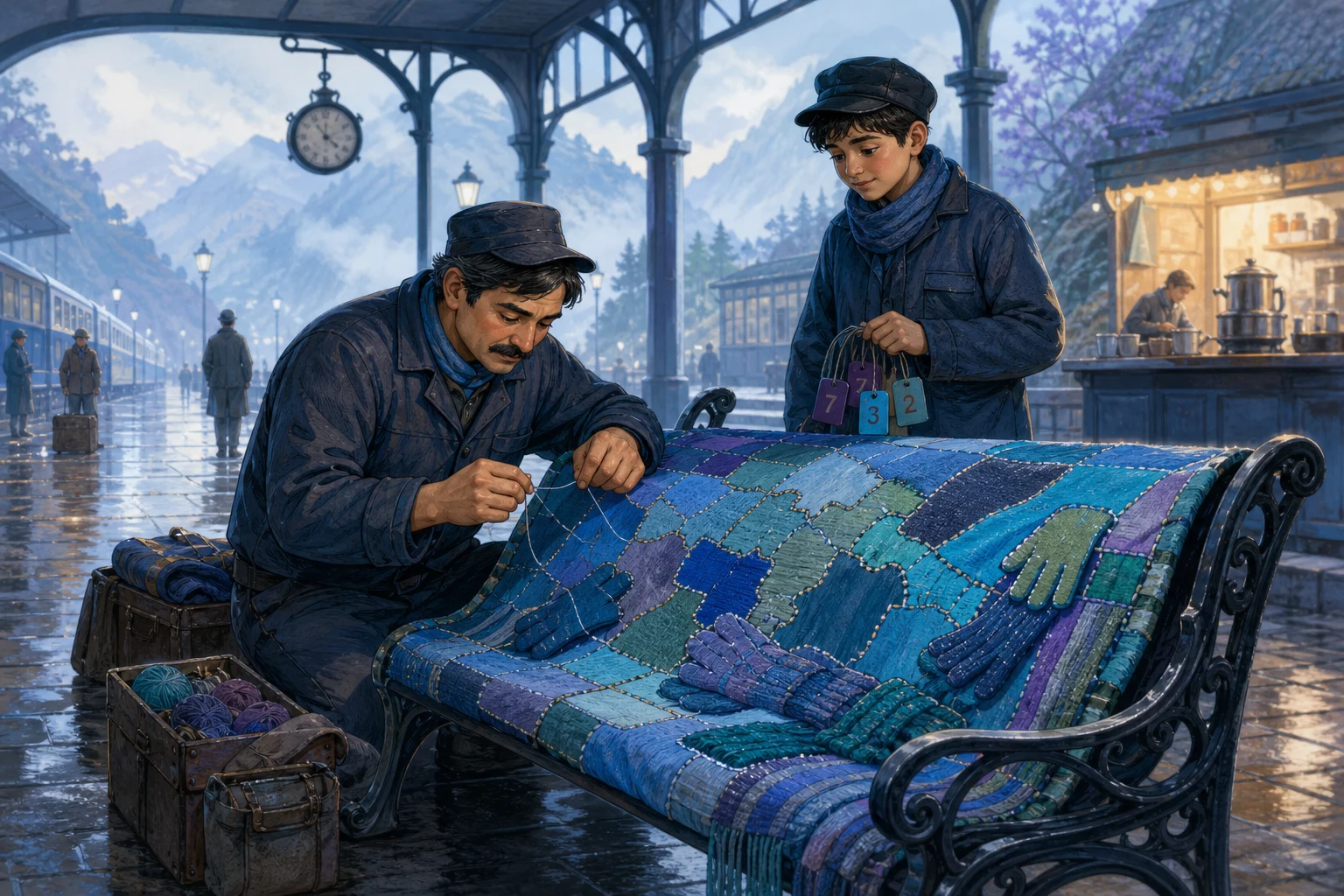
A Map Woven in Blue
Ilya’s patchwork bench covers began with lost gloves and ended as a map everyone could help complete.
Read Story →
The Hour Nobody Owned
Mina’s first community hour is lively, crowded, and almost entirely controlled by the loudest guests. A ferry cleaner, a brass token, and one patient adjustment teach her what true hospitality requires.
Read Story →