
Quote Stories
Keep It Low
Vesa and Aru learn that a doubles match has more than one way to win.
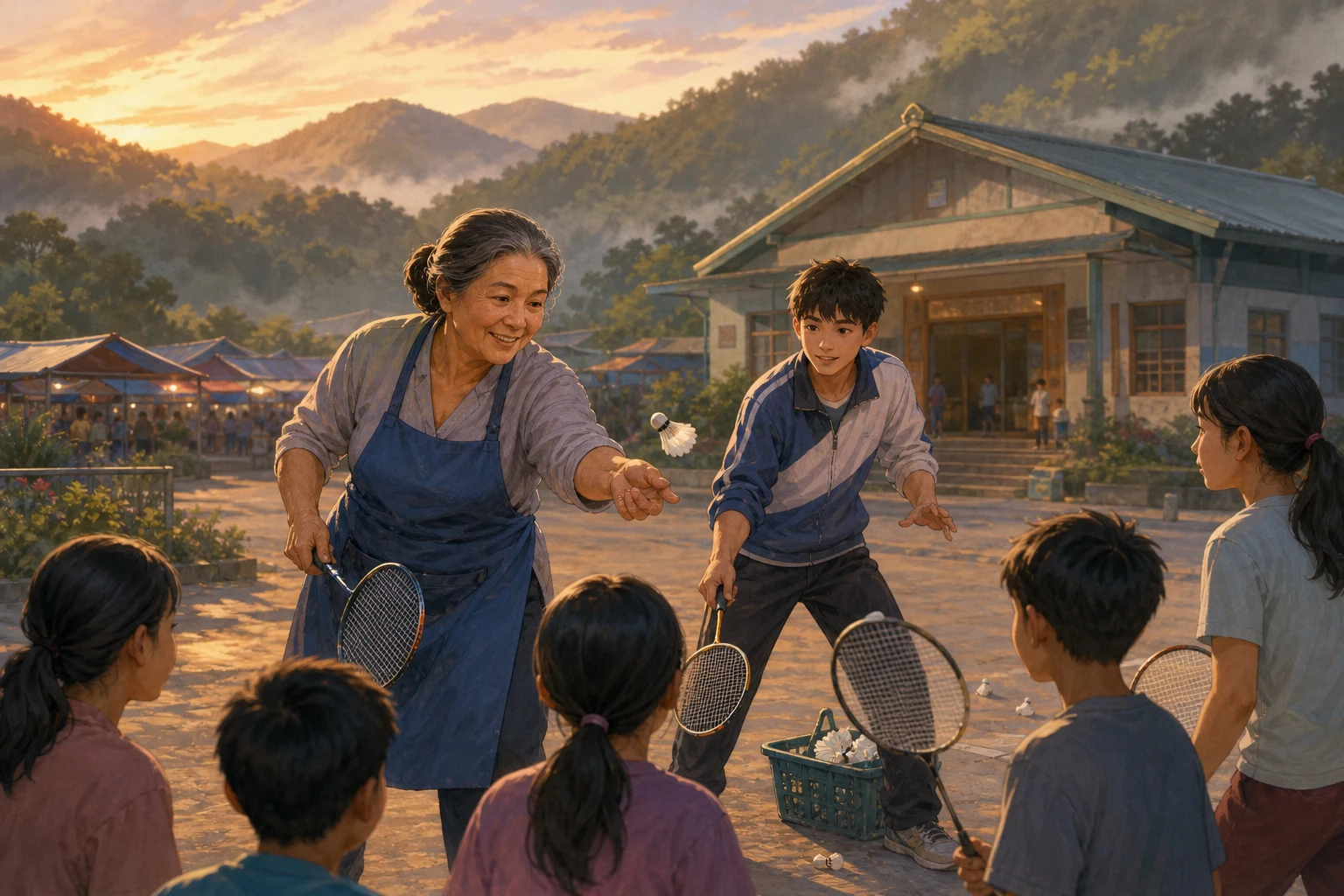
“Stop apologizing to the shuttle,” Vesa said.
Aru froze beside the service line. The shuttlecock had landed three steps outside the boundary, where it lay in the dust like a tiny white flower.
“Sorry,” he said.
Vesa closed her eyes. “That was exactly what I meant.”
Above them, the recreation hall’s windows rattled in the cool hill wind. Beyond the open doors, morning mist curled around the steep lanes, softening the roofs and market awnings. Inside, the veterans’ doubles league had begun with six pairs, two borrowed nets, and a tournament bracket taped crookedly to the wall.
Vesa had not held a racket in twenty-three years. She had once played with quick feet and a sharp cross-court drop that made opponents curse under their breath. Now she cooked lunch for the school, rose before dawn, and considered a successful day one in which no pot boiled over.
Aru, sixteen, washed dishes after classes and apologized whenever a plate chipped, a customer waited, or his own shadow seemed to get in someone’s way.
Their first match lasted eleven minutes.
Vesa shouted instructions. Aru tried to obey all of them at once. They collided near the net, missed easy returns, and lost by a score so lopsided that the opposing pair offered to let them replay the final point.
“No,” Vesa said, gathering the shuttlecocks. “We have suffered enough.”
At the cafeteria the next morning, Aru stood at the kitchen door holding two rackets.
“I watched a doubles match,” he said. “The players didn’t stand together.”
“Excellent. You have discovered geometry.”
“They moved according to the shot.”
Vesa looked at him. “And what did we do?”
“Moved according to your shouting.”
The corner of Vesa’s mouth twitched. “That may be the first useful thing you’ve said all week.”
They began practicing in pieces. Ten-minute games behind the market after the vendors packed away their scales. Short serves in the school courtyard while teachers carried tea upstairs. Footwork drills beside the public fountain, where younger children chased the shuttle whenever it flew too far.
Vesa learned that Aru had a clever backhand but hated using it. Aru learned that Vesa’s famous drop shot had become less reliable, especially when her left knee stiffened in the cold.
At first, Vesa corrected every mistake.
“Your grip is wrong.”
“Your stance is late.”
“You watched the shuttle instead of the opponent.”
Then, one gray morning, she missed an easy return and heard herself say, “Sorry.”
Aru stared.
“Don’t make a ceremony of it,” she said. “The shuttle is not listening.”
He laughed so hard he had to lean against the net post.
After that, their practice changed. Before each game, they chose one small aim: keep the serve low, call “mine” clearly, or let the other player take the difficult shot. They played market vendors who served with theatrical spins, school staff who knew nothing about badminton but possessed great stamina, and two twelve-year-olds who defeated them three times in a row and demanded mango sweets as their coaching fee.
Aru stopped apologizing. Vesa stopped trying to command every rally.
She began watching him instead—not to correct him, but to notice when he was ready. He began trusting her calls, including the quiet ones.
At the tournament, the hall smelled of floor polish, steamed buns, and damp wool. Their first match went to three games. In the second, Vesa’s knee protested sharply. Aru shifted position without being asked, covering the front court while she guarded the back.
“You’re changing the plan,” she said.
“I thought we had one.”
“We had a good one.”
“We can have another.”
They reached the final against a retired postmaster and his sister, who had played together long enough to communicate through eyebrow movements. Vesa and Aru fought for every point. They saved two match points, then lost the third when Aru’s return clipped the tape and fell back on their side.
For a moment, the hall seemed to hold its breath.
Aru lowered his racket. “I’m—”
Vesa tapped his shoulder with hers. “Not today.”
They shook hands with their opponents, accepted two paper cups of tea, and sat on the steps outside. The mist had lifted. Below the hall, the town’s narrow streets shone with rain, and the first vendors were reopening their stalls.
A boy in a sweater approached with a racket nearly as tall as he was.
“Can you show me how to serve?” he asked.
Vesa glanced at Aru. “You do it.”
His eyes widened. “Me?”
“You know the important part.”
“What part?”
“Keep it low.”
Aru took the racket. The boy’s first serve flew sideways into a flowerpot. His second bounced before reaching the net. On the third, Aru crouched beside him, adjusted his fingers, and waited.
The shuttle rose, crossed cleanly, and dropped just inside the line.
The boy looked at Vesa. “Was that good?”
Vesa watched Aru grin—not with triumph, but with recognition. He had become the person he once needed.
“Good enough to try again,” she said.
By sunset, the tournament banners were coming down. Vesa’s silver medal rested in her apron pocket, warm from her hand. Aru was still on the court, coaching the boy and three others who had wandered over.
Vesa picked up a racket and joined them.
There was room on the court now—not because anyone had moved aside, but because they had learned how to play with one another.
Related Quote Stories
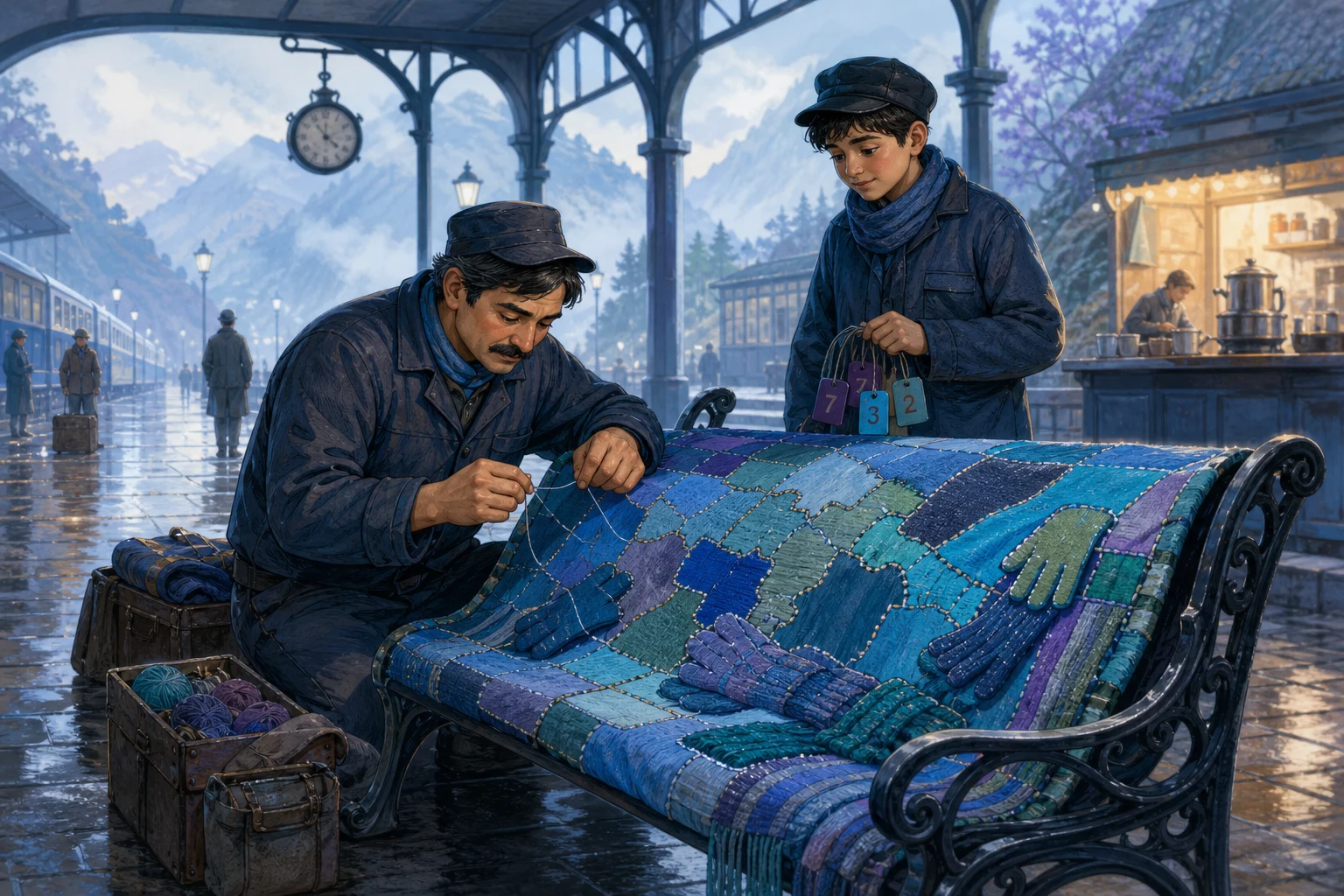
A Map Woven in Blue
Ilya’s patchwork bench covers began with lost gloves and ended as a map everyone could help complete.
Read Story →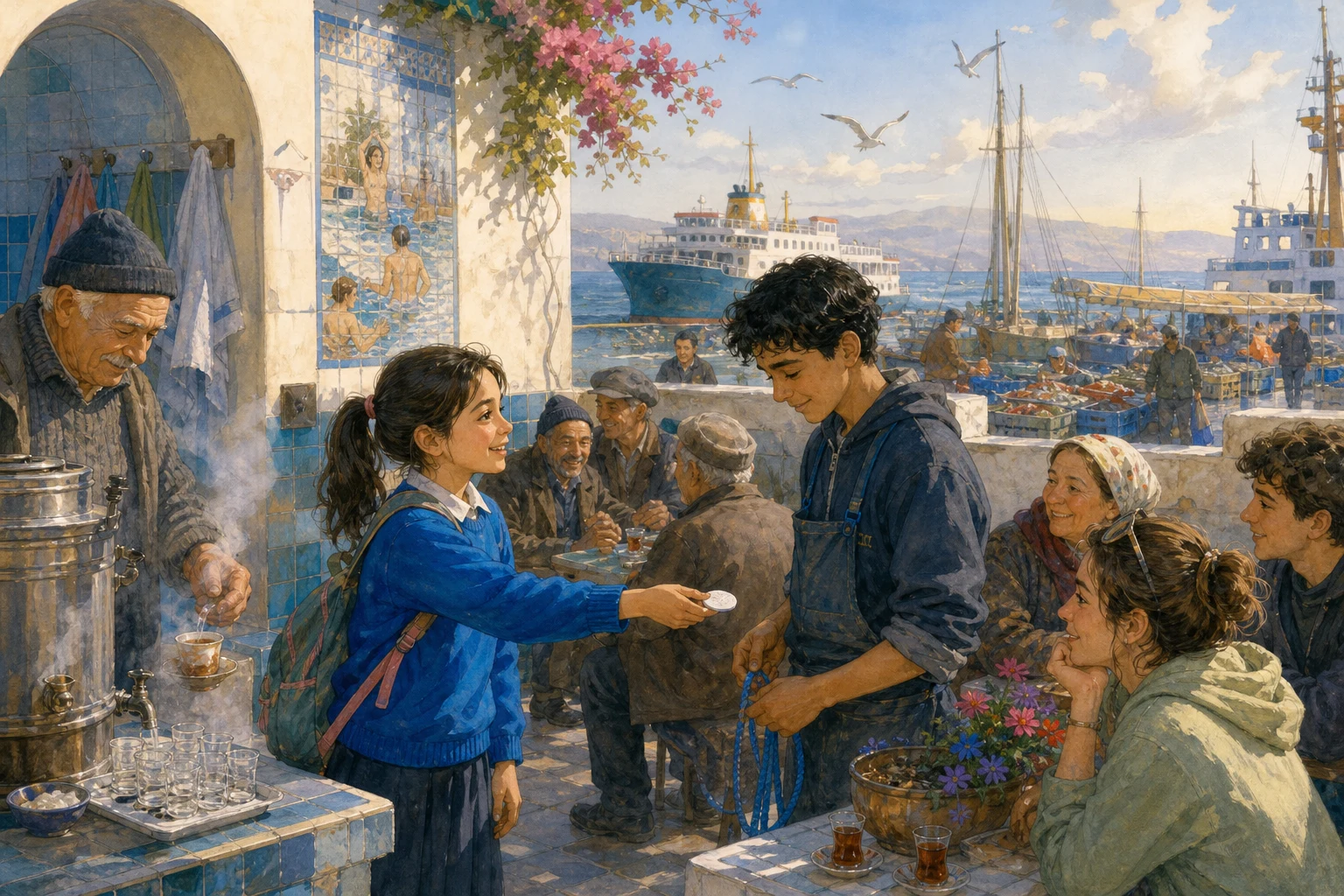
The Hour Nobody Owned
Mina’s first community hour is lively, crowded, and almost entirely controlled by the loudest guests. A ferry cleaner, a brass token, and one patient adjustment teach her what true hospitality requires.
Read Story →
Tabs in the Wind
Kito’s first calendar was neat, accurate, and almost useless. The second one belonged to everyone.
Read Story →