
Quote Stories
Kito Leaves Room for the Rain
A young composer learns that listening is part of making music.

Kito’s recorder held the city in neat little boxes.
Rain on a metal roof: twelve seconds. A bicycle bell: bright, then fading. The wooden pestle in Auntie Sada’s courtyard: three steady knocks, a pause, three more.
He labeled each file, trimmed every unwanted breath, and kept his school composition folded inside a plastic sleeve. The contest judges, he believed, would reward precision.
Then, two evenings before the hillside celebration, the hired performers canceled.
“Couldn’t we use your sounds?” asked Kito’s teacher.
Kito looked toward the school courtyard, where strings of paper lanterns stirred above the tiled paving. “Recorded sounds are not performers.”
“Perhaps not. But people are.”
Kito carried his recorder down the hill. At the produce stalls, he asked a vendor named Mama Lela to call out her prices in rhythm. She agreed, provided he carried two baskets first. At a workshop near the bus lane, a bicycle bell maker offered six bells, each with a different note. An elderly neighbor, Bibi Nuru, promised three lullabies—if Kito stopped calling them “old songs.” Children followed him because he had said the procession could include footsteps.
He arranged everything on a page: bells first, then calls, then footsteps, then Bibi Nuru’s singing. He marked where each person should begin and where each should stop.
The first rehearsal lasted less than a minute.
A bell rang early. Mama Lela’s call collided with a child’s skipping rhythm. Someone laughed. Three children ran in the wrong direction. Bibi Nuru finished her lullaby while Kito was still waving for silence.
“It is noise,” Kito said.
“No,” said the bell maker. “It is many things arriving at once.”
Kito nearly packed his recorder away. Instead, he sat on the courtyard steps and listened again—not to the whole sound, but to the spaces inside it.
The bell maker’s pause made room for the vendor’s voice. The children’s feet gathered themselves after every laugh. Bibi Nuru’s lullaby began softly, leaving a pocket of quiet before its final line.
Kito changed the arrangement. He removed half the instructions. He asked the children to listen for the bells, the bell maker to follow Mama Lela’s longest call, and everyone to leave the last pause untouched.
On the night of the celebration, the procession climbed from the market to the school courtyard. Bells shimmered beneath the lanterns. Voices rose and answered one another. Feet slapped the stones, stumbled, recovered, and found a shared pace. Bibi Nuru’s lullaby drifted through the middle of it all, gentle enough that even the passing dogs seemed to slow.
The ending was not clean. A baby cried. One bell rang after the final pause. Kito’s own recorder slipped from his hand and clicked against the paving.
Nobody moved to correct the sound.
They let it belong.
Later, Kito played the recording for his teacher. The composition contained mistakes he would once have erased. It also contained Mama Lela’s laugh, the children’s uneven steps, the bells’ bright disagreement, and a silence wide enough for every part to be heard.
“What will you call it?” his teacher asked.
Kito listened to the courtyard settling around them.
“Still Growing,” he said. “And I think I need to leave the last pause.”
Related Quote Stories
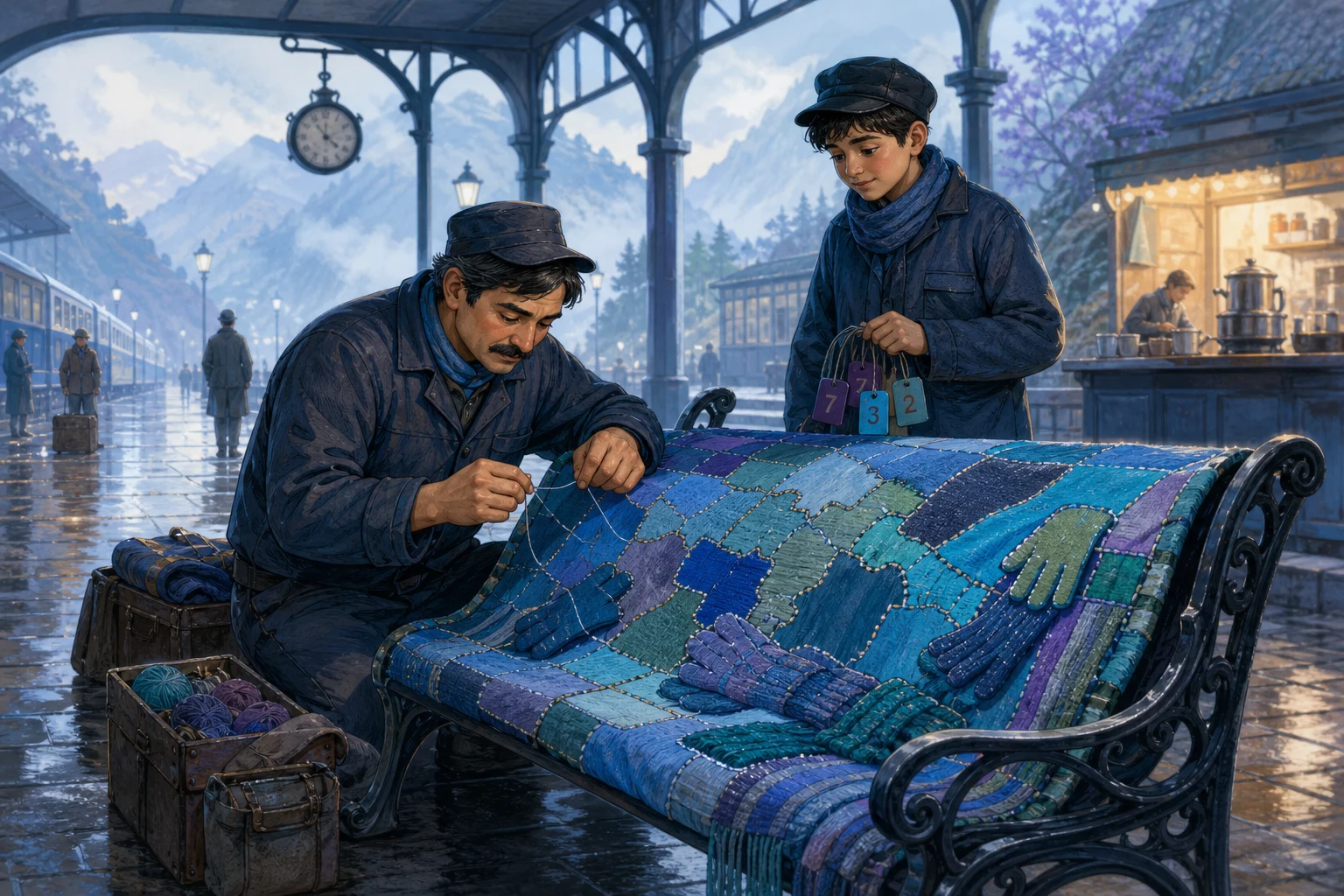
A Map Woven in Blue
Ilya’s patchwork bench covers began with lost gloves and ended as a map everyone could help complete.
Read Story →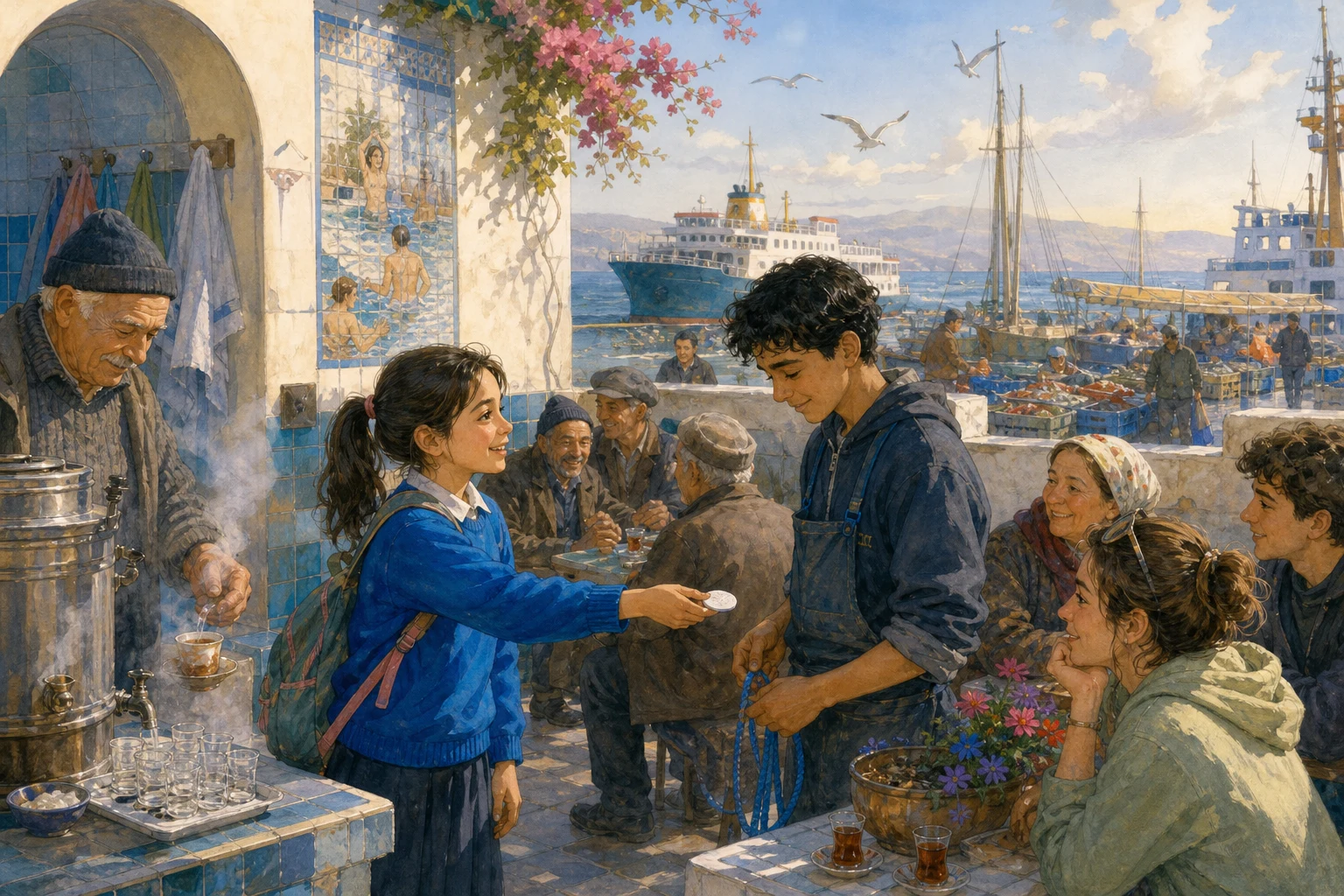
The Hour Nobody Owned
Mina’s first community hour is lively, crowded, and almost entirely controlled by the loudest guests. A ferry cleaner, a brass token, and one patient adjustment teach her what true hospitality requires.
Read Story →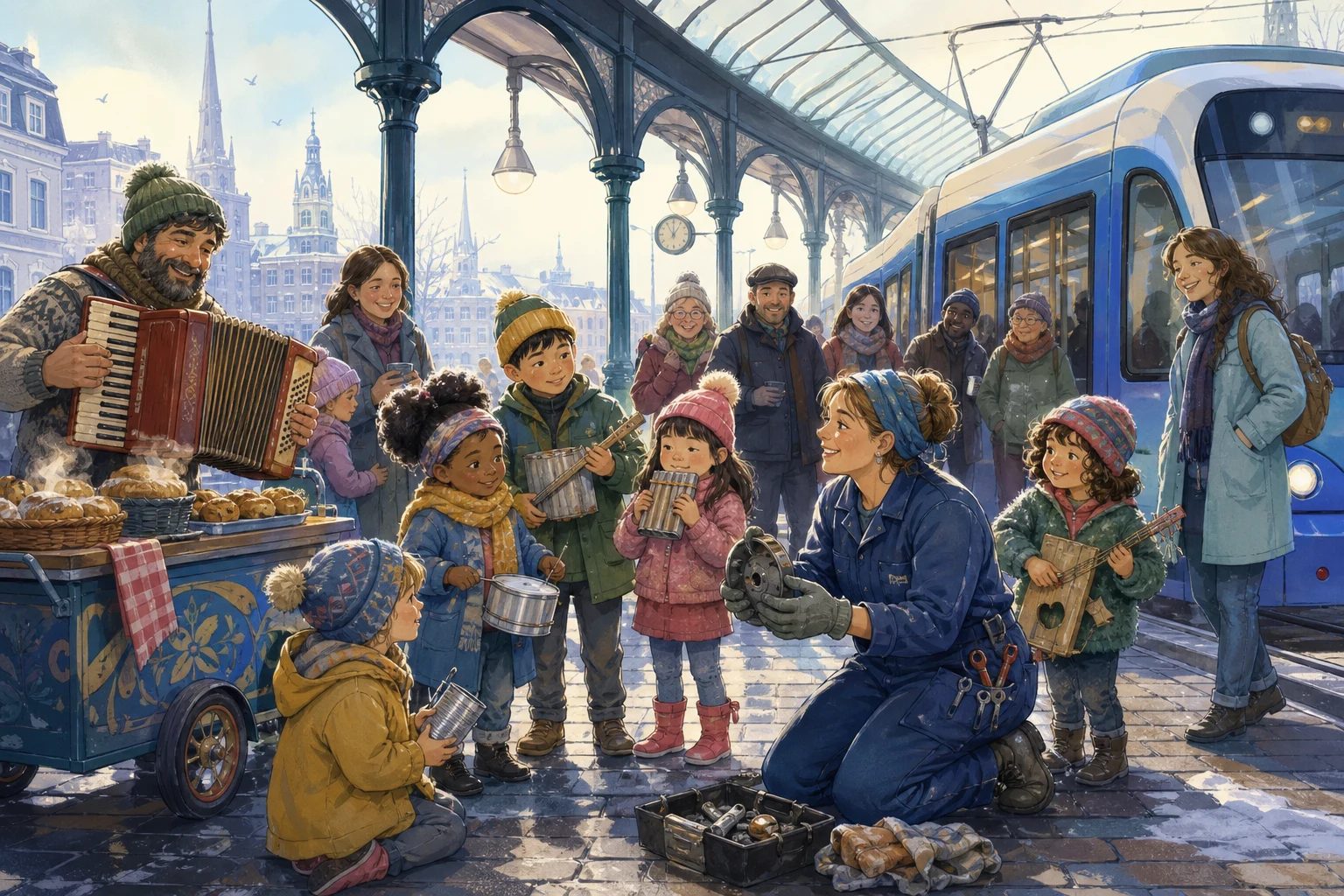
A Tune for Every Pocket
Celia could repair almost anything with a spring, a screwdriver, and enough patience. Her niece’s silence in music class required something different.
Read Story →