
Quote Stories
Lanterns Along the Turning Water
A race becomes something more than a race when every crew learns to navigate together.

Mara’s stopwatch slipped into the bilge just as Ivo missed another stroke.
Water slapped against the rowing shell. Behind them, the other crews pulled steadily toward the eastern buoy, their oars flashing like silver hinges. Ivo’s rhythm broke again. He grimaced, shifted his ankle, and tried to catch up.
“Leave him at the dock next week,” Captain Sella called from the neighboring boat. “The festival race is for racers.”
Mara kept her eyes on the stopwatch disappearing beneath the dark water. She wanted to answer. Instead, she watched Ivo search the horizon.
“There,” he said. “The red roof behind the sail loft. We’re drifting north.”
He was right. Mara corrected their angle, irritated that he had noticed what she had not.
That evening, she spread a harbor map across the club’s workbench. The annual race had always been a straight dash: fastest boat, loudest applause, cleanest victory. But the harbor was more than a line between two buoys. It held bell towers, floating workshops, narrow channels, and landmarks that vanished when the tide turned.
Mara drew a new course. At three points, crews would solve a navigation clue. At another, they would exchange rowers with a partner boat. The finish would require every crew member to light a small lantern and bring it safely across the water.
She did not tell anyone she had designed it for Ivo. That seemed kinder than admitting it.
At the next club meeting, Captain Sella studied the map with folded arms.
“No puzzles,” she said. “No exchanges. No lanterns. Speed is honest.”
“Speed only measures speed,” Mara replied.
“It measures who trained hardest.”
Mara looked at Ivo, who was quietly tracing the harbor’s old channels with one finger. “So does knowing when not to pull harder.”
Sella rejected the plan. Mara left the meeting furious, then returned the next morning with a box of brass signal lamps borrowed from the club storeroom. Ivo helped her test the clues. He remembered which warehouse walls had been repainted, where gulls gathered before a weather change, and which bell sounded late because its rope was frayed.
By race day, a pale fog had rolled over the harbor.
The starting horn boomed. The fastest crews surged forward, vanishing almost at once. Mara’s boat followed the first lantern line, with Ivo rowing carefully beside her. At the first marker, the clue asked which bell had rung twice before dawn.
“The west tower,” Ivo said.
Mara trusted him. They turned.
Ahead, a boat emerged from the fog at the wrong angle. Another spun near the floating workshops. The straight course had become a maze.
At the exchange point, Mara handed her oar to a younger rower from the club’s novice crew. Ivo moved to the stern, where he could read the landmarks. Sella’s boat appeared beside them, silent and uncertain.
“Follow our lantern,” Mara called.
Sella hesitated only a moment before falling in behind.
The crews traveled slowly now. They listened for bells, watched the water’s color, and called directions across the fog. Ivo’s injured ankle forced him to row lightly, but his voice traveled farthest.
“Left of the blue roof. Keep the current on your right.”
When the fog thinned, the harbor looked transformed. Boats emerged from every direction, each carrying a small flame. Some crews had arrived late. One had lost an oar and been helped by another. None had finished alone.
At the quay, Sella stepped from her boat and handed Mara the club’s brass starting horn.
“You were right,” she said. “Speed is honest. It just isn’t the whole truth.”
Mara glanced at Ivo. He was sitting on the dock, rubbing his ankle and grinning at the lanterns reflected in the water.
“Next year,” he said, “we should add a tide chart.”
Mara picked up a pencil. This time, she did not design the course in secret. She passed the map around, making room for every hand that reached toward it.
Related Quote Stories

Supper That Travels
Yara’s first meal kits were efficient, tidy, and nearly useless. To make supper portable, she had to learn that every pair of hands carried its own knowledge.
Read Story →
What Remains on the Workbench
Mara had labeled the storeroom shelves by date, material, and probable owner—everything except possibility.
Read Story →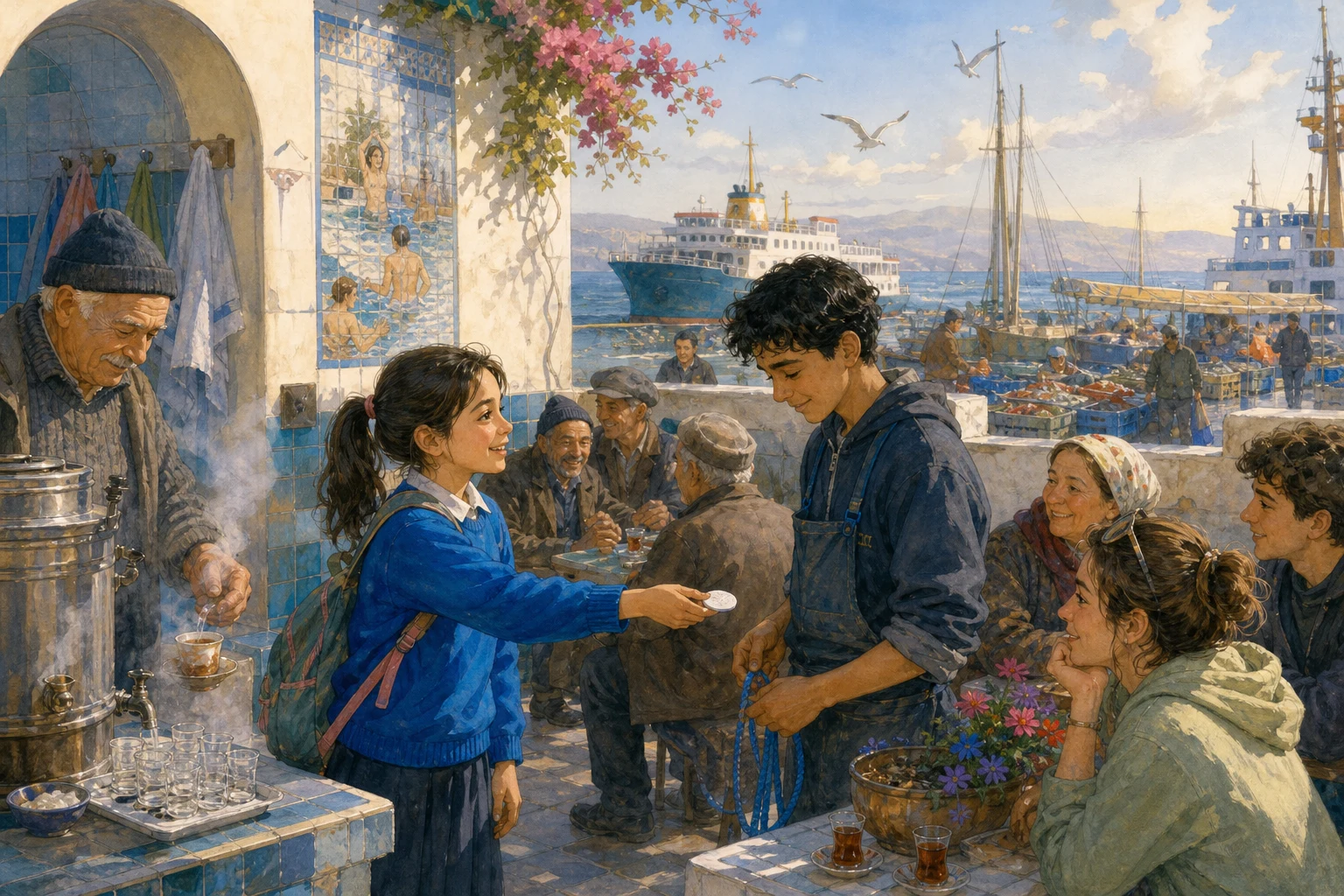
The Hour Nobody Owned
Mina’s first community hour is lively, crowded, and almost entirely controlled by the loudest guests. A ferry cleaner, a brass token, and one patient adjustment teach her what true hospitality requires.
Read Story →