
Quote Stories
Light Through the Learning
A young glazier discovers that craft can open more than windows.
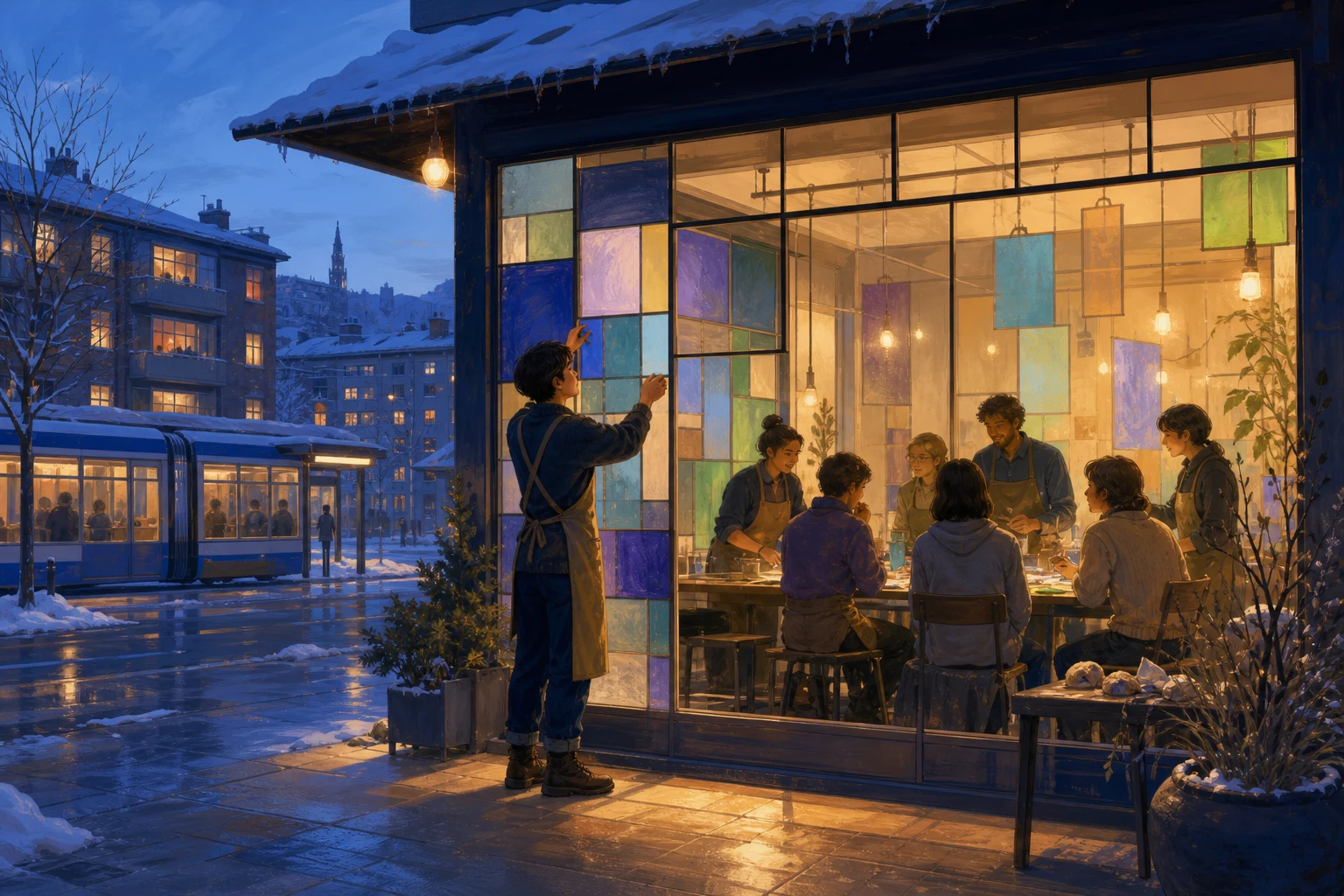
Tavi knew how to make glass disappear.
He could cut a pane so cleanly that the edge seemed to end in air. He could coax a stubborn frame back into square, replace cracked putty, and tell by touch whether a window had been chilled too quickly. At nineteen, he was still an apprentice, but people already brought him their difficult repairs.
The row of empty shops beside the tram stop was his largest assignment yet. For weeks, he climbed ladders beneath the pale winter sky, replacing cloudy panes and tightening loose frames. By the end, every window was sound. The shops still looked asleep.
Then the night class lost its room.
“We can’t keep canceling,” said Nera, the mathematics tutor, standing outside the newly repaired corner shop. “Half the learners come straight from work. This is the only place they can reach.”
Tavi glanced through the bare windows. Inside, the room held six folding tables, a kettle, and the cold blue reflection of the streetlights. Anyone passing could see everything: every nervous answer, every erased calculation, every hand raised too slowly.
“It needs a curtain,” Nera said.
“It needs light,” Tavi replied. “A curtain will make it darker.”
He spent the afternoon studying the problem as if it were a faulty frame. A thick covering would give privacy but swallow the street’s glow. Clear glass would keep the room bright but make the class feel like a display.
That evening, he asked the learners to draw what they would want a passerby to see.
“Nothing,” said Olek, who had stopped attending after the first lesson.
“A question,” said Nera.
“A map,” offered a bakery assistant.
“My hands,” said an older man who was learning to read music.
Tavi cut thin removable panels from translucent scraps left over from other jobs. The group painted them with lines, shapes, tools, recipes, alphabets, and unfinished questions. He fitted the panels into the windows in a loose pattern.
At dusk, the room glowed amber. From inside, the streetlights softened into halos. From outside, people could see movement and color without staring directly at anyone.
For three evenings, it worked beautifully.
On the fourth, a tram conductor knocked on the door. “The panels are lovely,” she said, “but the corner is nearly black. Drivers can’t see the crossing.”
Tavi felt heat rise in his face. He had solved the room and forgotten the street.
He removed the panels, expecting disappointment. Instead, Nera carried them to the tables.
“Good,” she said. “Now we know what they need to do.”
They tested dotted patterns, narrow stripes, and overlapping leaves cut from frosted film. The bakery assistant noticed that small gaps could guide light downward. Olek suggested leaving a clear band at eye level so people approaching the door could recognize one another. The music student designed a pattern of short and long marks that became the class schedule.
By the following week, the windows were bright without being exposed. The crossing was visible. The room felt private enough for mistakes and open enough for invitations.
A tailor began teaching repairs on Tuesdays. A retired electrician offered a Saturday workshop. Someone placed a small shelf beneath the timetable for books and spare notebooks. The empty shops no longer waited in silence after closing; they changed purpose with the evening.
Tavi kept repairing glass, but he began asking a different question before choosing a pane: What should pass through here?
One snowy night, Nera found him outside, adjusting a panel while the class gathered inside.
“You made the windows,” she said. “They made the room.”
Tavi looked at the warm shapes moving across the pavement. “We made it together.”
He tightened the last fitting. Light slipped through the patterned glass and laid a path toward the door.
Related Quote Stories
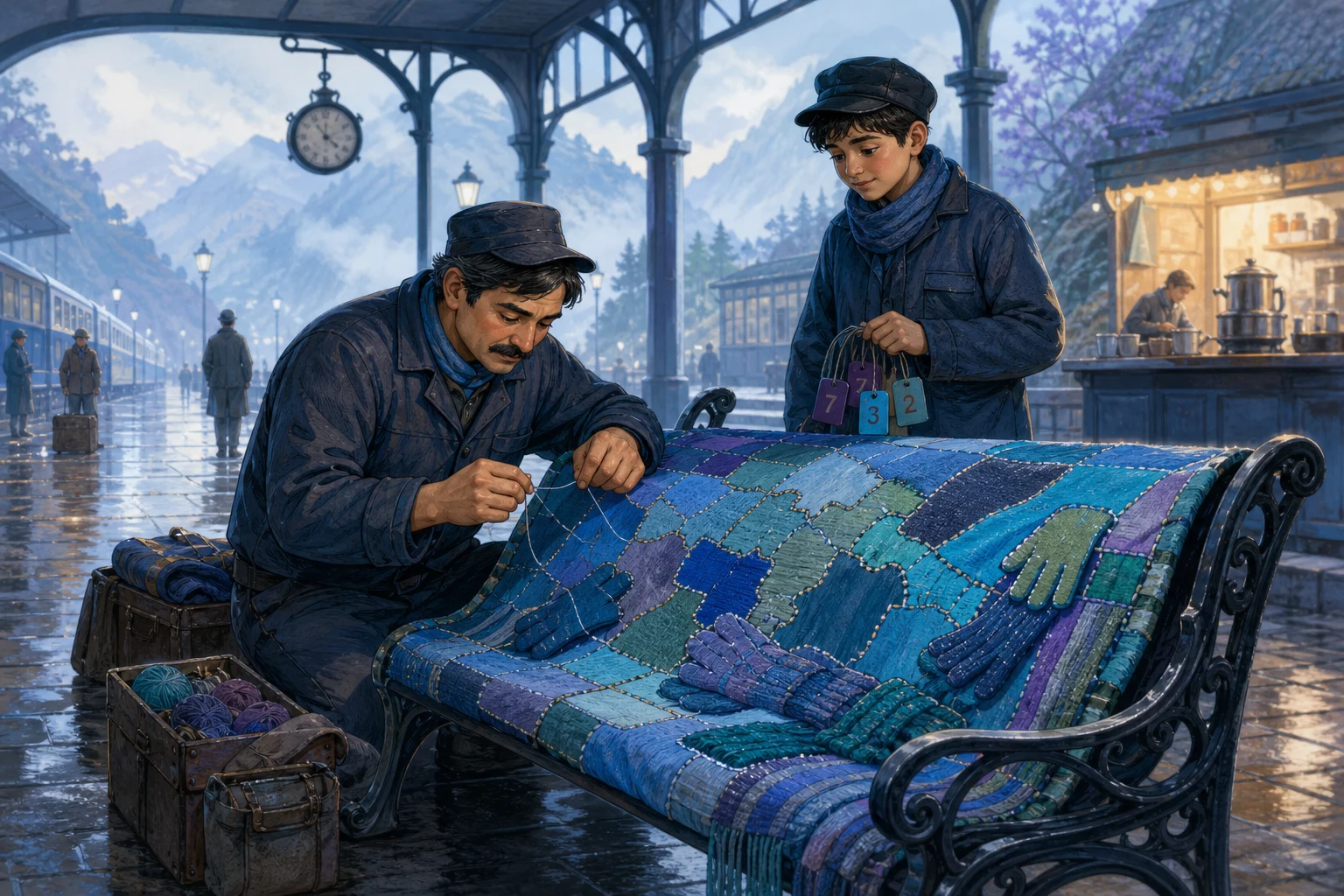
A Map Woven in Blue
Ilya’s patchwork bench covers began with lost gloves and ended as a map everyone could help complete.
Read Story →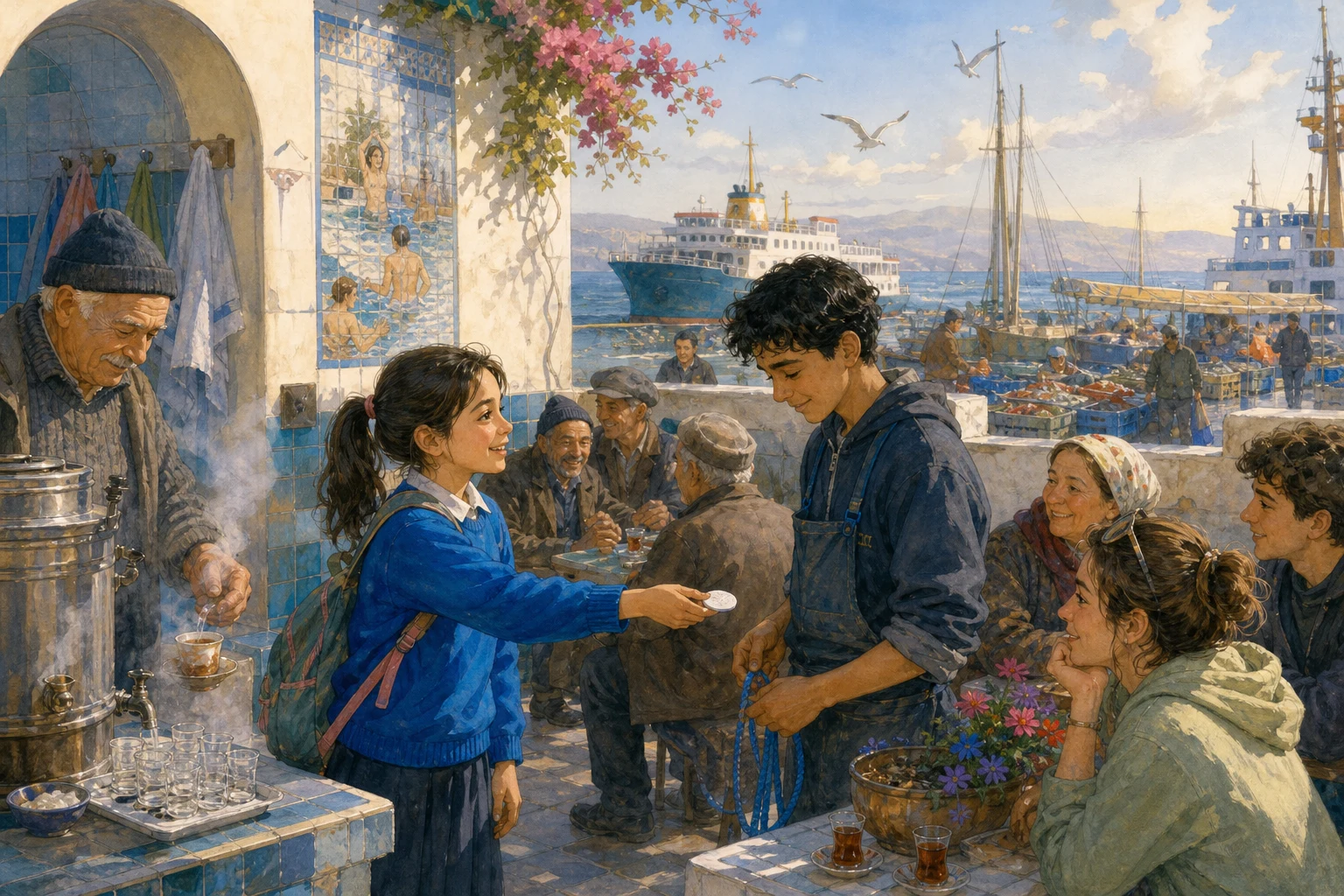
The Hour Nobody Owned
Mina’s first community hour is lively, crowded, and almost entirely controlled by the loudest guests. A ferry cleaner, a brass token, and one patient adjustment teach her what true hospitality requires.
Read Story →
Tabs in the Wind
Kito’s first calendar was neat, accurate, and almost useless. The second one belonged to everyone.
Read Story →