
Quote Stories
Maps That Make Room
Miro’s quiet game finds a larger way to belong.

Miro began with a key and a bucket of blue paint.
The recreation room had been closed since the roof began leaking, which was long enough ago for three generations of children to grow up believing the room had always smelled of dust, damp wood, and old footballs. Miro remembered otherwise. He had once polished its floor until it shone beneath paper lanterns.
Now, at seventy, he worked mornings beneath the covered stairway behind the school. He replaced a swollen door hinge, scrubbed mold from the window frames, and argued cheerfully with a stubborn radiator.
“Come on,” he told it. “You have one job.”
The radiator answered with a metallic cough.
On rainy afternoons, children waited in the school corridors for buses climbing toward the hillside neighborhoods. Some sat alone with their coats on. Others gathered in pairs, speaking the language they shared at home. They rarely crossed those invisible boundaries.
Miro noticed. He noticed nearly everything in a building he had cared for since before the youngest teachers were born.
So he made a game.
He cut a square board from an old cupboard door and painted paths between the bus depot, the bell tower, the covered market, the footbridge, and the lookout above town. Players moved wooden pieces by drawing cards. A card might show a bridge, a steep stairway, or a bowl of soup. Another asked them to point, draw, act, or choose between two pictures.
There were no long instructions. No difficult words. Miro called it Crossing Places.
When the recreation room reopened, he set the game on a table and invited the children inside.
At first, the game worked exactly as he imagined. Children laughed when someone had to imitate a mountain goat. They drew crooked maps and traded buttons for playing pieces. Even the quietest players began leaning over the board.
Then Sana stopped moving her piece.
“What is it?” Miro asked.
She pointed to the painted market and shook her head. Her older brother translated: their family never went there. Their meaningful place was the greenhouse behind the bus depot, where their grandmother grew bitter greens in winter.
A boy named Petar added that the game needed the old quarry path. His family used it to reach a spring. Laleh drew a bakery that opened before sunrise. Tomás sketched the courtyard where his cousins played cards.
Miro looked at his board. It contained the places he had spent decades preserving. It did not contain enough of the town as it was now.
“I made the map too small,” he said.
The children understood his gesture, even if they did not understand every word. He placed a stack of blank cards on the table.
“Your turn,” he said.
For three rainy afternoons, the game became a workshop. The children added landmarks, family routes, favorite smells, shortcut stairs, and places that existed only in memory. They invented a rule that let a player replace one card with a drawing. They removed a rule that rewarded knowing the town’s oldest buildings. They added one that asked every player to contribute something before anyone could reach the finish.
Miro objected to that rule.
“If everyone contributes,” he said, “the game may never end.”
“Good,” said Sana’s brother.
Miro tried to look stern. The children saw him smile.
The finished board had grown beyond the cupboard door. It included folded paper extensions secured with clothespins. The painted roads no longer met neatly. A blue pencil river crossed a yellow stairway. Someone had drawn a house with three chimneys and labeled it only with a sun.
Miro loved the original board. He loved its straight lines and careful landmarks. But when the children played the enlarged version, nobody asked who had designed it. They argued about routes, invented gestures, and made room at the table without being told.
One afternoon, a bus from the far valley arrived early. A new girl stood in the doorway, holding a red mitten and looking at the crowded room.
Miro picked up the mitten-shaped playing piece someone had carved that morning. He placed it at the edge of the board, where a blank card waited.
“Choose a place,” he said, pointing first to the board, then to her.
The girl studied the game. Slowly, she took a pencil and drew a narrow path winding toward a cluster of stars.
No one knew what it meant yet.
That was fine. They made space for it.
By spring, Crossing Places was played every week. Miro still repaired the radiator, though it had never forgiven him. He also kept a tin of blank cards beside the board.
When people asked which version was the real one, he tapped the empty cards.
“This part,” he said, “is always real.”
Related Quote Stories

When Desks Learned to Bend
Nera’s first folding desk collapsed under the weight of a single book. Hiding the failure would be easy; inviting others to inspect it would be harder—and far more useful.
Read Story →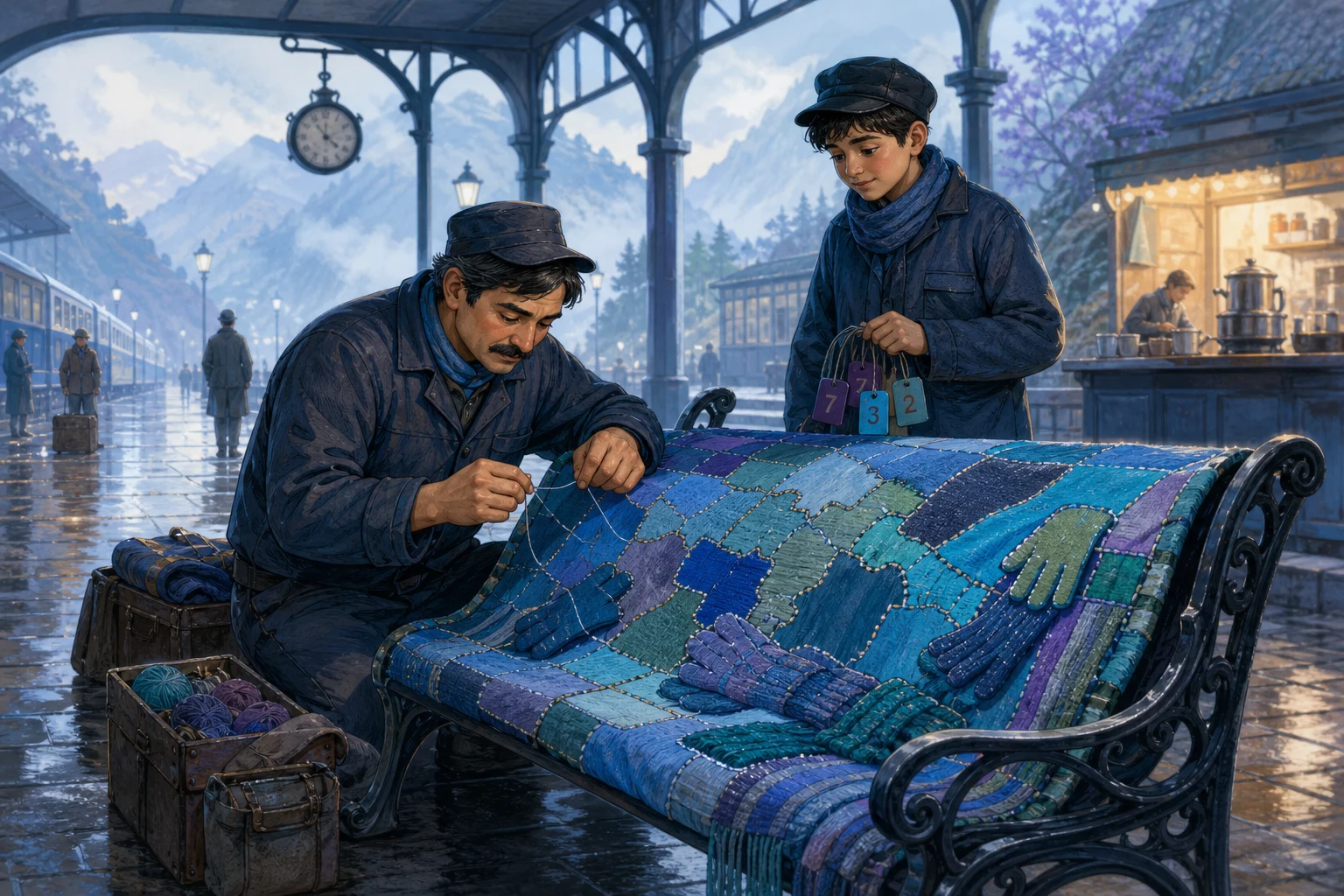
A Map Woven in Blue
Ilya’s patchwork bench covers began with lost gloves and ended as a map everyone could help complete.
Read Story →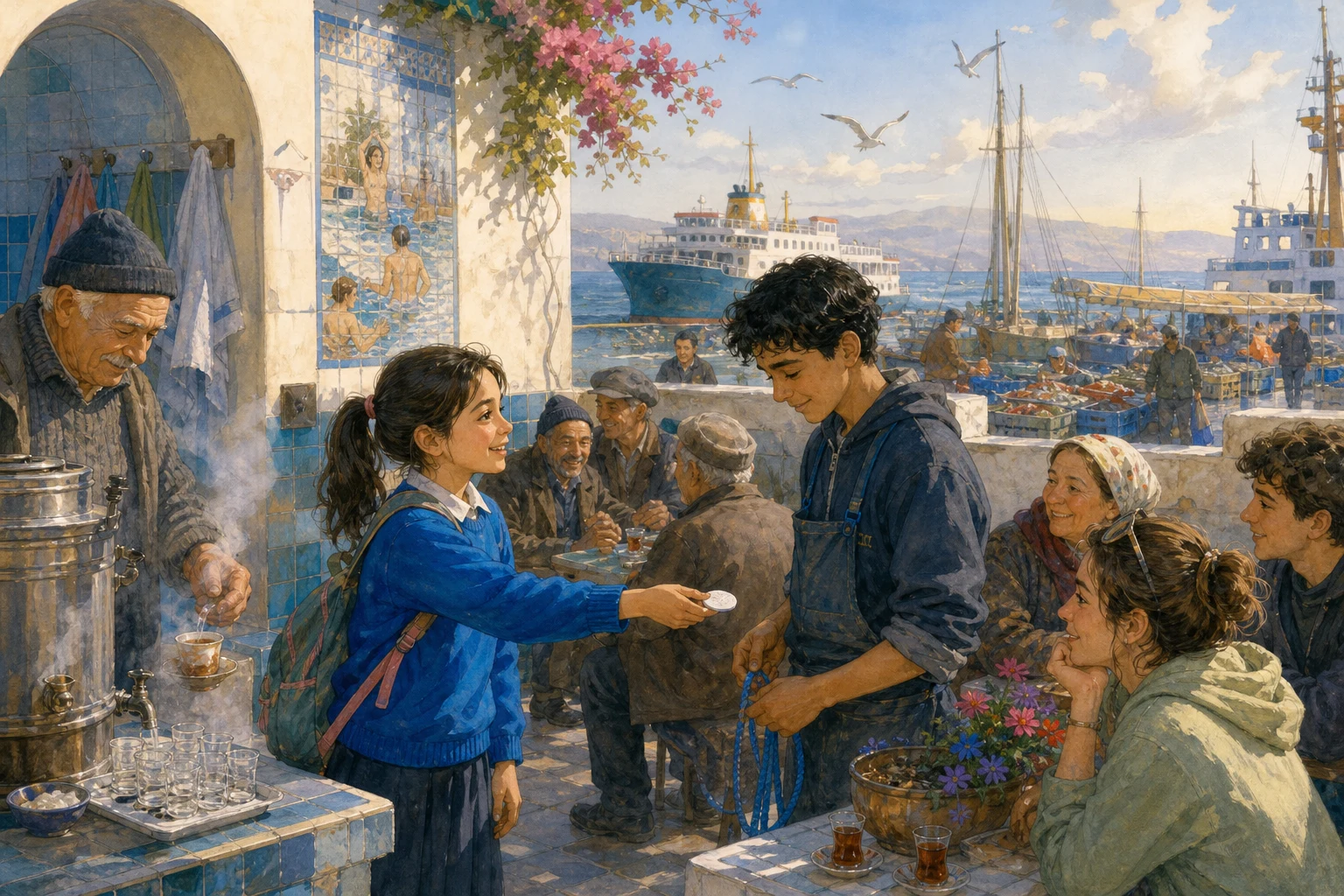
The Hour Nobody Owned
Mina’s first community hour is lively, crowded, and almost entirely controlled by the loudest guests. A ferry cleaner, a brass token, and one patient adjustment teach her what true hospitality requires.
Read Story →