
Quote Stories
Niko Learns to Leave Room
A bus apprentice discovers that confidence grows best when it is shared, not supplied.

Niko’s first solution was a stack of anonymous notes.
He slipped them beneath the driver’s clipboard before dawn, each one containing a useful phrase for the steep routes: “The blue awning means the next left.” “Say ‘hold tight’ before the bridge.” “At the upper market, wait for the baskets.”
The new driver found every note and grew more uneasy.
Niko noticed it from his usual seat behind the driver’s cabin. Mara would glance at the paper, glance at the passengers, and grip the wheel as though the route itself might judge her. A few riders had laughed at her accent during her first week. Since then, she spoke only when necessary.
“You’re making her nervous,” said Ivo, the mechanic, after catching Niko with another note.
“I’m helping.”
“You’re helping from hiding.”
Niko disliked the accuracy of this.
The next morning, instead of writing instructions, he stood beside the bus door with a small chalkboard. At the top he wrote: TODAY’S LOCAL PHRASE. Underneath, he left a blank line.
“Who knows something Mara can use?” he asked.
An old flower seller offered a greeting used in the hillside gardens. A student contributed the phrase for “mind the ice.” A baker taught them how to say “fresh bread,” then insisted everyone practice until the bus sounded like a badly rehearsed choir.
Mara watched, uncertain. Niko handed her the chalk.
“Only if you want,” he said. “You choose tomorrow’s phrase.”
She wrote one word from the neighborhood where she had grown up. Niko repeated it incorrectly. Mara corrected him. The passengers tried. By the third attempt, everyone was laughing—including Mara.
The phrases became a small ritual. Some were practical; some were beautiful; one was so long that the bus reached the next stop before anyone finished saying it. Mara began adding phrases from her own language, and passengers started collecting them in the margins of their tickets.
Then winter closed the high pass.
Mara’s bus was rerouted through unfamiliar streets, past a shuttered quarry and a row of homes hidden behind snow-laden pines. At the detour sign, the passengers turned toward her.
For one breath, she said nothing.
Niko felt the old urge to reach for a note. Instead, he stayed seated.
Mara straightened. She explained the new route slowly, naming each turn and checking that the elderly riders could hear. At the narrowest bend, she paused, looked into the mirror, and announced the next stop in three languages.
No one laughed. Someone repeated the stop name so a newcomer could remember it.
By the time they reached the upper market, Mara was smiling. A child near the back asked whether she knew a phrase for “we made it.”
Mara considered this, then taught them one.
Niko wrote it on the chalkboard after the shift. Beneath it, Mara added another line: “Leave room for someone else to speak.”
The red scarf tied to her seatback fluttered whenever the doors opened. Soon passengers began bringing greetings from every neighborhood, and Mara kept them in a bright notebook beside the timetable.
Niko still carried a pencil. He simply used it less often to solve things for people—and more often to make space for what they already knew.
Related Quote Stories
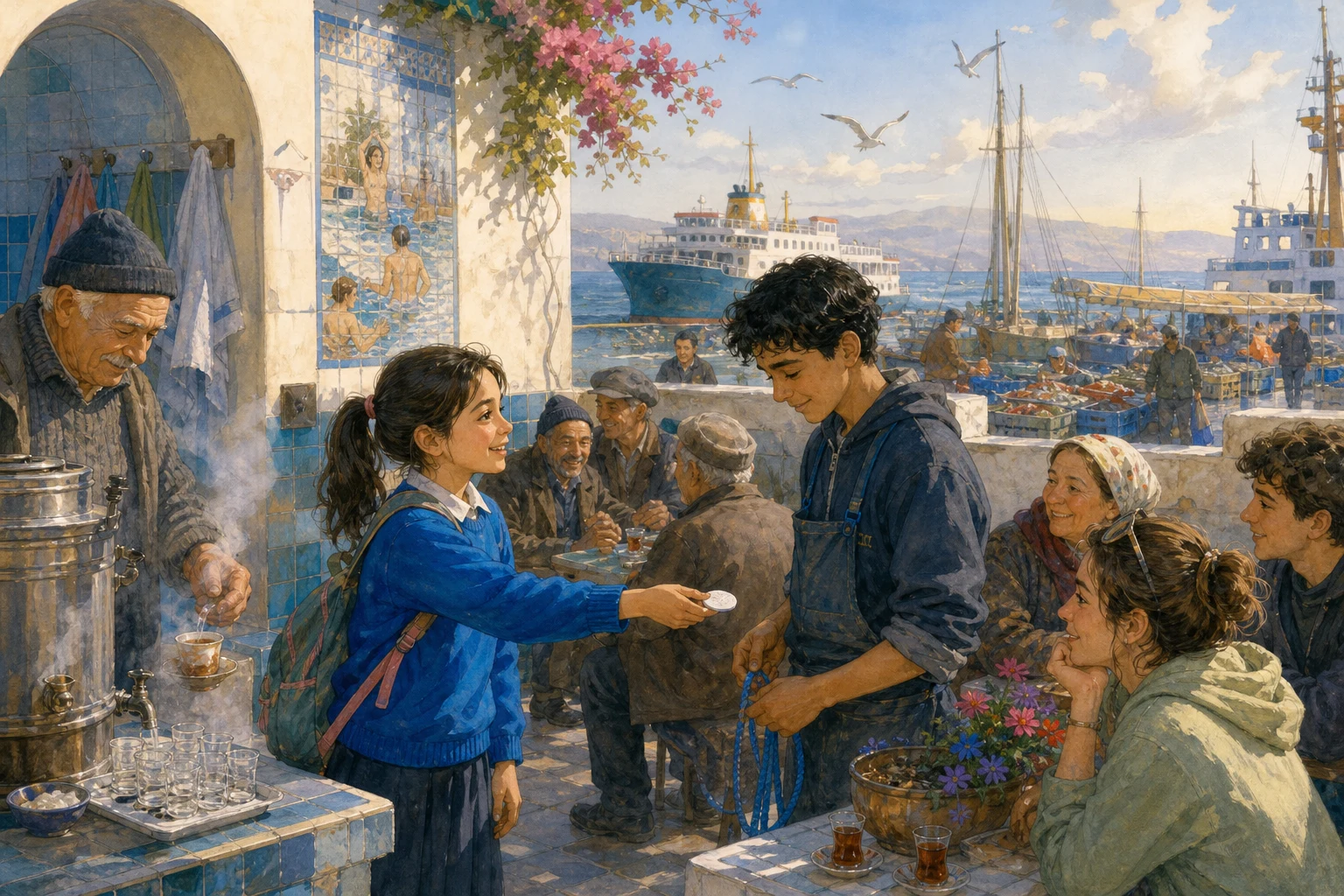
The Hour Nobody Owned
Mina’s first community hour is lively, crowded, and almost entirely controlled by the loudest guests. A ferry cleaner, a brass token, and one patient adjustment teach her what true hospitality requires.
Read Story →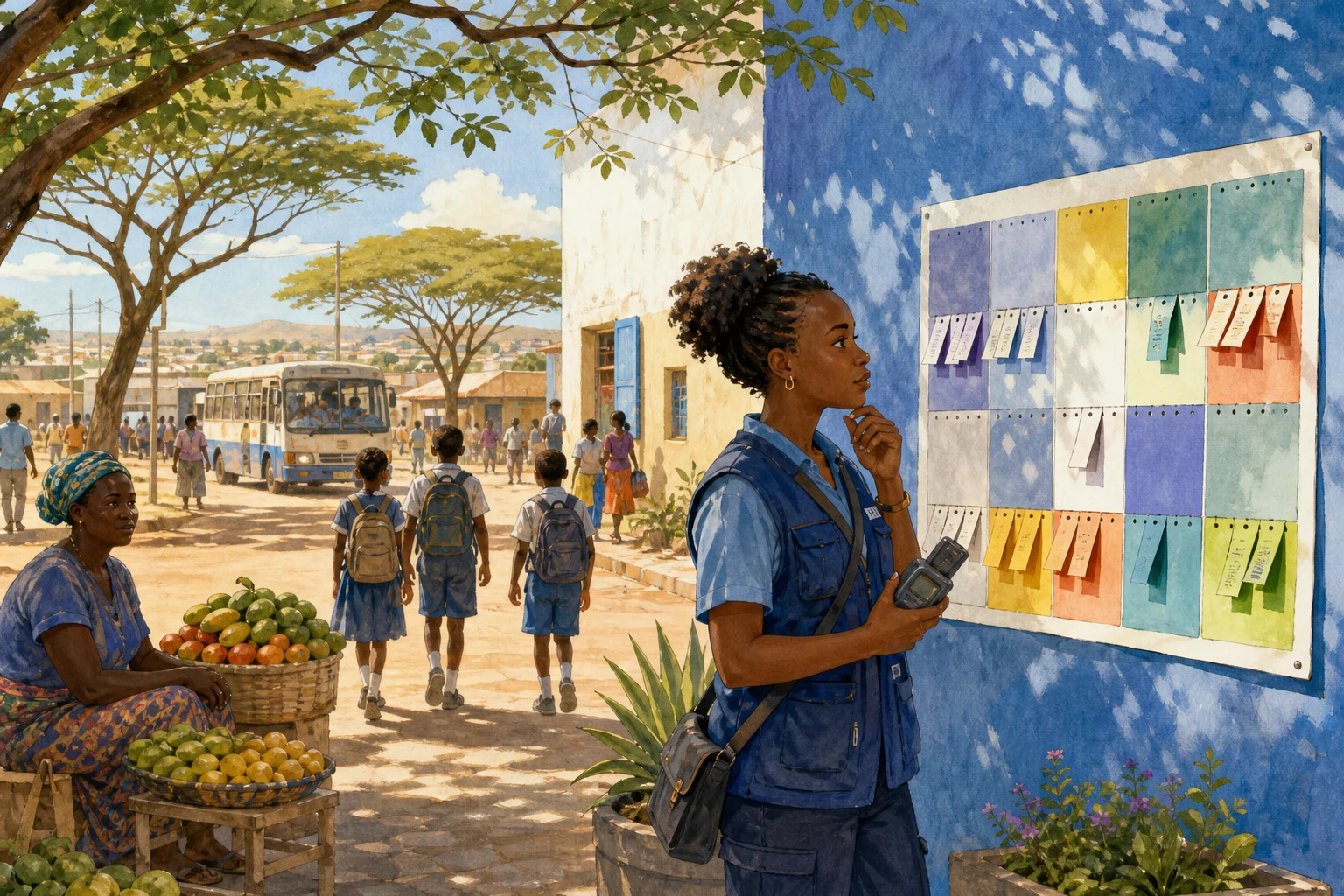
Tabs in the Wind
Kito’s first calendar was neat, accurate, and almost useless. The second one belonged to everyone.
Read Story →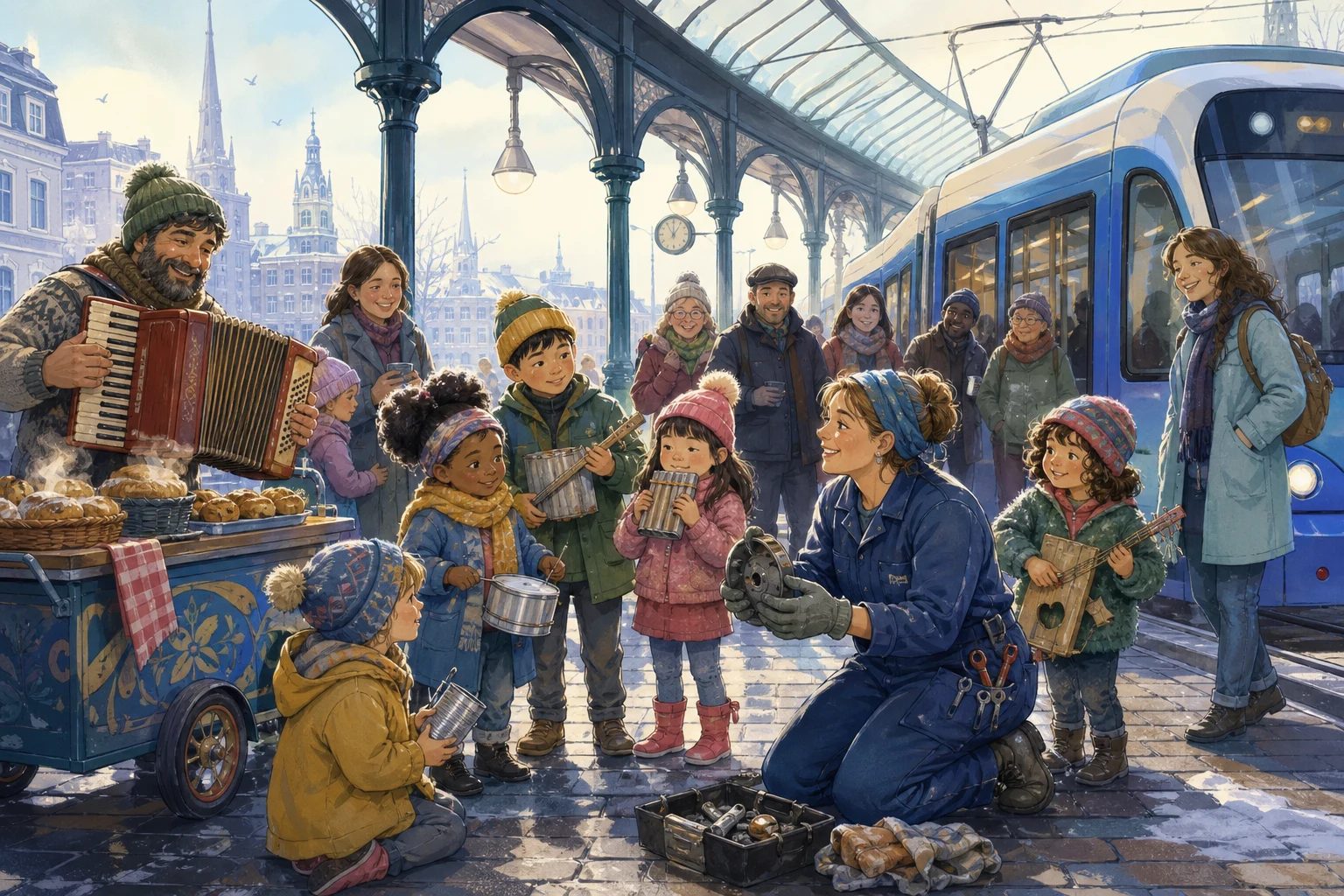
A Tune for Every Pocket
Celia could repair almost anything with a spring, a screwdriver, and enough patience. Her niece’s silence in music class required something different.
Read Story →