
Quote Stories
Questions on the Road
Nadi learns that discovery begins before the answer.

“It won’t turn,” Nadi said.
She gave the paper wheel another breath. It trembled, spun once, and collapsed into the dust.
Across the schoolyard, the children watched in silence. The afternoon wind lifted the edge of the canvas awning, rattled the jars on Uncle Samir’s science cart, and carried one of Nadi’s carefully drawn diagrams into a thornbush.
“Maybe the wind is broken,” a boy called.
A few children laughed. Most had already begun drifting toward the gate.
Nadi gathered the paper, the sticks, and the pride she had been carrying since morning. She had memorized three explanations for wind power. She had arranged the lesson in perfect order. First, demonstrate. Second, explain. Third, let everyone repeat the result.
Only the result had refused to appear.
Uncle Samir folded the canvas while she packed the cart. He did not say the lesson had failed. He only handed her the wheel.
“What would you ask it?” he said.
Nadi looked at him. “Ask what?”
“The wheel. The wind. The children.”
She wanted to answer that machines did not ask questions. Instead, she noticed the boy who had joked about the broken wind. He was crouched beside the school wall, watching a line of ants carry a yellow crumb twice their size.
The next morning, Nadi tied a wooden board to the side of the cart. At the top, she painted three words in broad blue letters:
WHAT DO YOU WONDER?
Before leaving, she placed a handful of blank cards beneath them.
At the next school, the children did not gather around the demonstration table. They gathered around the board.
“Why does bread puff up?” asked one girl.
“Why does my shadow disappear under the tree?” asked another.
“Why do seeds have wings if they cannot fly?”
Nadi wrote every question down. Some she knew. Some she only partly knew. One made her pause: Why does a puddle vanish even when nobody drinks it?
Uncle Samir smiled when he saw her hesitation.
“That one belongs to all of us,” he said.
They began with the puddle. The children marked its edge with bits of charcoal and returned at different times of day. They compared the wet stones with the dry ones. They argued about sunlight, heat, and thirsty soil. By evening, their chart was crowded with arrows and crossed-out guesses.
The answer was not finished, but the investigation was alive.
Soon the cart changed. The jars still held magnets, lenses, seeds, and colored powders, but beside them were string, spoons, paper scraps, bread dough, and anything else the children thought might help. Each school added a question before the cart rolled onward.
Nadi learned to leave space after asking one. She learned that a wrong guess could be useful if someone felt safe enough to offer it. She learned that the quietest child might notice the detail everyone else had missed.
At the orchard school, a group tested how far different seeds traveled by tying them to scraps of cloth. At the hillside school, children tracked shadows with stones. In a kitchen behind the market, a baker let them compare dough covered with cloth, dough left open, and dough tucked near the warm oven.
Weeks later, Nadi returned to the first school with a new wind lesson. She brought no finished model. Instead, she brought paper, reeds, thread, and a question: How can we make something that turns when the air moves?
The children built wheels that were round, square, crooked, and enormous. One spun backward. Another flew apart. The boy who had joked about the broken wind made a wheel with four uneven sails. It turned faster than any of the others.
Nadi crouched beside him. “What did you change?”
He pointed to the sails. “I didn’t make them match.”
She looked at the spinning wheel and then at the children leaning close around it. The answer was not hers to display. It was theirs to find, test, and improve.
That evening, Nadi added one more card to the board. She wrote slowly, leaving room beneath the words.
WHAT SHOULD WE TRY NEXT?
The wind moved through the schoolyard. This time, nobody blamed it for being broken.
Related Quote Stories

When Desks Learned to Bend
Nera’s first folding desk collapsed under the weight of a single book. Hiding the failure would be easy; inviting others to inspect it would be harder—and far more useful.
Read Story →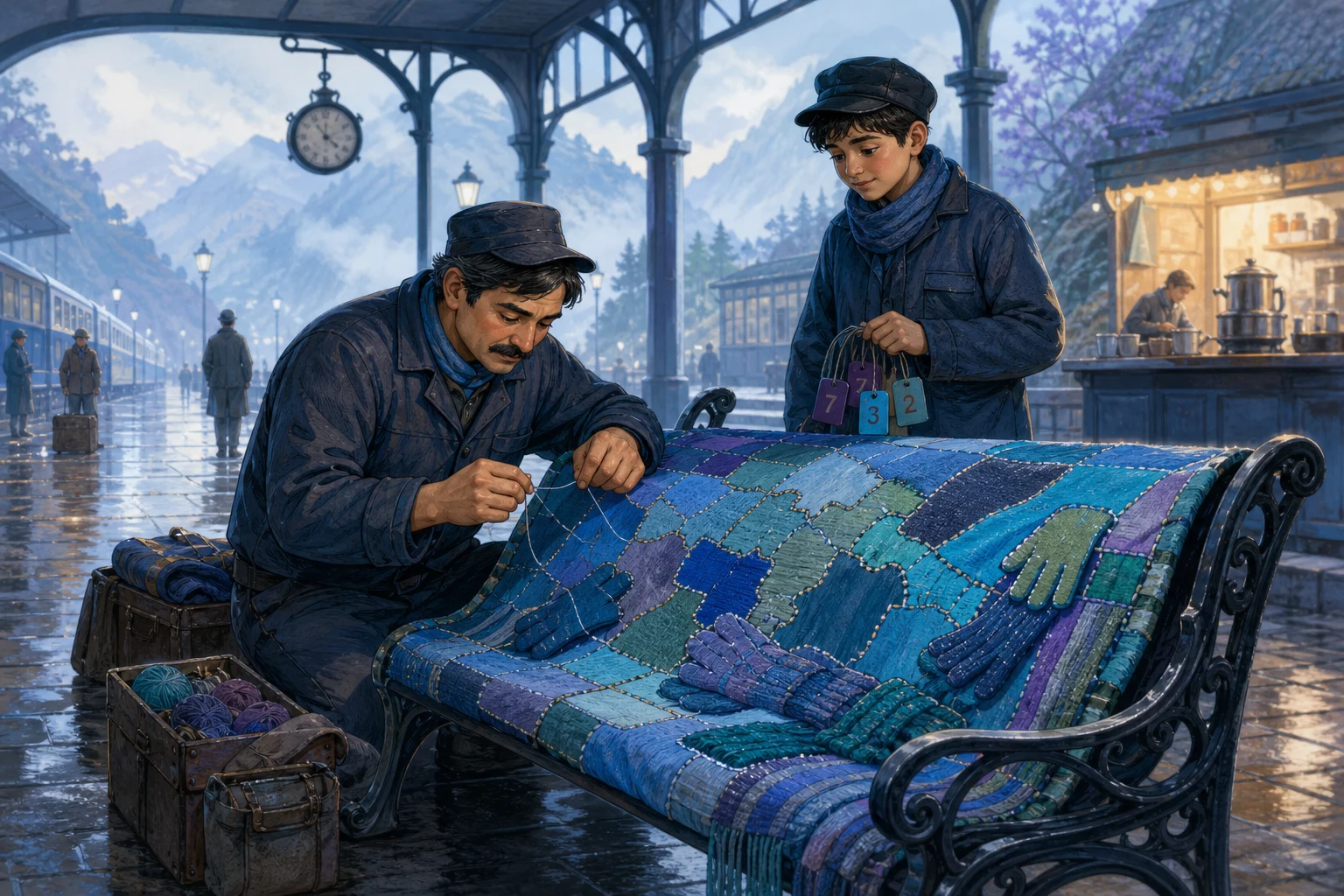
A Map Woven in Blue
Ilya’s patchwork bench covers began with lost gloves and ended as a map everyone could help complete.
Read Story →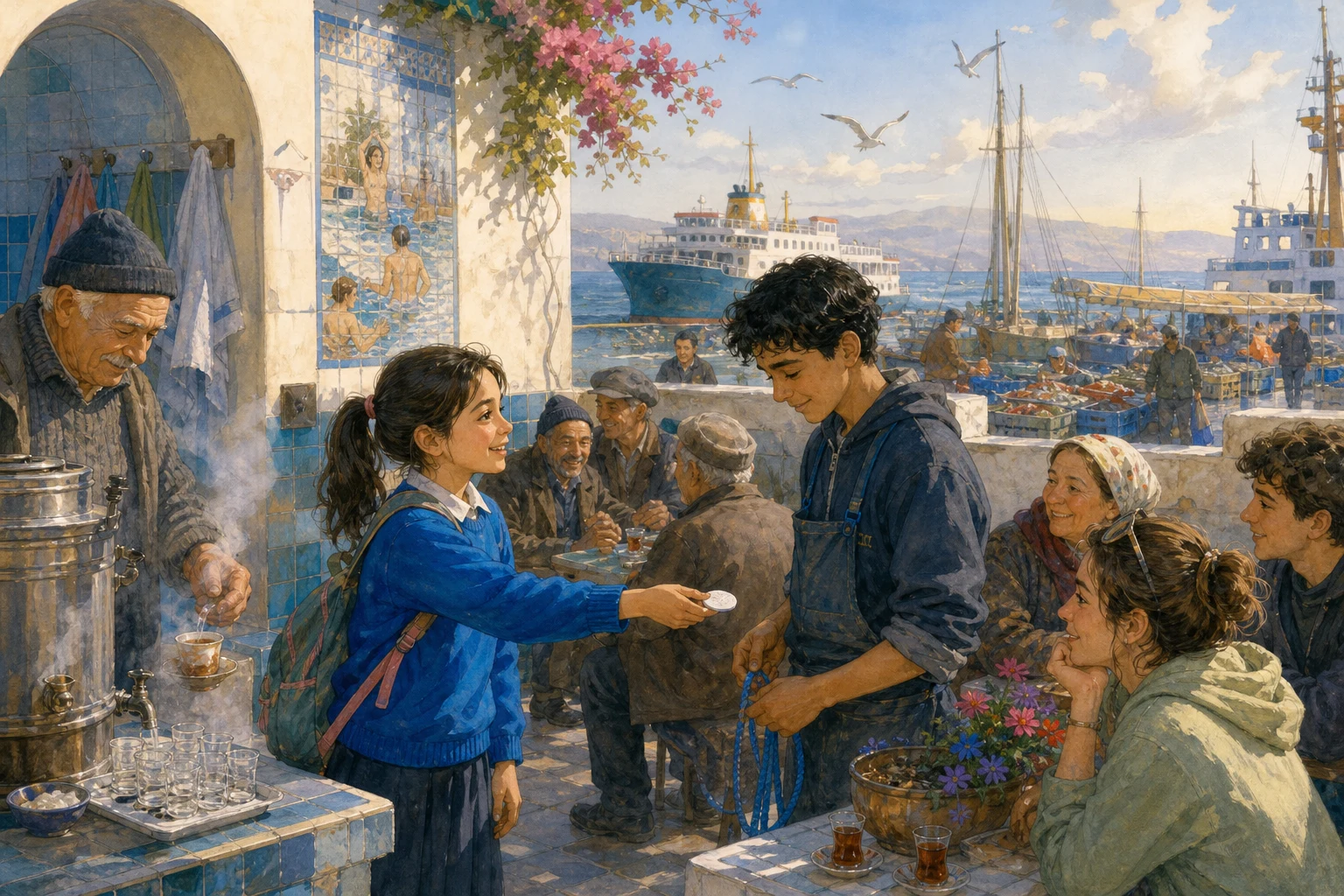
The Hour Nobody Owned
Mina’s first community hour is lively, crowded, and almost entirely controlled by the loudest guests. A ferry cleaner, a brass token, and one patient adjustment teach her what true hospitality requires.
Read Story →