
Quote Stories
Seats for the Unfinished
A projectionist learns what makes a gathering worth returning to.

Oren arranged the chairs by height, aligned the lanterns along the courtyard wall, and placed a brass bell beside the microphone. Twelve seats. No more.
“A story night needs standards,” he told himself.
He had spent thirty years running the projector at the Almar Cinema, where a crooked frame or a loose reel could ruin an entire evening. So when people began arriving with poems, recipes, jokes, and memories, Oren listened for faults.
A grocer forgot his ending. A teenager repeated the same sentence three times. Someone read a recipe for lentil bread as if it were a love letter.
Oren made notes.
Then Sami, a bus driver with careful hands and a voice barely louder than the courtyard fountain, stood before the screen.
“I wrote this about the first passenger of every morning,” Sami said.
He paused too long after the first paragraph.
“Keep moving,” Oren called from the side. “The pause has gone stale.”
Sami looked at the floor. He finished quickly, thanked everyone, and left before the tea was served.
The following Thursday, only four people came.
Oren sat beneath the blank screen, listening to the projector fan tick as it cooled. On the table lay his notes: too long, too soft, unclear, unfinished.
He read the last word again.
Unfinished.
It was not an insult. It was a description. Yet he had delivered it like a verdict.
The next afternoon, Oren found Sami’s bus at the depot. He carried the brass bell in his pocket, though he did not know why.
“I was wrong about the pause,” Oren said.
Sami looked surprised. “It was a very long pause.”
“Yes. But it belonged to you.”
Sami considered this. “I have another paragraph.”
“Bring it.”
The next story night, Oren removed six chairs and placed them in a circle. On a card beside the microphone he wrote a new rule: Before advice, name one thing you received from the story.
The first speaker was a girl who had brought three jokes and forgotten the punch lines. A tea seller praised her courage. The grocer said her descriptions made him hungry. No one mentioned the missing endings.
Sami read his piece again. This time, when he reached the pause, Oren let the silence settle. Somewhere beyond the wall, a vendor closed a metal shutter. A palm leaf scraped softly against stone.
Then Sami continued.
Week by week, the circle changed. People returned with revised paragraphs, stranger recipes, better jokes, and sometimes the same story told in a new voice. Oren still noticed crooked sentences. He simply learned to wait before reaching for his pencil.
One evening, the old cinema’s projector jammed during a test screening. Oren opened the casing, found the torn belt, and stared at the dark screen.
The storytelling night was due to begin in twenty minutes.
He expected disappointment. Instead, the audience carried the chairs into the courtyard, lit the lanterns, and formed their circle without him.
Sami saved a seat beside the microphone.
Oren arrived with grease on his fingers and no bell. He sat down.
“Do I introduce the first speaker?” he asked.
“No,” said the grocer. “You’re reading tonight.”
Oren almost objected. He had no prepared story. Then he looked at the empty chair beside Sami and began describing the first film he had ever projected—the one whose final reel had arrived late, leaving an entire audience watching a blank screen while they waited.
He told them how embarrassed he had been. How someone in the back row started humming. How, eventually, everyone joined in.
When he finished, nobody corrected the timing.
Sami leaned forward. “I received the part where you stayed.”
Oren looked around the circle. For once, he did not count the flaws or the chairs. He listened to the quiet applause gathering between one person’s words and the next.
Related Quote Stories

A Route Through the Arcade
When a road closure cuts off the market district, a quick-thinking dispatcher must learn to trust the trainee he once dismissed.
Read Story →
When the Courtyard Kept Time
Sela repaired the courtyard clock to serve the night workers who passed beneath it. Then its cheerful chimes woke the people sleeping nearby. To make time welcoming to everyone, she had to stop measuring it alone.
Read Story →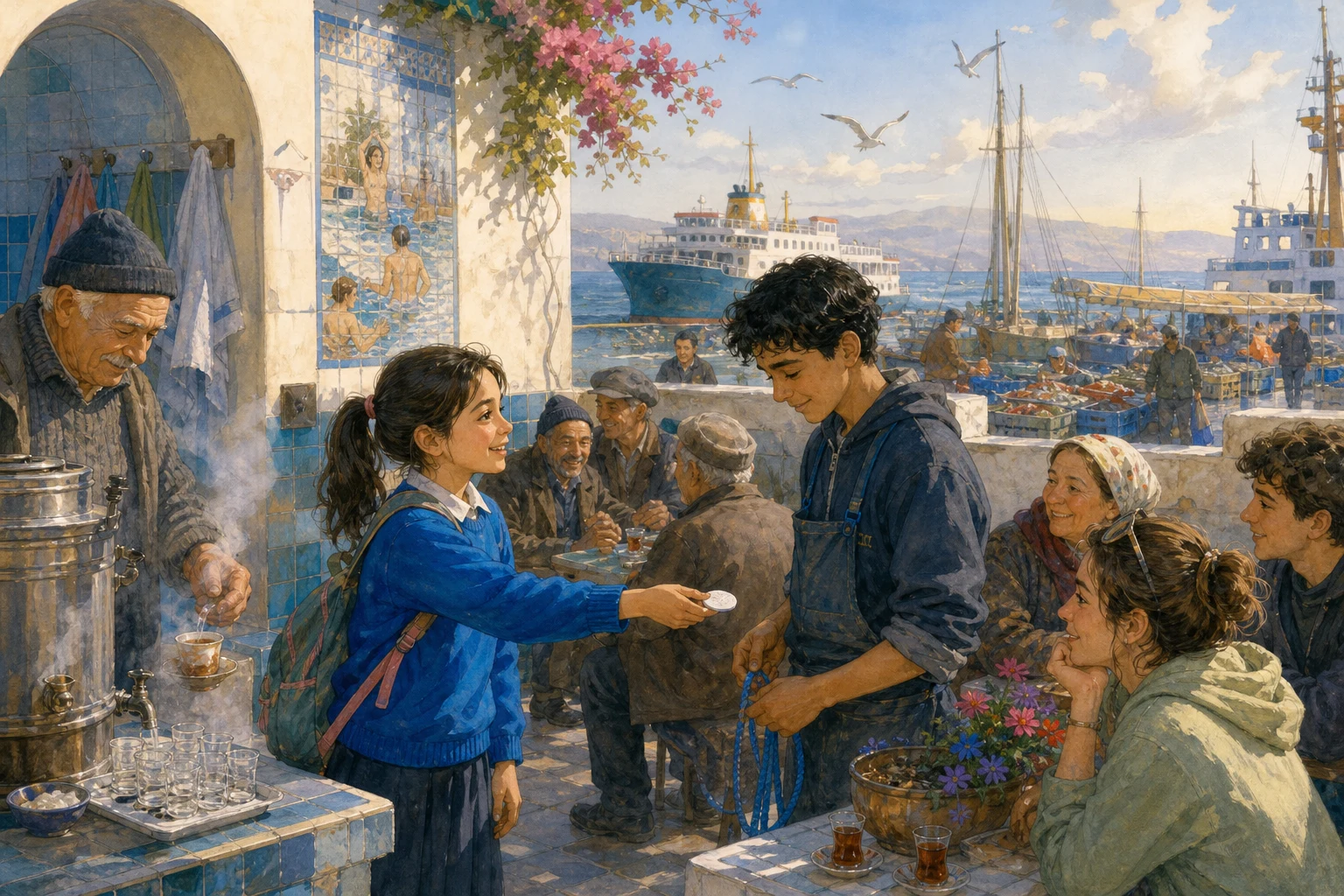
The Hour Nobody Owned
Mina’s first community hour is lively, crowded, and almost entirely controlled by the loudest guests. A ferry cleaner, a brass token, and one patient adjustment teach her what true hospitality requires.
Read Story →