
Quote Stories
Sixty-Three Ways to Keep Time
A clockmaker learns that careful work can open a door to the future.
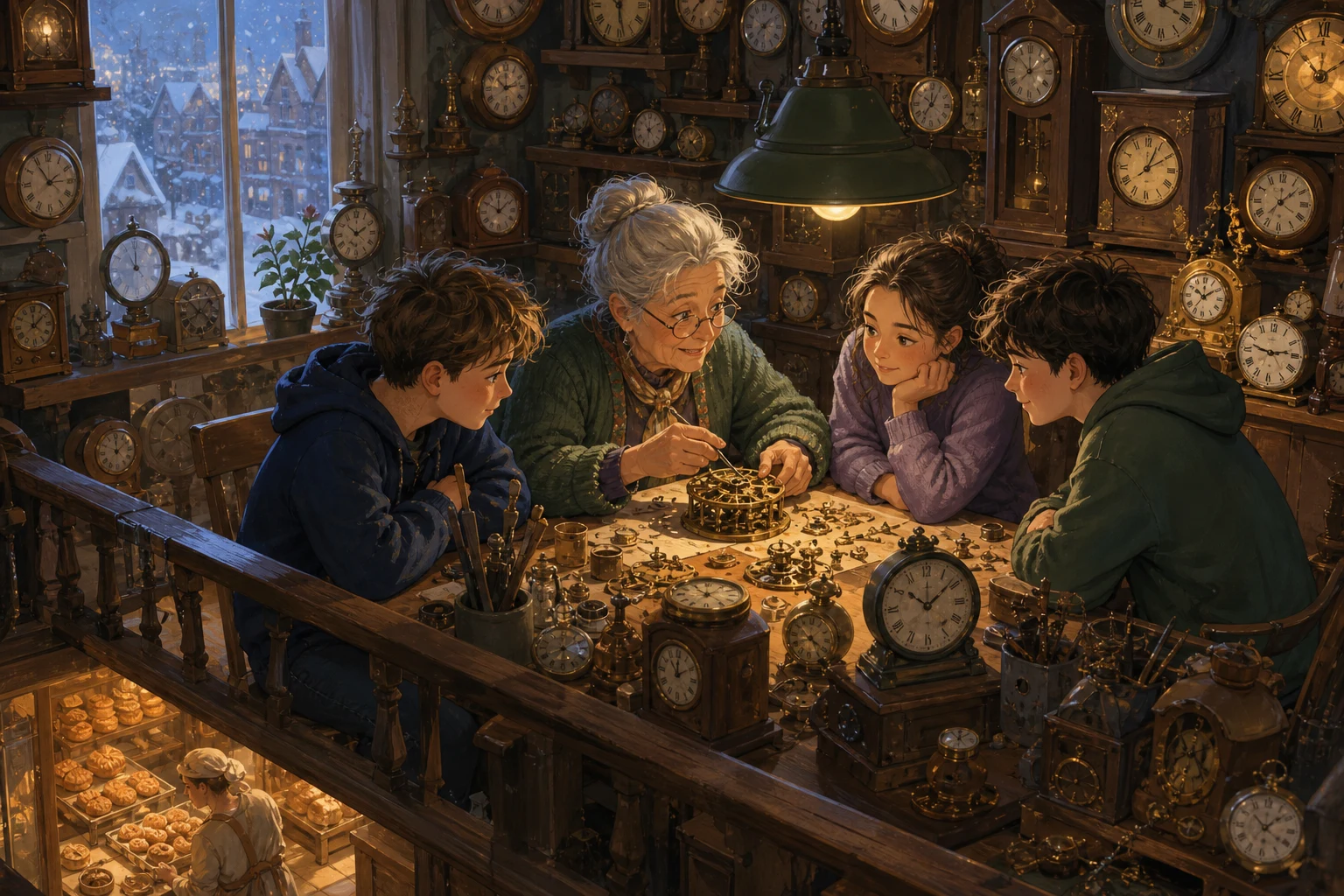
At 6:12 on Monday morning, every clock in Bela Varga’s shop stopped.
She knew why. The electricity had failed during the night, and the clocks, obedient little creatures, had all surrendered to the same dark silence. Still, Bela stood beneath the painted sign reading VARGA REPAIRS and felt as if the room had been holding its breath.
Her sister Mira had loved a dramatic gesture.
“Even time needs a pause,” Mira used to say.
Bela had never agreed. Time, in her experience, was less poetic. It was a spring under tension, a gear worn thin, a customer waiting in the cold. It was something to measure and mend.
She unlocked the drawer beneath the counter and removed the sale labels she had prepared. The shop would close at the end of the month. The tools, cabinets, magnifying lamps, and unfinished mechanisms could be sold. The building above the bakery was too cramped, the roof leaked in two places, and Bela’s hands ached after long days of fine work.
Then Mayor Orsa arrived carrying a wooden crate.
“Mira promised us sixty-three clocks,” she said.
“Then Mira promised more than she could deliver.”
“She promised the anniversary exhibition would show how people keep time.” Orsa lifted the lid. Inside lay alarm clocks, kitchen timers, pocket watches, and a brass clock shaped like a swan. “The exhibition opens in three weeks.”
Bela looked at the crate. “They are all broken.”
“That is why we brought them to you.”
“I am closing.”
“I know.” Orsa smiled. “You can close after the clocks are ticking.”
Bela should have refused. Instead, she reached for the swan.
The first clock belonged to a baker who had used it to time the rise of rye loaves. The second had sat beside a hospital bed. A blue alarm clock had awakened three generations of one family, though its bell now produced only a faint metallic cough. Each owner brought a memory along with the mechanism, and Bela found herself listening longer than she intended.
By Thursday, twenty-one clocks covered every surface in the shop.
By Saturday, there were forty.
Bela worked before sunrise and after the bakery closed. She cleaned pivots, replaced teeth, straightened hands, and muttered at screws too small to deserve names. But the exhibition date advanced steadily, while the pile of silent clocks seemed to grow.
On Sunday afternoon, three teenagers appeared at the door.
“We heard you need help,” said the tallest girl.
“I need experienced help.”
“We can become experienced.”
Bela examined them. The girl wore a green scarf and carried a notebook. Beside her stood a boy with grease on his cheek and a smaller girl holding a thermos.
“Names?” Bela asked.
“Rina, Olek, and Sava.”
“Have you repaired clocks before?”
“No,” said Olek. “But I repaired my uncle’s radio.”
“It caught fire,” said Rina.
“Only briefly.”
Bela almost smiled. “You may sort screws.”
For two hours, the teenagers sorted screws. They labeled trays, swept filings, and learned that a clock could be ruined by tightening one part that looked perfectly harmless. When Sava placed a balance wheel upside down, the mechanism rattled like a beetle in a tin cup.
Bela reached for it, then stopped.
“What do you see?” she asked.
Sava bent close. “The wheel is touching the bridge.”
“Good. What else?”
“The sound changes when I press here.”
“Then don’t press there. Find out why.”
The next morning, Bela found a timetable taped to the shop window. It listed every clock, its owner, the repair needed, and the day it would be ready.
“You made this?” Bela asked.
Rina nodded. “People keep asking when they can collect them.”
“And the prices?”
“We made those too,” said Olek. “Simple cleaning costs less than a replacement spring. If someone cannot pay, they can help with sorting or painting the display boards.”
Bela stared at the neat columns. Mira had kept prices in her head, which meant they changed depending on the weather, the customer, and whether she had eaten lunch.
“This is not how a repair shop works,” Bela said.
“No,” Rina replied. “It is how this one could work.”
The sentence stayed with Bela.
A week before the exhibition, the brass swan refused to run. Its mainspring was sound, its escapement clean, but the hands stopped whenever they reached twelve. Bela dismantled it twice. On the third attempt, she discovered a tiny bend in the minute hand.
She straightened it carefully. The swan began to tick.
Then the shop lights flickered, and the clocks began chiming at once.
The noise was magnificent and unbearable. Bells rang from shelves, counters, windowsills, and the floor. The teenagers covered their ears. Bela laughed so suddenly that she had to sit down.
“What?” Olek shouted.
“Nothing is wrong!” Bela called back. “They are only disagreeing.”
At the exhibition, the clocks stood on long tables beneath paper snowflakes. Each had a card explaining its repair and the memory attached to it. Visitors moved from the baker’s timer to the hospital clock, from the blue alarm to the brass swan. No two clocks kept exactly the same rhythm, but together they filled the hall with a patient, uneven music.
Bela watched Rina explain the escapement to a child. Olek showed a retired carpenter how to wind a pocket watch without forcing the crown. Sava stood beside the timetable, adding new names to a list of people who wanted lessons.
Mayor Orsa handed Bela the keys to the shop.
“You still plan to sell everything?” she asked.
Bela looked through the window. Snow moved between the old tram arches, turning the streetlamps hazy. Above the bakery, the shop seemed smaller than ever—and somehow large enough.
“I will sell some things,” Bela said. “The broken cabinets. The extra shelves. Perhaps the chair no one likes.”
“And the shop?”
Bela turned toward the teenagers, who were arguing cheerfully over a stubborn kitchen timer.
“The shop stays,” she said. “Repairs in the morning. Lessons on Saturdays.”
That evening, Bela removed the sale sign. In its place she painted a new one:
VARGA REPAIRS
CLOCKS, WATCHES, AND BEGINNERS
The next morning, she arrived before sunrise. Three teenagers were already waiting outside, carrying notebooks, sandwiches, and a box of mechanisms they had found at home.
Bela unlocked the door.
Inside, the clocks began ticking—each at its own pace, none alone in the silence.
Related Quote Stories

Ink Along the Waterway
Rina thought repainting the market lane meant making everything match. Then a missing blue heron sent three people the wrong way.
Read Story →
A Sky Made of Many Tails
When every large kite collapses in the plateau wind, Tavi stops hiding the failures and invites younger builders to redesign the festival together.
Read Story →
After the Blue Cart Rolled
Daro had always believed the best mistake was the one nobody noticed. Then a blue cleaning cart rolled across a mural, and hiding problems became impossible.
Read Story →