
Quote Stories
What Belongs in the Lunch Tin
Mara discovers that a welcoming meal cannot be measured by sameness.

At 6:40 on Monday morning, Mara lined up forty-two lunch tins like soldiers.
Each held the same portion of rice, beans, greens, and a boiled egg. The lids clicked shut. The labels faced forward. Nothing spilled, varied, or surprised her.
“Beautiful,” she told the empty kitchen.
By noon, the children had created a trading market beneath the breadfruit trees. Eggs changed hands for plantain. Greens disappeared into pockets. Three tins came back untouched, and one boy had exchanged his entire lunch for a biscuit.
On Tuesday, six families sent no ingredients at all.
Mara stared at the shelves, where the jars of dried beans and strings of peppers had begun to thin. Her new system was supposed to make the school kitchen easier. Instead, it had made the kitchen lonely.
She could have defended the plan. She had the figures: fewer cooking fires, faster packing, less washing. Instead, she asked the head teacher for permission to ride the weekly bus to every stop on the mountain route.
At the first stop, a grandmother named Lela told her that children liked food with enough sauce to mix into rice. At the next, a grower explained that the purple beans would be plentiful for only three weeks. A group of students voted for crisp onions, soft cassava, and “nothing that looks like a green pencil.”
Mara wrote everything down.
She learned that some children needed small portions before they could manage a larger meal. She learned that one family could provide coconuts but not eggs, while another had eggs but little time to cook. She learned that the school’s oldest pot made the best stew because its heavy bottom held heat after the fire was lowered.
By Friday, Mara had filled three notebooks and missed two buses because she kept listening.
The new menu was seasonal rather than identical. Each lunch had a shared base, two portion sizes, and one choice: sauce, fruit, or vegetable. On Tuesdays, a different household would lead a cooking class, with Mara handling the knives, timing, and large pots.
The first class made cassava cakes. They came out lopsided. One burned. Another collapsed when lifted from the pan.
The children ate every one.
Then, near the end of the month, rain loosened the upper slope above the school road. Stones rattled down before dawn, and the bus route closed. Mara stood in the kitchen with a delivery of rice, lentils, dried pumpkin, and no fresh vegetables.
For a moment, she reached for the old emergency plan: identical tins, identical portions, no discussion.
Then twelve children appeared in the doorway.
“We can cook,” said Sela, who had once traded away her entire lunch.
They measured rice. They sorted lentils. Two older students built a safe cooking line, while younger ones peeled the dried pumpkin softened overnight in water. Mara showed them how to season in stages, but she did not decide everything. The children argued cheerfully over whether the stew needed more ginger. They settled it by tasting.
At lunchtime, the meal was not identical. Some bowls held more broth; others had extra pumpkin. Every bowl had rice, and every child had helped make it.
Mara sat down with the last serving. Across from her, Sela dipped a cassava cake into the stew.
“Next Tuesday,” Sela said, “my grandfather can teach us the pepper sauce.”
Mara looked at the crowded kitchen, the crooked cakes, and the row of bowls waiting to be filled. Her notebooks had taught her how to plan a menu. The children had taught her who the menu belonged to.
“Then we’d better save him a pot,” she said.
Related Quote Stories

When Desks Learned to Bend
Nera’s first folding desk collapsed under the weight of a single book. Hiding the failure would be easy; inviting others to inspect it would be harder—and far more useful.
Read Story →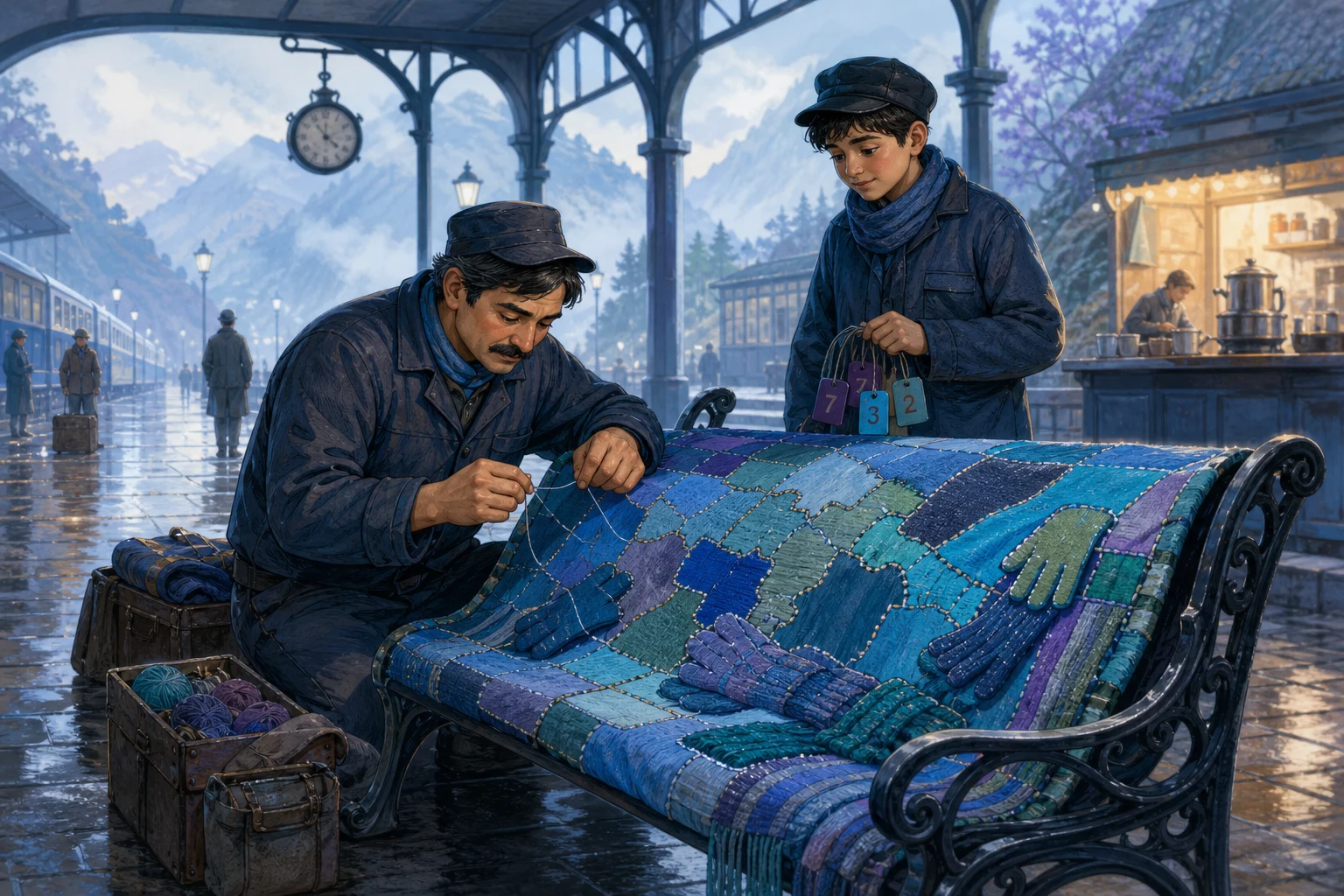
A Map Woven in Blue
Ilya’s patchwork bench covers began with lost gloves and ended as a map everyone could help complete.
Read Story →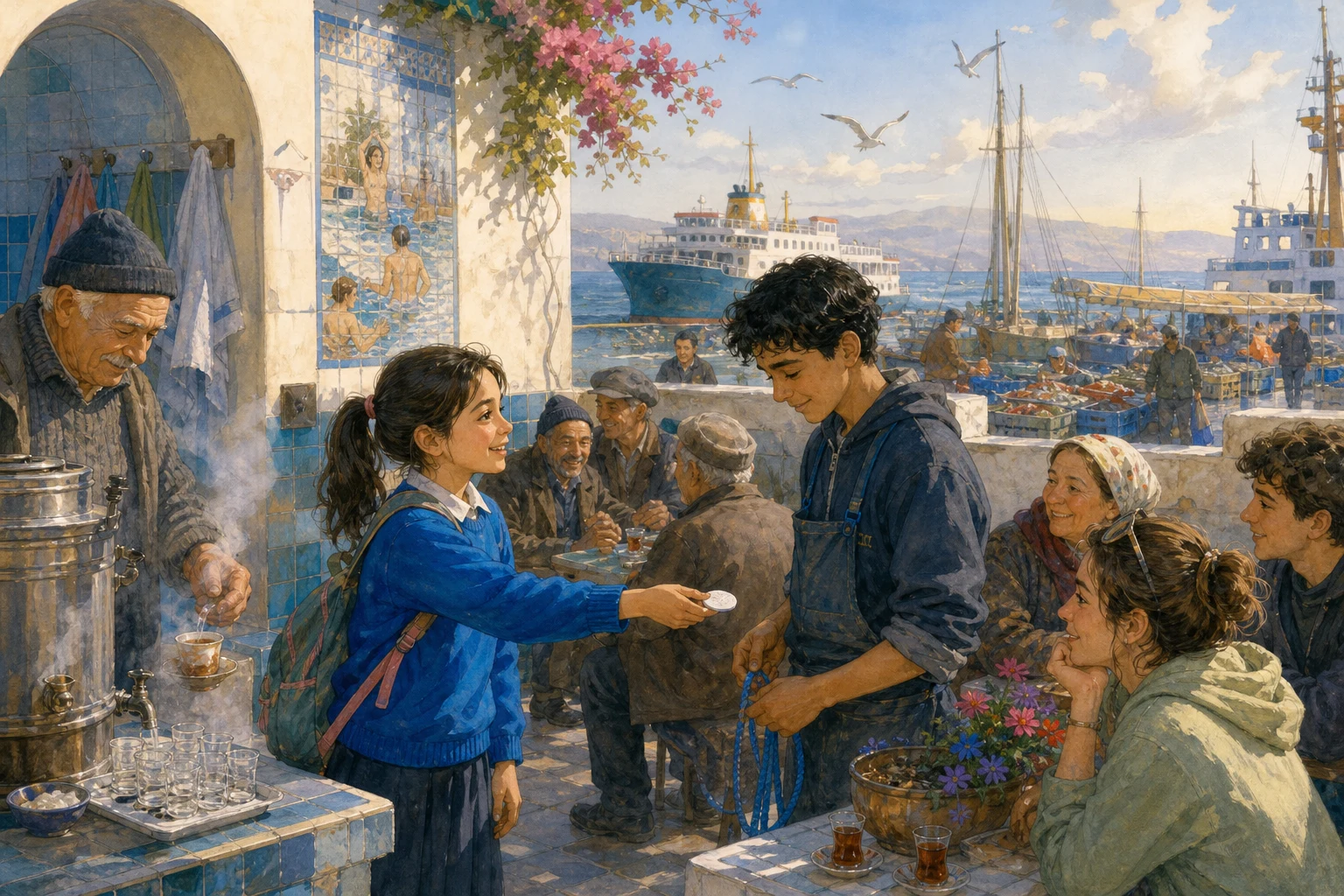
The Hour Nobody Owned
Mina’s first community hour is lively, crowded, and almost entirely controlled by the loudest guests. A ferry cleaner, a brass token, and one patient adjustment teach her what true hospitality requires.
Read Story →