
Quote Stories
What the Key Could Not Open
Eren discovers that ordinary objects become remarkable when people are given room to remember.
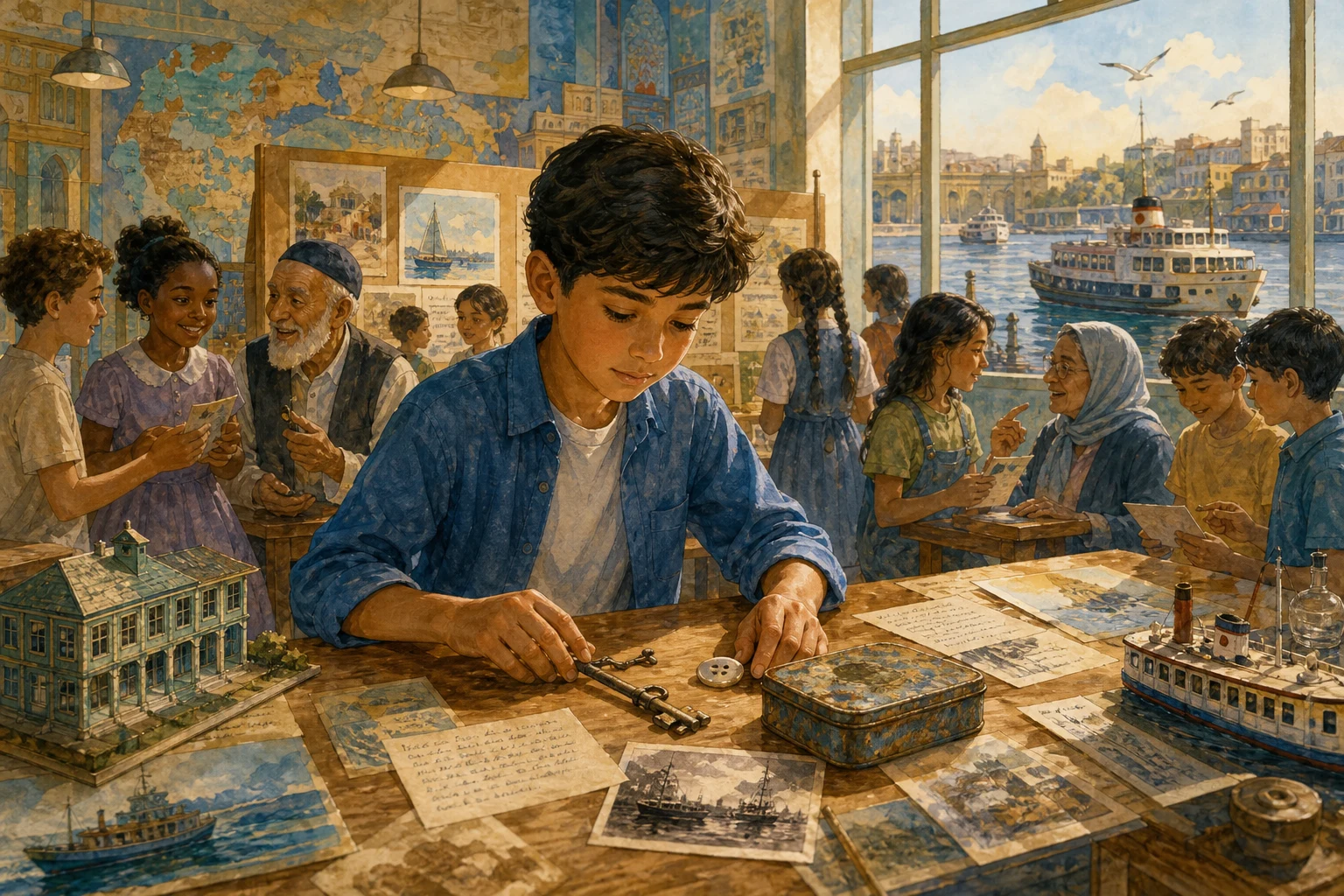
Eren could make a bent key unlock a vanished palace.
He could make a chipped button belong to a sea captain’s coat and a dented spice tin conceal a map beneath its false bottom. In the evenings, he arranged his treasures on his grandmother’s kitchen table and gave each one a history grand enough to fill the river-port city beyond the window.
Then his teacher announced the school’s history display.
“Bring something that tells us where we come from,” she said.
Eren went home certain he had already won. He would display the bent key beneath a painted sign: KEY TO THE GOVERNOR’S SECRET ROOM. Beside it, the button would become THE CAPTAIN’S LAST FASTENER. The spice tin would be THE COOK’S HIDDEN TREASURE.
His grandmother examined the labels while stirring lentils.
“Did the key open the room?” she asked.
“Not yet,” Eren said. “It’s been waiting.”
“For what?”
“For a better story.”
Grandmother Nara tapped the tin with her wooden spoon. “Or perhaps it has been waiting for the person who knows its real one.”
Eren frowned. Real stories, he thought, were usually smaller. They did not contain secret rooms or captains escaping by moonlight.
Still, the next morning he carried the objects to the ferry steps and began asking questions. The woman who sold oranges recognized the spice tin. It had belonged to her father, who had measured cinnamon into paper twists during the first shop he rented near the water. A boat painter knew the chipped button. It had come from a blue work coat worn by his older brother, who taught him to mix colors without wasting a drop.
The bent key took longer.
At last, a retired ferry watchman named Daro turned it over in his palm.
“This opened the cupboard in the old waiting room,” he said. “People left letters there for passengers who had already departed. I kept the key after the room was repaired.”
“What kind of letters?” Eren asked.
“Apologies. Directions. News. Once, a recipe for pear bread.”
Eren wrote everything down. He wrote the names carefully, leaving space beneath each object for more memories.
At school, his classmates brought their own things: a cracked measuring cup, a green hair ribbon, a wooden shuttle from a loom, and a smooth stone with a white stripe. Their stories were better than Eren’s inventions—not because they were grander, but because they carried voices he had never heard.
Eren’s first instinct was to place his objects in the center and push the others toward the wall. He even prepared a speech beginning, “My collection proves that I am the best storyteller in our class.”
Then he saw Lio standing beside the cracked measuring cup, unable to make anyone stop and listen.
“Tell me about it,” Eren said.
Lio explained that the cup had belonged to his aunt, who used it to teach him fractions while making dumplings. Eren found a card and wrote the story in large letters. Soon another classmate asked him to help with the hair ribbon, and another wanted to add a drawing beside the loom shuttle.
By afternoon, the display had changed. It was no longer Eren’s collection. It was a long table of objects, names, drawings, questions, and memories, with no single piece placed higher than the rest.
During the opening, visitors moved slowly from one card to another. Daro stood before the bent key for a long time. The orange seller laughed when she saw the spice tin. Lio’s aunt pressed both hands to her mouth beside the measuring cup.
Eren waited for someone to praise his imagination.
Instead, his grandmother leaned close and said, “You made a fine doorway.”
“A doorway to what?”
“To everyone else’s story.”
Eren looked across the crowded room. The key still could not open a secret palace. It opened a cupboard, and perhaps a letter, and now a conversation. That seemed larger than he had expected.
Before leaving, he added one final card to the table:
ASK WHO REMEMBERS.
Underneath, he left several blank lines.
Related Quote Stories

A Lantern for the Last Lap
Sefu was halfway around the track when the last spectator folded a chair and left. He kept running—and began carrying a lantern for everyone still behind him.
Read Story →
Knots for the Evening Tide
When storm preparations pull younger children away from school, Mina turns her grandfather’s net shed into an evening classroom—then learns to let every learner become a teacher.
Read Story →
A Bell Made of Many Quiet Things
Toma wanted the guild prize for the loudest bell. Then one child’s empty place at rehearsal made him listen differently.
Read Story →