
Quote Stories
What the Path Could Tell
Lio learns that a place can be read in more than one way.

Lio’s recorder filled the mornings before his notebook did.
He caught the bamboo gate clacking open, the market scale giving its tiny metal shiver, and rain ticking across the roofs like handfuls of seeds. By noon, he had enough sounds for another map.
Visitors liked his maps. Each one showed a winding route through the raised walkways, past orchid nurseries and under the bright awnings of the covered market. Lio drew little symbols beside each path: three lines for rain on tin, a black square for the clatter of the rice mill, a curl for frogs calling near the ditch.
His newest map was his best yet—or so he thought—until Mara unfolded it on the workbench beside her garden beds.
Mara was deaf and spoke with her hands, her face, and a pencil when she needed one. She tapped the paper, then pointed toward the far end of the settlement, where her vines climbed a trellis between two quiet houses.
Lio shook his head. “There’s nothing to record there.”
Mara placed his fingertips against the wooden bench. A child ran past on the walkway. The bench trembled. Then she guided his hand to a hanging gourd, its skin warm from the sun, and to the soft leaves of a lemon basil plant.
She wrote: Not nothing.
Lio looked again at his map. Every route curved toward noise. He had drawn the busiest stalls, the loudest workshops, and the bridge where visitors liked to stop. He had missed the shaded seat where elders sorted seeds, the cool wall beside the water channel, and Mara’s garden, where people came to trade cuttings and rest their hands in the soil.
The embarrassment arrived first. Then curiosity pushed past it.
The next morning, Lio asked Mara to walk with him. They tested places in different ways. At the market, they marked the floor where carts made a strong vibration. Near the nursery, they tied strips of textured cloth to a railing. An elder suggested a scent station with crushed ginger and mint. Two children invented rhythm codes: one tap for a turn, two taps for a place to pause.
Lio redrew the map three times. His first version was crowded and confusing. His second used too many raised symbols. On the third, he left open space between the routes and added a small key made of wood, cloth, clay, and scent.
When afternoon rain erased the chalk arrows they had tested, nobody went home. The children replaced them with carved marks. A basket maker donated smooth beads. The market keeper offered leftover citrus peels for the scent stations. Mara checked each section by touch and movement, then gave Lio a satisfied nod.
At last, they set the finished map beneath the market awning. Visitors followed the raised line from the bridge, paused at the textured railing, and found the garden by its lemon-basil marker. Some listened. Some felt the walkway tremble beneath their feet. Some followed the rhythm code tapped by a child guide.
Lio stood beside Mara as people gathered around the map. It did not capture everything. No map could. But it gave more people a way in.
Mara handed him a blank card.
Lio smiled and drew a single open circle—the sign they had chosen for a place where anyone could add another way of noticing.
Then he set the card at the map’s edge.
Related Quote Stories
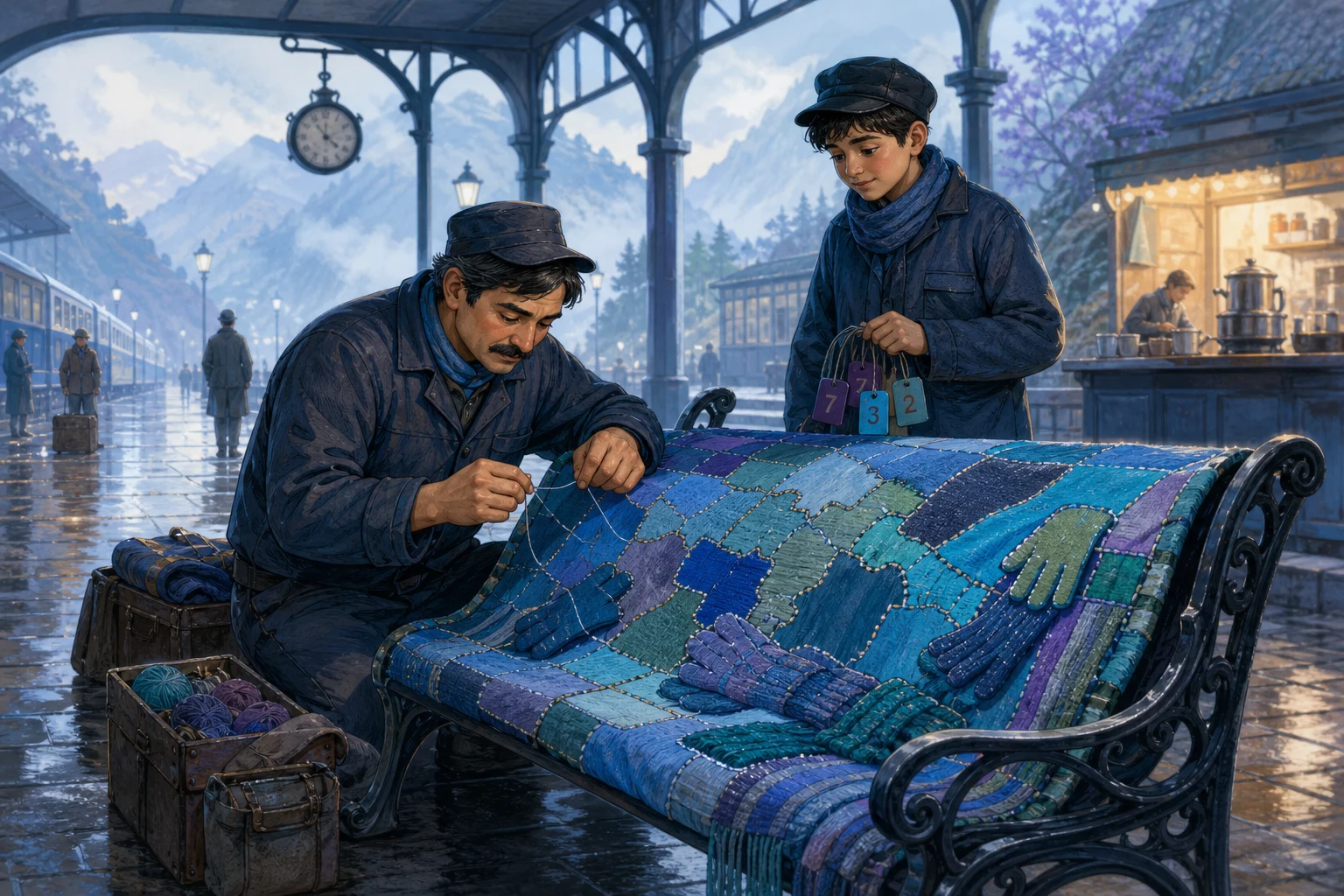
A Map Woven in Blue
Ilya’s patchwork bench covers began with lost gloves and ended as a map everyone could help complete.
Read Story →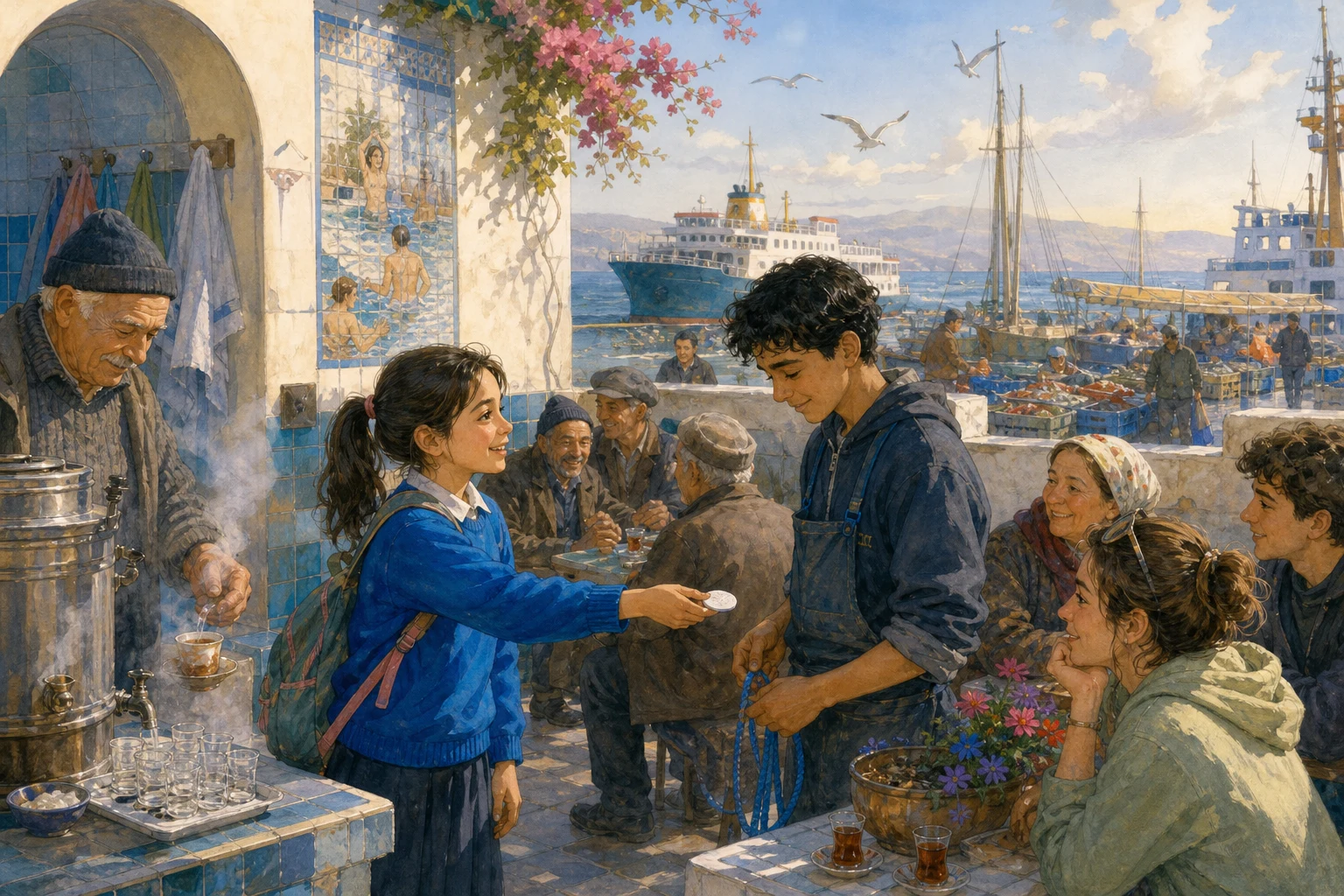
The Hour Nobody Owned
Mina’s first community hour is lively, crowded, and almost entirely controlled by the loudest guests. A ferry cleaner, a brass token, and one patient adjustment teach her what true hospitality requires.
Read Story →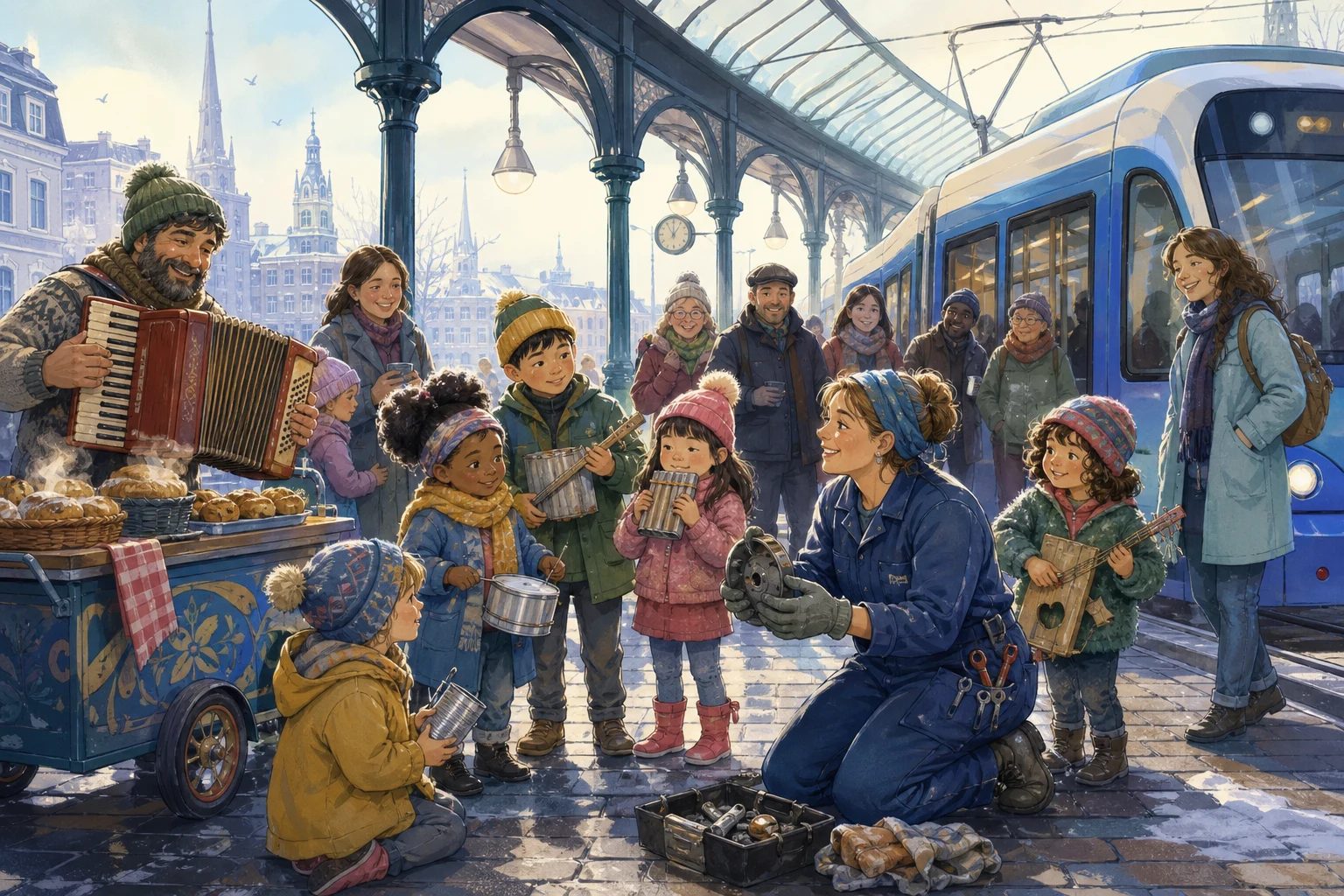
A Tune for Every Pocket
Celia could repair almost anything with a spring, a screwdriver, and enough patience. Her niece’s silence in music class required something different.
Read Story →