
Quote Stories
What the River Carried Back
A young collector turns discarded wrappers into a welcome for both banks.

The first lantern lasted eleven seconds.
Nara counted them aloud as it drifted from the ferry landing: one, two, three—then the paper sides sagged, the bamboo frame tipped, and the little flame vanished into the dark water.
Her second lantern made it farther. A breeze caught its red wrapper, spun it twice, and dropped the whole thing into a patch of reeds.
By sunset, six lanterns had failed.
Nara stood knee-deep in warm mud, holding the seventh against her chest. Around her, the river slid between the two crowded banks, reflecting roofs, palms, and the first lamps of the evening market. Across the water, children were practicing songs for the yearly crossing festival.
“Pretty,” said a voice behind her. “Not useful.”
Old Tomas, who repaired ferry boats beneath a corrugated roof, pointed at the soggy lanterns. “The river does not care how pretty something is.”
Nara looked at the wrappers she had collected from the market: silver drink packets, bright yellow soap sleeves, strips of blue food packaging. She had imagined hundreds of lanterns floating together, a shining road between the banks.
“I can make them stronger,” she said.
“Then find out what strong means.”
She carried the broken lanterns to Tomas’s workshop. He did not laugh when she spread them across his bench. Instead, he placed a boat rib beside them and asked, “What are you trying to make them do?”
“Float. Glow. Look beautiful.”
“Anything else?”
Nara hesitated. From the workshop doorway, she could see a ferry waiting on the far side. Its passengers lifted their hands, trying to signal that they wanted to cross.
“Help people see where the boats are,” she said.
Tomas nodded. “Now we have a design problem.”
Together they tested frames made from thin cane, cork, and scraps of sealed wood. Nara learned that a lantern could not simply sit on the water; it needed a broad base. A flame could not hang loose inside a paper shell; it needed a small metal cup and a shield against the wind. And a floating light was dangerous if nobody could retrieve it.
Her first improved model stayed upright but drifted toward the ferry channel. A boatman snatched it with a pole before it reached the oars.
At the market, two older residents saw the experiment and shook their heads.
“Children’s decorations,” one said.
Nara felt the words land harder than the lanterns had. She packed her materials into a sack and nearly went home.
Then a boy from the opposite bank called across the water. “Our boats need signals too!”
Nara raised her head. “What kind?”
He pointed to the ferry landing. “One color for waiting. One for danger. One for a boat that has room.”
By morning, Nara had stopped working alone. Children from both banks brought corks, clean wrappers, bottle caps, and ideas. Tomas showed them how to tie a retrieval cord without tangling it around a propeller. The ferry workers explained where lights should be placed. The market sellers agreed to collect packaging instead of throwing it into the drains.
Nara changed the lanterns again. Each one became a reusable signal box: a sturdy floating frame, a covered lamp, and a small colored panel that could be swapped without rebuilding the whole thing. Blue meant “ferry approaching.” Green meant “room aboard.” Red marked a shallow or crowded passage.
For the festival, the children painted messages on the panels: WELCOME, COME ACROSS, MAKE ROOM.
That evening, the river filled with music. The lights did not form the perfect shining road Nara had first imagined. They moved more slowly, tethered in safe lines near the crossings. Some leaned in the current. One went dark and had to be replaced.
But the ferry workers read the colors. Passengers waited at the right landings. A grandmother on the western bank saw a green panel and waved until a boat turned toward her. On the eastern side, a group of children held up a sign that read, “WE SAVED YOU A PLACE.”
Tomas stood beside Nara, listening to both banks answer one another across the water.
“You were right,” he said. “They are beautiful.”
Nara watched a blue lantern bob beside the ferry. “Because they work?”
“Because everyone knows what they are for.”
After the music ended, the children pulled the lanterns back to shore and stacked them in Tomas’s workshop. They would be used again the next evening, and the evening after that—not as a brief spectacle, but as a shared way of finding one another.
Nara kept the first broken lantern on a shelf above her bed. Its paper was wrinkled, its frame crooked, and its flame long gone. Still, it had carried her to the better idea.
Related Quote Stories
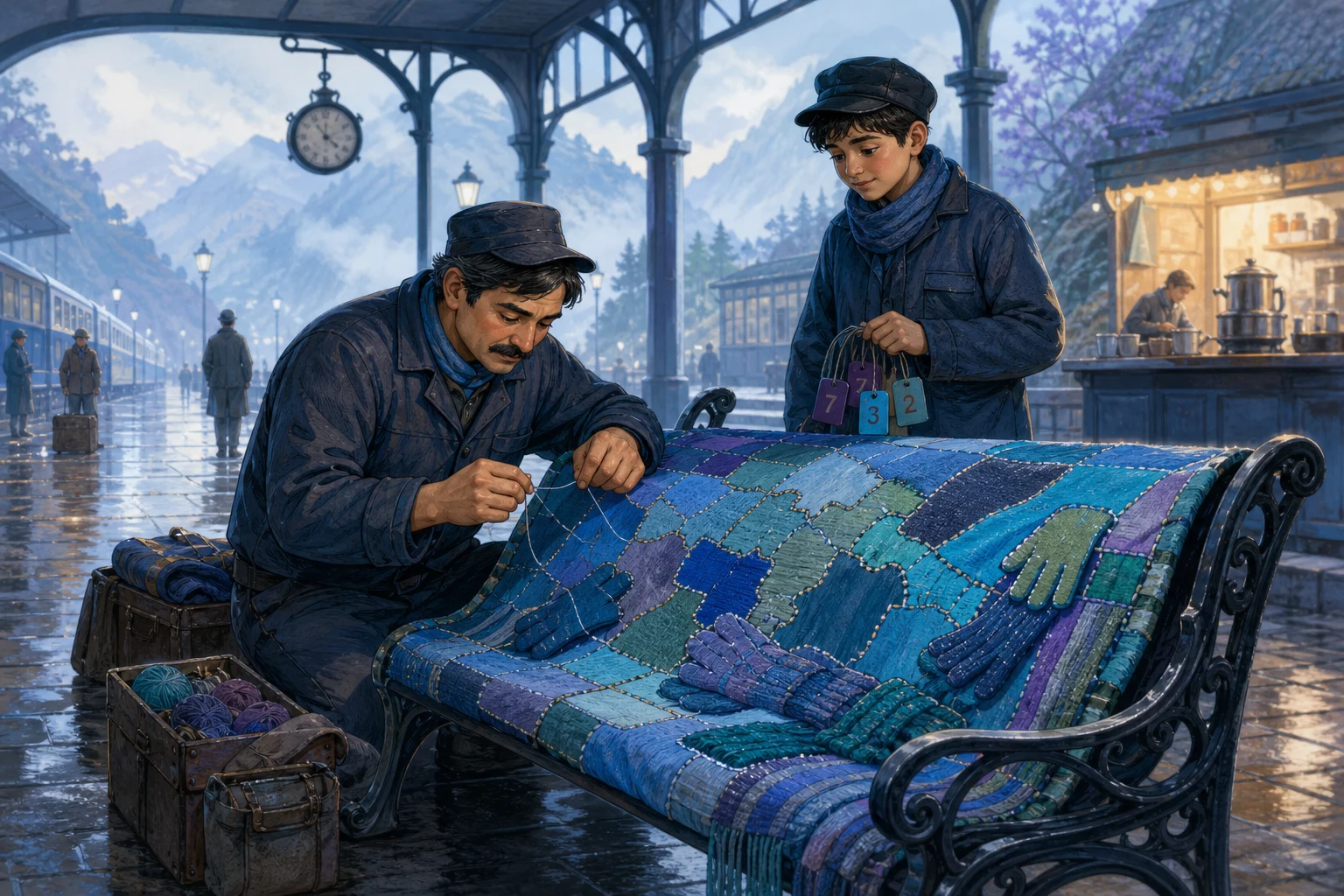
A Map Woven in Blue
Ilya’s patchwork bench covers began with lost gloves and ended as a map everyone could help complete.
Read Story →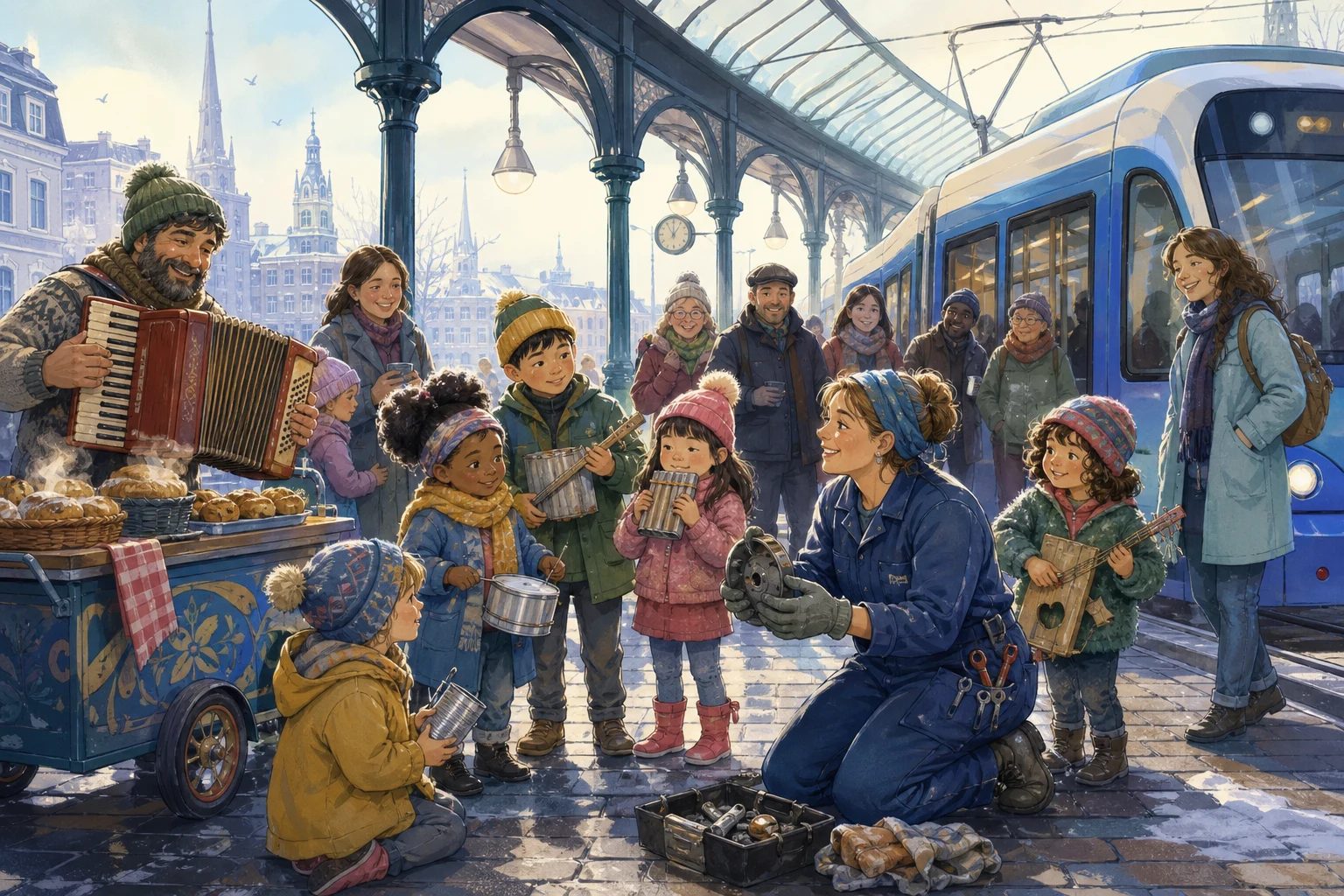
A Tune for Every Pocket
Celia could repair almost anything with a spring, a screwdriver, and enough patience. Her niece’s silence in music class required something different.
Read Story →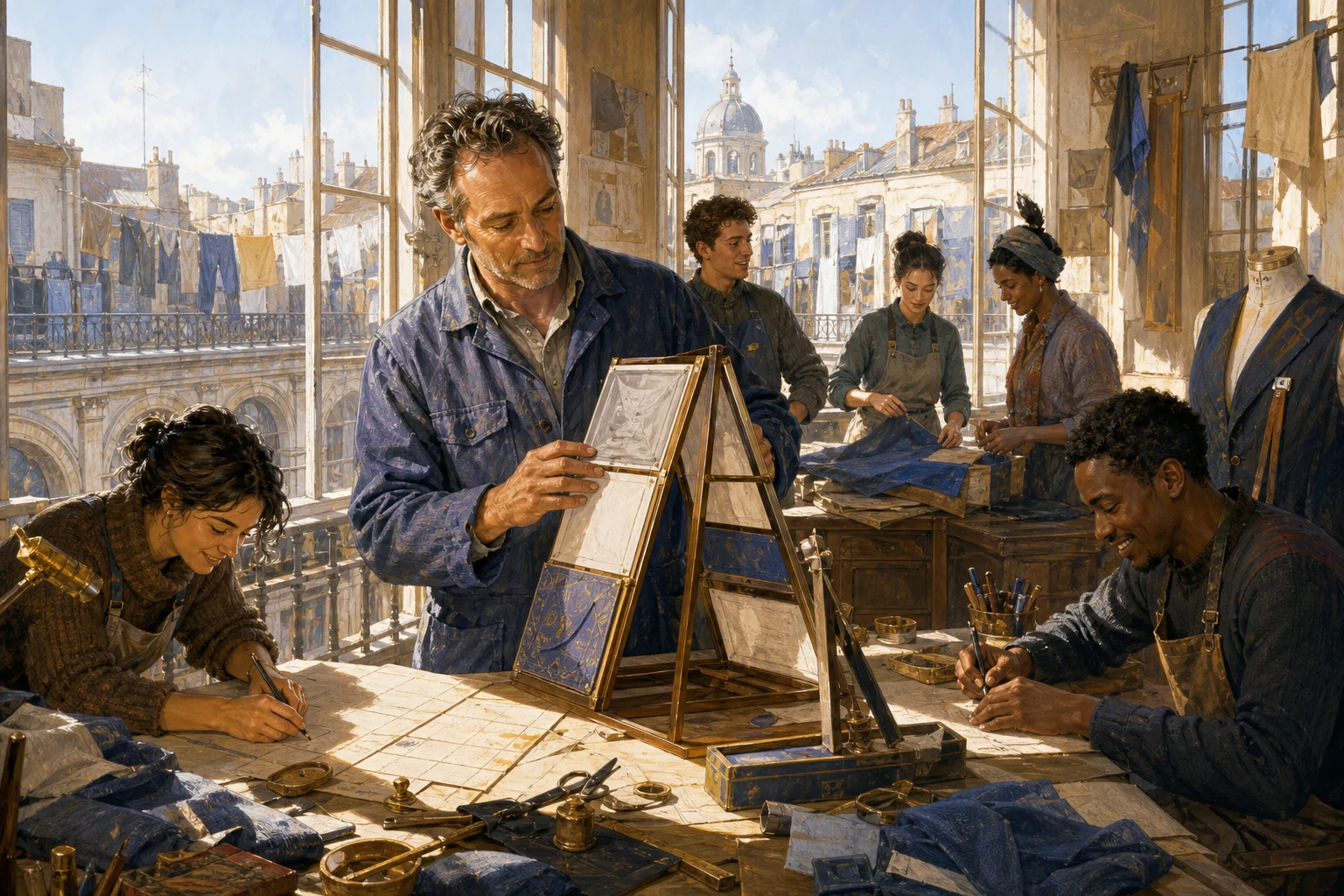
A Table for Starting Over
Soren wanted the room above the tailoring arcade for himself. Then a broken model, a dented floor, and several determined apprentices persuaded him to unlock the door.
Read Story →