
Quote Stories
What the Stage Already Knew
Niko learns to listen before he performs

Niko found the rhythm while carrying a tray of paper programs.
Three steps from the curtain, the floor gave a soft wooden hum. Near the orchestra pit, it answered with a bright shiver. At center stage, beneath the faded gold star painted in the boards, his shoes seemed to wake a deep, patient drum.
He stopped. The audience had not yet arrived. Outside, barges nudged the river docks, and market sellers called across the evening water. Inside, the theater smelled of dust, velvet, and rain-damp coats.
Niko crossed the stage again.
Tap. Hum. Shiver. Drum.
By closing time, he had a pattern.
He practiced it after the last usher left, using his heels, palms, and the edge of a program tray. He imagined the visiting director sitting in the empty front row, astonished by a performance no musician had thought to write.
On the fourth night, Niko stepped into the light and began.
The first few beats pleased him. Then the floor answered differently. A loose board clicked. The trapdoor groaned. His rhythm scattered. He hurried, trying to force the sounds back into order.
“Enough,” called Mara, the theater manager.
Niko froze.
“This is not a rehearsal room,” she said. “And you nearly woke the scenery crew.”
“I can make it work.”
“Perhaps. But you are listening only for the sound you want.”
The next afternoon, Niko met Ilya in the costume corridor. The retired dancer had once performed on that stage and now taught balance to children in the rehearsal rooms. She listened while he described the floor.
“Then stop asking it to accompany you,” Ilya said. “Ask what it has heard.”
Together, they walked through the theater with a notebook. Tomas, the stagehand, showed them the board that complained whenever the scenery lift moved. Laleh, who cleaned the balconies, demonstrated the brisk rhythm of her broom against the brass railings. The lighting technician tapped a careful three-beat pattern while checking the cables. A singer hummed the note she used to find her pitch in the wings.
Niko had thought he was collecting noises. Instead, he began collecting people’s timing.
They built a short opening piece. Tomas would make the scenery lift groan once. Laleh would sweep the balcony rail. The lighting technician would click the switches in sequence. The performers would add breaths, footfalls, and small fragments of warm-up. Niko would connect the sounds from the stage.
At the final rehearsal, the scheduled musician failed to arrive. The theater filled with an uncomfortable silence.
Niko looked at the empty chair, then at the workers waiting in the wings.
“We don’t need to replace the missing music,” he said. “We can leave space for it.”
He changed the arrangement. Instead of rushing to fill every pause, he let the theater breathe between sounds. A broom brushed brass. A cable clicked. Someone shifted a costume hanger. The old floor answered beneath Niko’s feet, not perfectly, but honestly.
That evening, the audience quieted as the piece began. They heard the building before they saw the actors: the lift’s low complaint, the balcony’s bright sweep, the lamps waking one by one. Then Niko crossed the stage, guiding the sounds without claiming them.
When the final footstep faded, the applause rose slowly, as if the audience had first needed to locate its hands.
Mara stood beside Niko in the wings. “You finally performed the floor,” she said.
Niko watched Laleh smile at Tomas, and Tomas bow toward the lighting booth.
“No,” he said. “We performed the theater.”
Under their feet, the boards gave one last, quiet hum.
Related Quote Stories
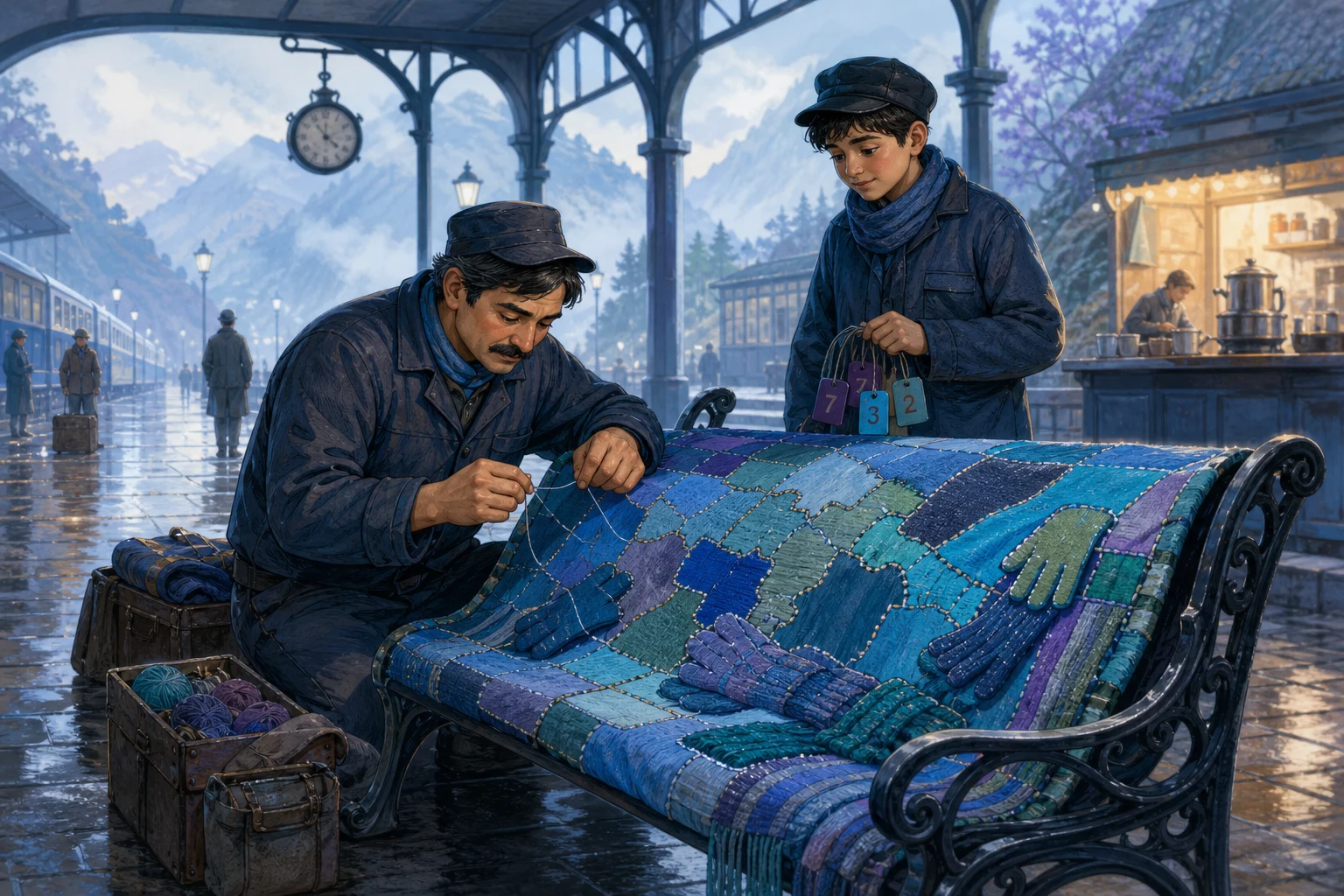
A Map Woven in Blue
Ilya’s patchwork bench covers began with lost gloves and ended as a map everyone could help complete.
Read Story →
The Hour Nobody Owned
Mina’s first community hour is lively, crowded, and almost entirely controlled by the loudest guests. A ferry cleaner, a brass token, and one patient adjustment teach her what true hospitality requires.
Read Story →
Tabs in the Wind
Kito’s first calendar was neat, accurate, and almost useless. The second one belonged to everyone.
Read Story →