
Quote Stories
When the Dough Began to Speak
Noor learns that a recipe can be measured in more ways than one.
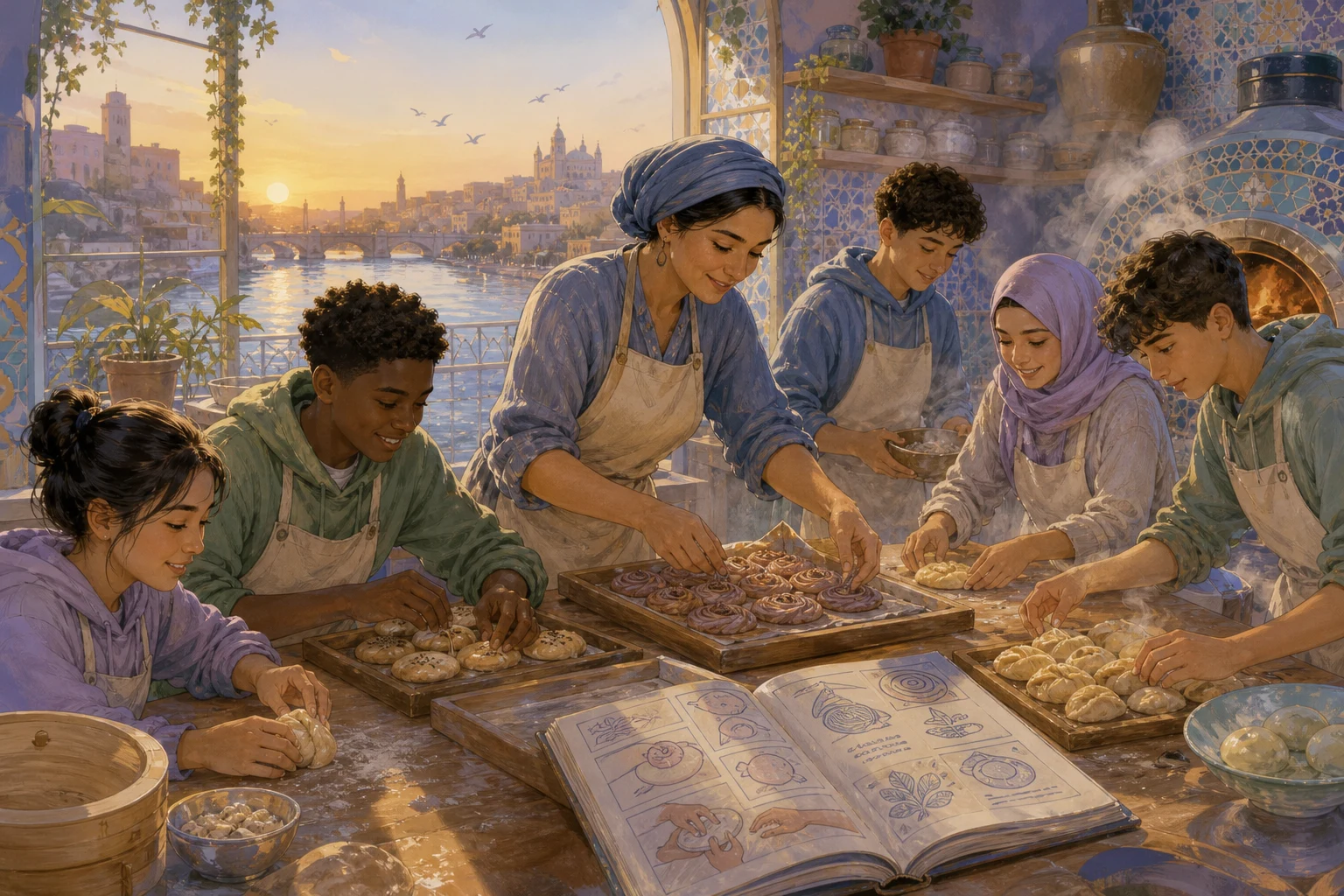
The cardamom buns rose like lopsided boats, one leaning against another in the oven tray.
Noor stared through the glass. “They were supposed to be identical.”
Behind her, six teenagers waited at the long worktable, each holding a different-looking coil of dough. One had gone flat. Another had puffed into a knot. A third was still pale and stubborn beneath its sprinkle of seeds.
Noor had prepared for this class with the seriousness she brought to the night shift at the riverside bakehouse. Every ingredient was weighed. Every instruction was numbered. The handouts lay in neat stacks beside bowls, spoons, and jars of yeast.
Yet the students kept interrupting.
“How warm is warm?” asked Ilya.
“Fold until smooth?” said Hana. “Smooth like glass or smooth like a blanket?”
“Is a pinch this much?” asked Mateo, holding two fingers apart.
Noor answered each question precisely. The more she explained, the more uncertain the room became.
By the time the timer rang, flour dusted the floor, the filling had leaked from three buns, and Noor’s neat recipe cards were marked with fingerprints and question marks.
She carried the tray to the cooling rack. Nobody reached for one.
The next Saturday, Noor arrived with no handouts.
Instead, she placed a bowl of dough in the center of the table and set out spoons, cloths, seeds, spices, and a row of small cups. On the wall, she drew three pictures: a hand, a nose, and an ear.
“Today,” she said, “we will not begin with numbers.”
The students looked suspicious.
Hana touched the dough. “What do we begin with?”
“Show us,” Noor said. “Something your family makes by feel.”
At first, nobody moved. Then Ilya pressed his thumb into the dough and lifted it slowly.
“My grandmother says it should answer,” he said.
Noor raised an eyebrow. “Answer what?”
He pressed again. The dough sprang back halfway.
“That,” he said. “If it answers too quickly, it is frightened. If it does not answer, it is tired.”
Mateo laughed, but he tried the motion. Hana smelled a jar of toasted seeds and nodded before adding any. Another student demonstrated how to listen for a hollow sound when tapping the underside of a loaf.
Noor watched. These were not careless guesses. They were careful observations, carried in hands, noses, ears, and memories.
She began sketching.
Over the following weeks, the class built a recipe book without relying on long paragraphs. A drawing of a relaxed fist meant “knead gently.” Three rising lines meant “wait until it grows.” A shaded ear meant “listen for the crust to sound dry.” Beside each picture, the students added words from their home languages, then taught one another how to pronounce them.
Noor contributed too. She drew the little mark she used in the bakehouse for “watch the edges,” a habit she had never thought worth explaining.
Their final project was breakfast for the workers crossing the canal before sunrise. The class prepared buns, flatbreads, rice cakes, and sweet rolls, adapting each recipe so someone could follow it through pictures, gestures, or spoken directions.
The kitchen filled with steam. For once, Noor did not correct every uneven shape. She moved between the tables, asking questions and listening to the answers.
At dawn, the first ferry horn sounded. Workers stepped onto the quay and found the students offering warm food from wooden trays. Some buns leaned. Some crusts were darker than planned. Every piece disappeared.
When the last tray was empty, Noor opened the class recipe book. Flour had softened its pages, and several drawings had been smudged beyond recognition. She smiled and left them that way.
A recipe, she had learned, did not become less exact when more people could enter it. It became larger.
Related Quote Stories
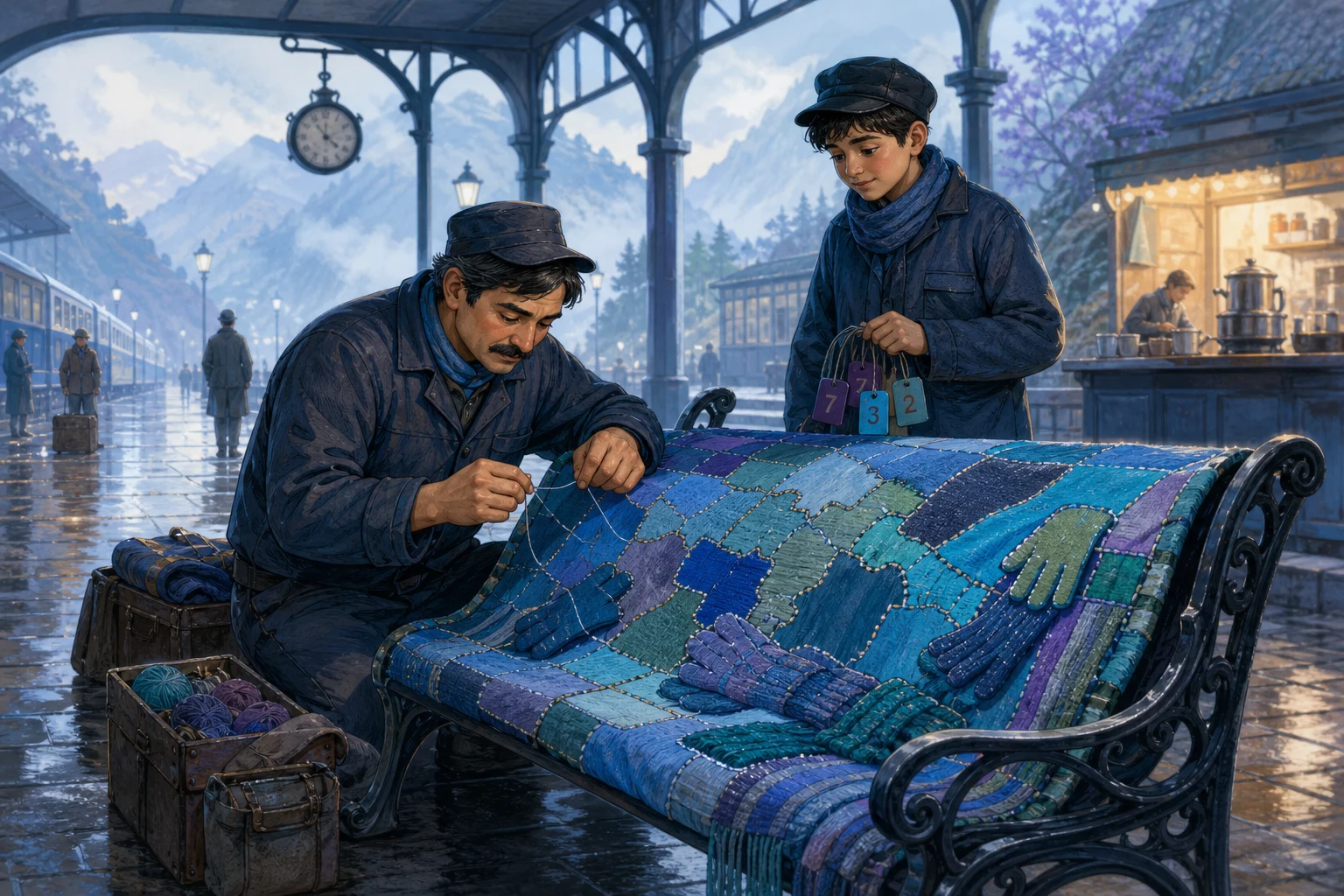
A Map Woven in Blue
Ilya’s patchwork bench covers began with lost gloves and ended as a map everyone could help complete.
Read Story →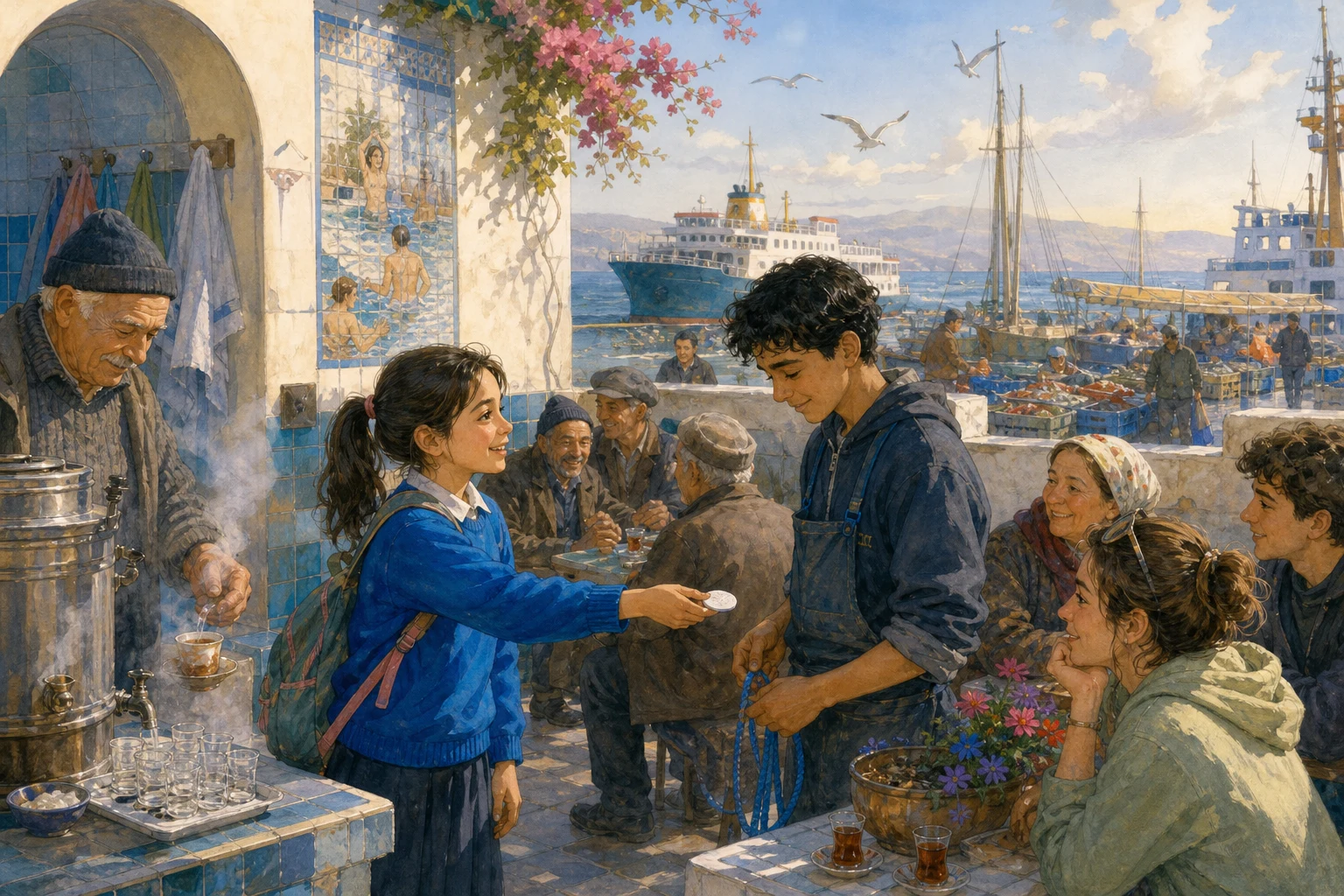
The Hour Nobody Owned
Mina’s first community hour is lively, crowded, and almost entirely controlled by the loudest guests. A ferry cleaner, a brass token, and one patient adjustment teach her what true hospitality requires.
Read Story →
Tabs in the Wind
Kito’s first calendar was neat, accurate, and almost useless. The second one belonged to everyone.
Read Story →