
Quote Stories
When the Harbor Clock Learned to Listen
A craftswoman discovers that precision can have more than one pair of hands.
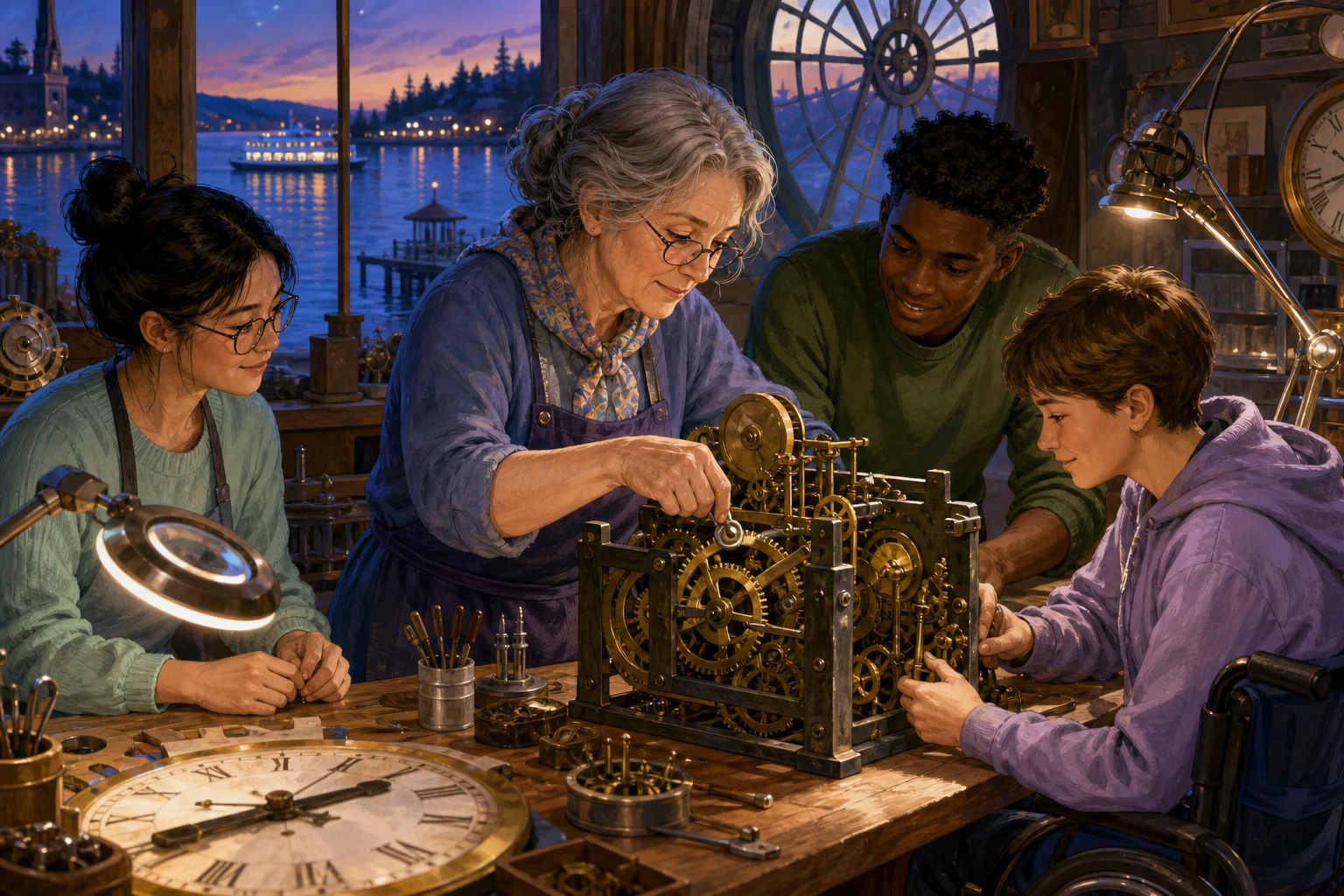
The brass wheel slipped from Mara Venn’s tweezers and vanished into the sawdust.
She froze above the workbench. Outside, a ferry horn rolled across the lake. Inside, the clock on the wall clicked once, then waited.
Mara found the wheel beneath a chair leg. Her hand was still trembling.
For forty years, she had repaired clocks alone. Now customers had begun taking their delicate watches elsewhere, where repairs were quicker and hands steadier. Mara told herself she did not mind. Then she started leaving the shop lights off until noon.
One rainy afternoon, a school custodian named Oren came in carrying a broken brass alarm clock. He had watched Mara work through the window for months.
“Could you teach me?” he asked.
Mara nearly said no. Instead, she pointed to the clock. “Can you tell what it needs?”
Oren studied it. “A patient person.”
The next week, retired bus driver Salma joined them. She knew every route around the lake but had never held a watchmaker’s loupe. Last came Jun, a quiet teenager who answered questions with drawings: careful diagrams of gears, springs, and imagined machines.
The three students worked slowly. Mara worked slower than she wanted.
Their first shared project was a tall regulator clock brought in by the owner of the old ferry office. Mara assigned each person one task and insisted on checking every step. When the clock was reassembled, it gave a bright metallic cough and stopped.
A gear tooth had broken.
Mara closed the case. “Classes are over.”
No one argued. Oren gathered the tools. Salma carried the damaged clock to the bench. Jun opened a notebook and drew the workshop as it was: narrow aisles, tiny instruments, one chair facing the light, and Mara bent alone over everything.
Then Jun turned the page.
The new drawing had wider benches. Magnifying lamps stood at different heights. Large-handled tools hung within reach. Three people worked around one mechanism, each responsible for a different kind of attention.
Salma understood first. “You don’t need to do every movement,” she said. “You need to decide which movement matters.”
Mara disliked the sentence because it was true.
They began again. Oren built a padded holder for small parts. Salma created a testing rhythm, listening for changes in the clock’s beat. Jun designed a set of oversized practice gears so beginners could learn without risking fragile mechanisms.
Mara learned to describe what her hands had always known. She learned to pause before correcting. She learned that asking someone else to hold a lens was not surrendering the work.
Weeks later, the ferry office clock ran again—but the group had a larger idea. They built a public timepiece for the square beside the pier, using salvaged gears and four separate bells. One marked dawn. Another announced the first ferry. A low wooden tone sounded at midday, and a bright chime welcomed the evening boats.
Each sound came from a different part of the harbor’s daily life.
On opening night, Mara stood beneath the clock as the crowd waited. Her hand shook when she reached for the winding key. Oren covered her fingers with his, not to take over, but to steady the turn. Salma watched the mechanism. Jun held up a drawing showing the order of the bells.
Mara wound the clock.
The first bell sounded across the water. Then the second, the third, and the fourth—separate notes, arriving together.
Mara listened until the final echo faded among the boats.
In the shop window, she placed a new sign:
REPAIRS, RESTORATION, AND LESSONS
Underneath, Jun added a small drawing of an open clock case.
There was room inside for more than one pair of hands.
Related Quote Stories

When Desks Learned to Bend
Nera’s first folding desk collapsed under the weight of a single book. Hiding the failure would be easy; inviting others to inspect it would be harder—and far more useful.
Read Story →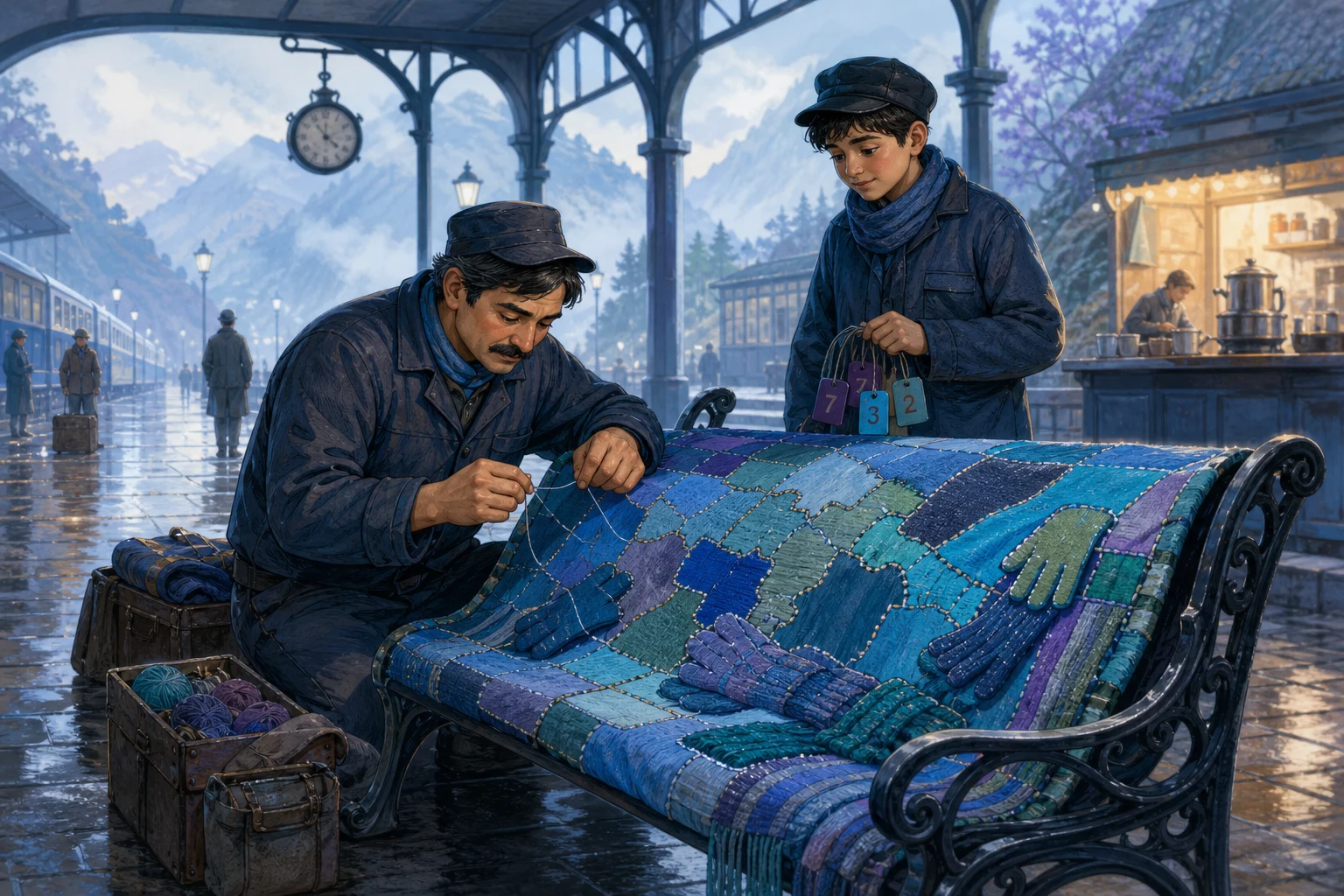
A Map Woven in Blue
Ilya’s patchwork bench covers began with lost gloves and ended as a map everyone could help complete.
Read Story →
The Hour Nobody Owned
Mina’s first community hour is lively, crowded, and almost entirely controlled by the loudest guests. A ferry cleaner, a brass token, and one patient adjustment teach her what true hospitality requires.
Read Story →