
Quote Stories
When the Seats Learned to Listen
A neglected amphitheater becomes a classroom shaped by every voice.

“Again,” Mara Vale called from the back row. “This time, speak to the reeds.”
Tomas lifted his poem and tried once more. His first attempt had vanished into the amphitheater’s cracked arches. The second came back in fragments: a word from the pond, a syllable from the boat-repair yard, a cough from somewhere behind the fig trees.
The students laughed. Mara did not. She was studying the wooden seats. Some tilted toward the stage; others tipped sideways. A few had sunk so deeply into the earth that anyone sitting there appeared to be disappearing.
“Why repair it?” asked Celia Venn, student council chair. “We could replace the whole thing. New boards, proper steps, painted railings. People would actually want to use it.”
“People already want to use it,” said Ren, who had been crouched beside a stack of discarded festival signs. “They just can’t hear one another.”
Ren rarely spoke during assemblies. He preferred recording sounds on a battered little meter: frog calls, roof drips, the thump of oars against the yard. Now he held up a rectangle of painted canvas.
“If we hang these behind the stage, the sound won’t scatter so much,” he said. “We can move them depending on what we’re doing.”
Celia folded her arms. “A school amphitheater should not depend on painted scraps.”
“Why not?” Mara asked. “The marsh depends on scraps. Mud, reeds, shells, driftwood. It makes something useful from what arrives.”
That settled the first afternoon. The students formed teams. One measured the slope of every seat. Another tested poems, arguments, jokes, and science demonstrations from different corners. Celia organized the work with impressive efficiency, producing schedules, labels, and a renovation proposal with a gold cover.
Ren’s panels failed twice. The first arrangement made every voice sound trapped inside a barrel. The second sent sound neatly toward the empty boat shed. Even Mara laughed at that.
On the third day, a storm pushed water beneath the stage. The students carried their panels through ankle-deep puddles while Celia tried to save her gold-covered proposal from the rain.
“It’s only paper,” Ren said.
“It’s a plan,” Celia replied.
“Plans can get wet.”
“So can people.”
They stared at each other, then began laughing—not because the problem was funny, but because neither knew what else to do. Together, they moved the proposal beneath an overturned canoe.
By week’s end, the amphitheater had changed without becoming polished. The worst seats were lifted and leveled. The festival panels hung on swiveling frames. Students painted small tide marks along the steps so visitors could see when the marsh was rising. Nothing matched, but every piece had a purpose.
For the opening lesson, Celia planned a debate about water management. Ren tested the panels. Tomas brought his poem. Mara arrived with a basket of marsh plants and immediately tried to place it behind a pillar.
Celia noticed. “You’re teaching too.”
“I’m maintaining the grounds.”
“You’ve maintained them for twelve years. That sounds like expertise.”
Mara looked toward the water, where pale flowers trembled above the reeds. She had spent years knowing every root and nesting place, yet the thought of explaining them made her throat tighten.
Ren adjusted one panel. “We can put you in the middle row.”
“Why the middle?”
“So you don’t have to project. The seats will help.”
Mara sat. The wood held steady beneath her. Around her, students settled into the uneven rows, close enough to hear one another without shouting.
She lifted a slender marsh plant from the basket.
“This is silverflag,” she began. “It looks delicate, but its roots hold the mud when the tide turns.”
The amphitheater carried her voice cleanly to the back wall. No echo stole it. No wind broke it apart.
Celia listened with her hands resting on her gold-covered plan. Ren listened with his sound meter turned off.
When Mara finished, Tomas read his poem. Then Celia opened the debate, and Ren moved the panels for each speaker. The space did not belong to the loudest person or the most finished plan. It adjusted, each time, to make room.
At sunset, Mara found a new sign nailed beside the entrance. It read: BRING A VOICE. WE’LL FIND A PLACE FOR IT.
She removed the old groundskeeping notice and carried it away, leaving the new sign in its place.
Related Quote Stories
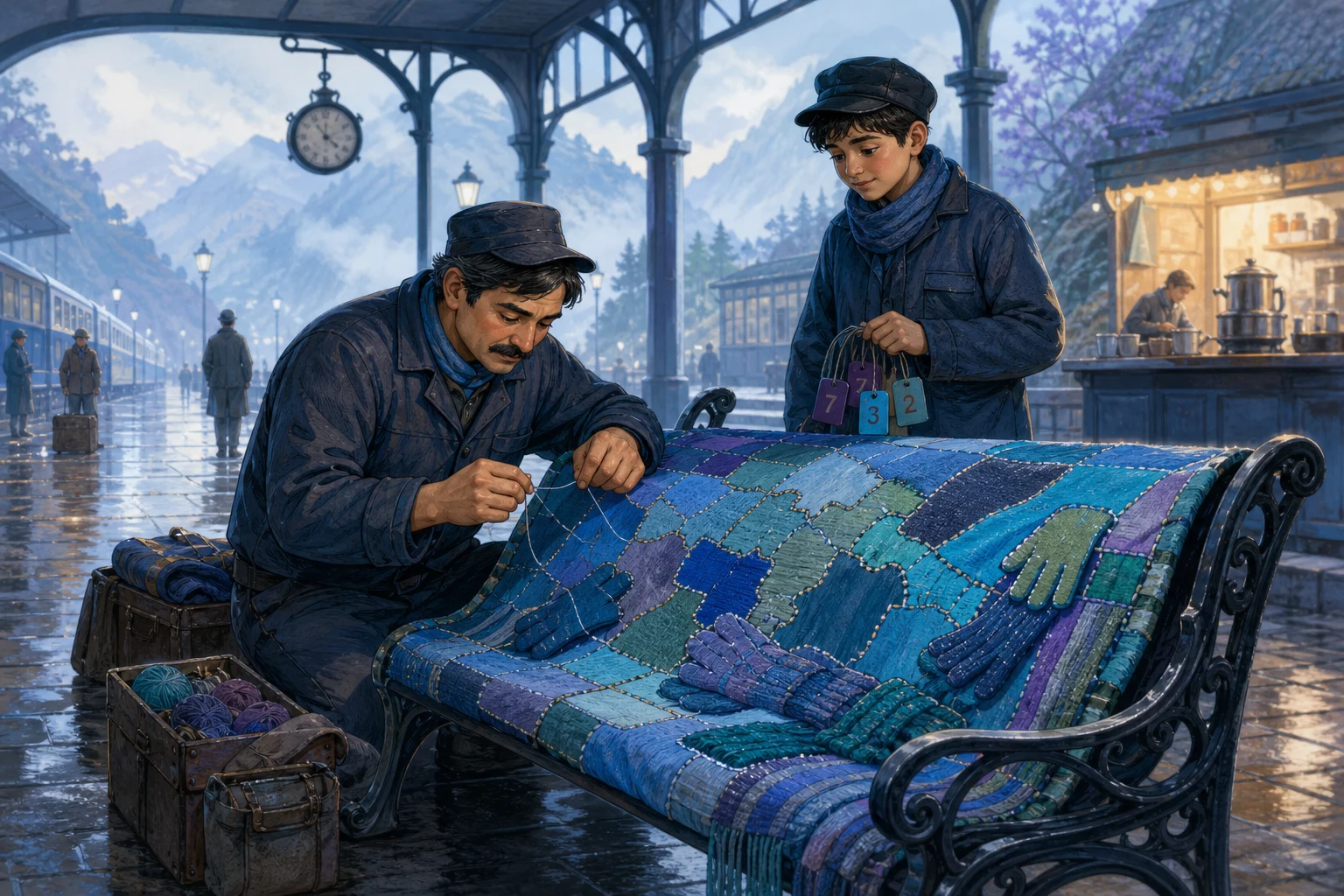
A Map Woven in Blue
Ilya’s patchwork bench covers began with lost gloves and ended as a map everyone could help complete.
Read Story →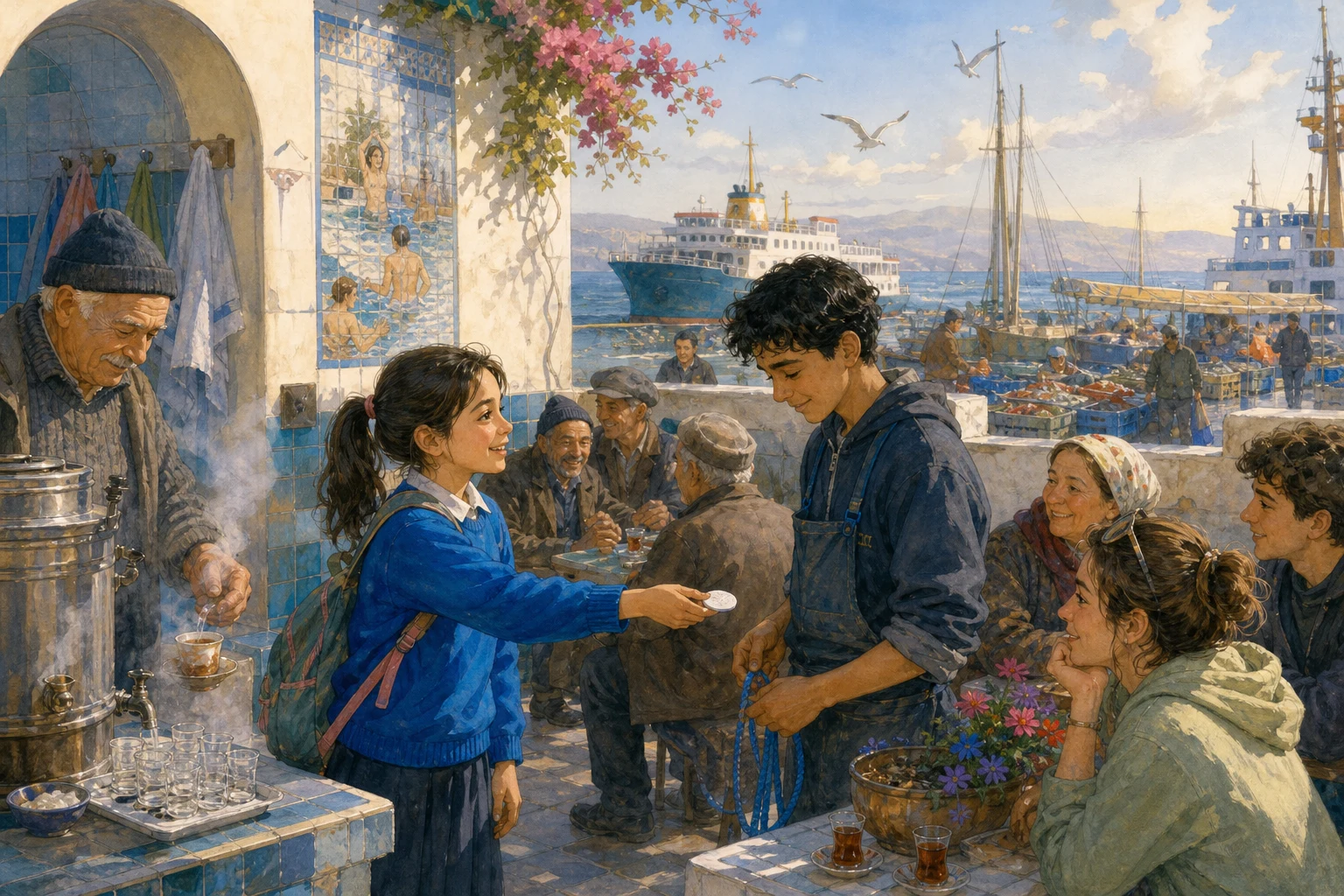
The Hour Nobody Owned
Mina’s first community hour is lively, crowded, and almost entirely controlled by the loudest guests. A ferry cleaner, a brass token, and one patient adjustment teach her what true hospitality requires.
Read Story →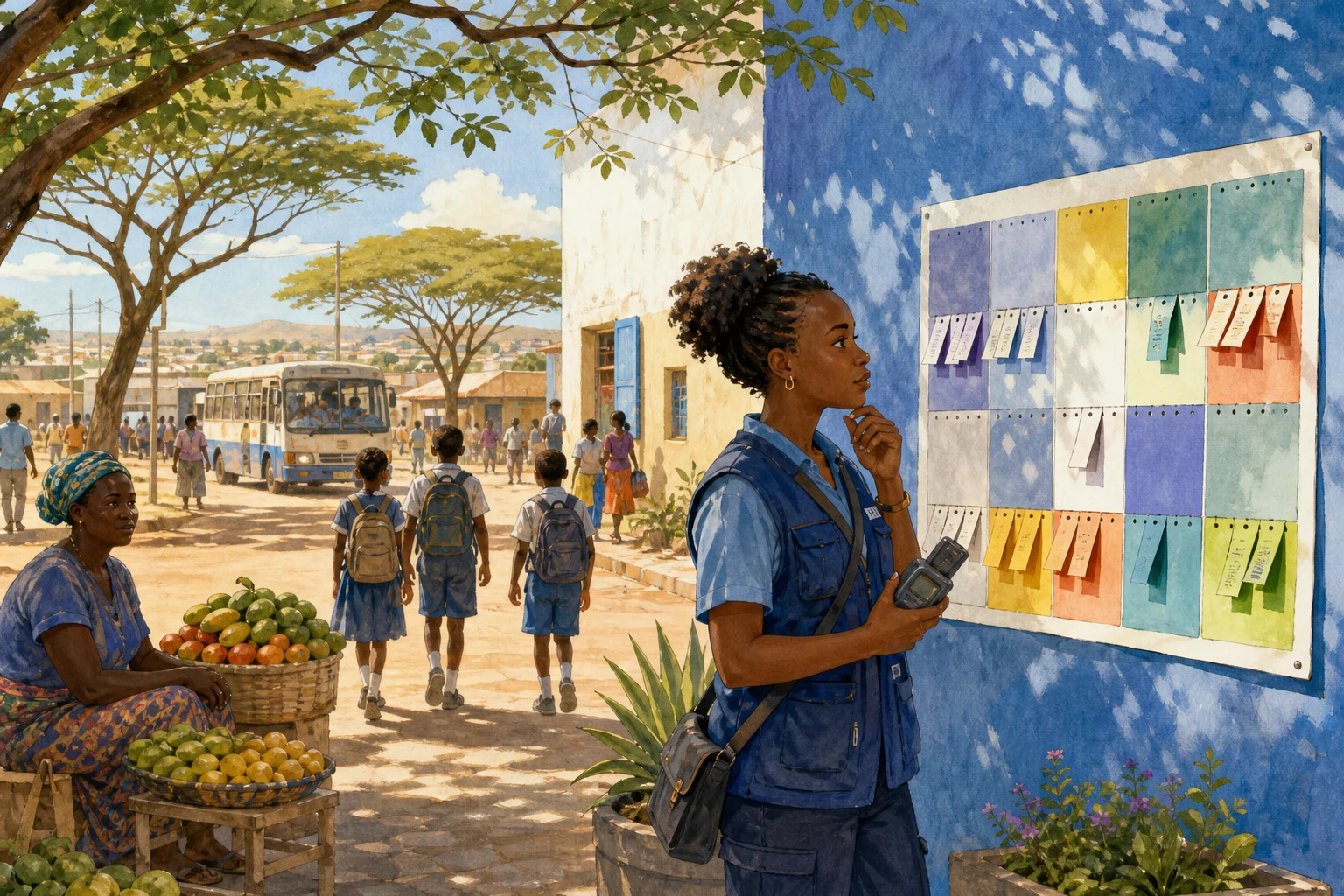
Tabs in the Wind
Kito’s first calendar was neat, accurate, and almost useless. The second one belonged to everyone.
Read Story →