
Quote Stories
Where the Missing Doorways Led
A courier learns that a useful map must make room for the unseen

Mara could draw a route between any two doors, but her first neighborhood map failed to notice the people behind them.
She made it during the slow hours between deliveries, balancing a clipboard against her handlebars while the river wind tugged at the pages. At the top, she wrote: PLACES THAT CAN HELP.
Below it, she marked the tailor beneath the blue awning, the gardener beside the east footbridge, the language tutor above the tea shop, and the bicycle repairer whose hands were always black with grease. She added arrows, shortcuts, and notes in three colors.
By Thursday, people were stopping her in the elevated walkways.
“Where can I get a jacket mended?” asked an elderly man carrying a torn sleeve.
“Who teaches reading after work?” asked a woman new to the river district.
Mara opened her map and pointed. She liked the clean certainty of it. A question arrived; an answer waited on paper.
Then Lio found the blank space.
He was thirteen, quick on a scooter, and familiar with every courtyard because he played a different game in each one. At the weekend market, he studied Mara’s enlarged map while she pinned it to a board near the floating produce stalls.
“You forgot Aunt Sela,” he said.
Mara looked at the map. “Which shop is hers?”
“She doesn’t have a shop. She fixes school uniforms in her apartment.”
“Does she want people coming to her home?”
“No. But she wants people to know she exists.”
Before Mara could answer, a woman approached with a basket of thread. She had heard Lio and introduced herself as Nadiya. She translated letters for neighbors who spoke little of the city’s common language, but she worked from her kitchen and had never thought of herself as a service anyone could find.
By sunset, three more names had been added in the margin. A potter who repaired cracked cooking vessels. A retired nurse who showed new parents how to read medicine labels. A baker who taught evening arithmetic while waiting for dough to rise.
Mara promised to redraw the map.
The festival arrived before she finished.
Rain swelled the river and pushed the market beneath the covered walkways. People crowded around Mara’s board, tracing the colored lines. An old tailor found the gardener easily. A student located the language tutor. But a family searching for someone to repair a child’s hearing device found nothing. Neither did a night-shift worker looking for lessons at an hour when most tutors were closed.
The map had plenty of arrows. It still left people standing in the rain.
Mara folded it in half.
“I made a map of places I already knew how to see,” she said. “That isn’t the same as making a useful map.”
Lio took a pencil from behind her ear. “Then ask better questions.”
So they did.
Over the next month, Mara stopped treating the map as a finished drawing. At each courtyard, she placed a blank card on a table. Each card asked three things: What can you help with? What would make a stranger feel welcome? Who could you teach?
Nadiya designed cards in several languages. The tailor added a note explaining that visitors could bring a picture instead of the right words. The retired nurse drew a green circle around services accessible by the gentlest ramps. Lio created symbols for after-school help, evening help, and help that could travel.
Mara learned to listen before reaching for her pen.
Soon the guide grew too large for one board. Residents copied sections onto waterproof sheets and tucked them beside ferry schedules, under courtyard bells, and near the market scales. Every contributor added a skill and the name of someone they were willing to mentor.
Mara kept the original map in her delivery bag. Its bold lines still showed the quickest routes across the district, but its empty corners had become her favorite part.
One bright morning, a new courier asked her for directions.
Mara handed over the latest guide. “Start anywhere,” she said. “And leave room for the next person.”
Related Quote Stories
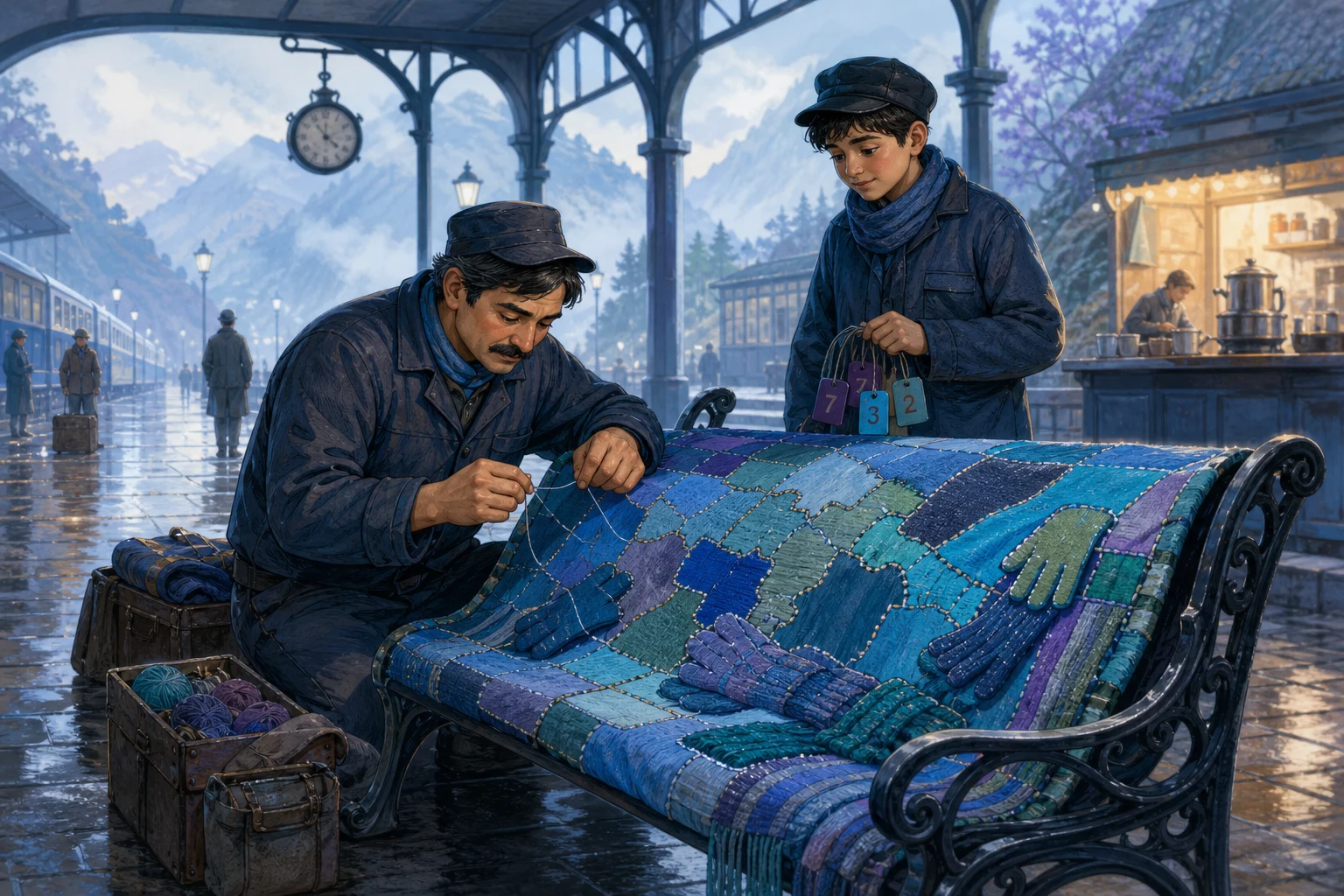
A Map Woven in Blue
Ilya’s patchwork bench covers began with lost gloves and ended as a map everyone could help complete.
Read Story →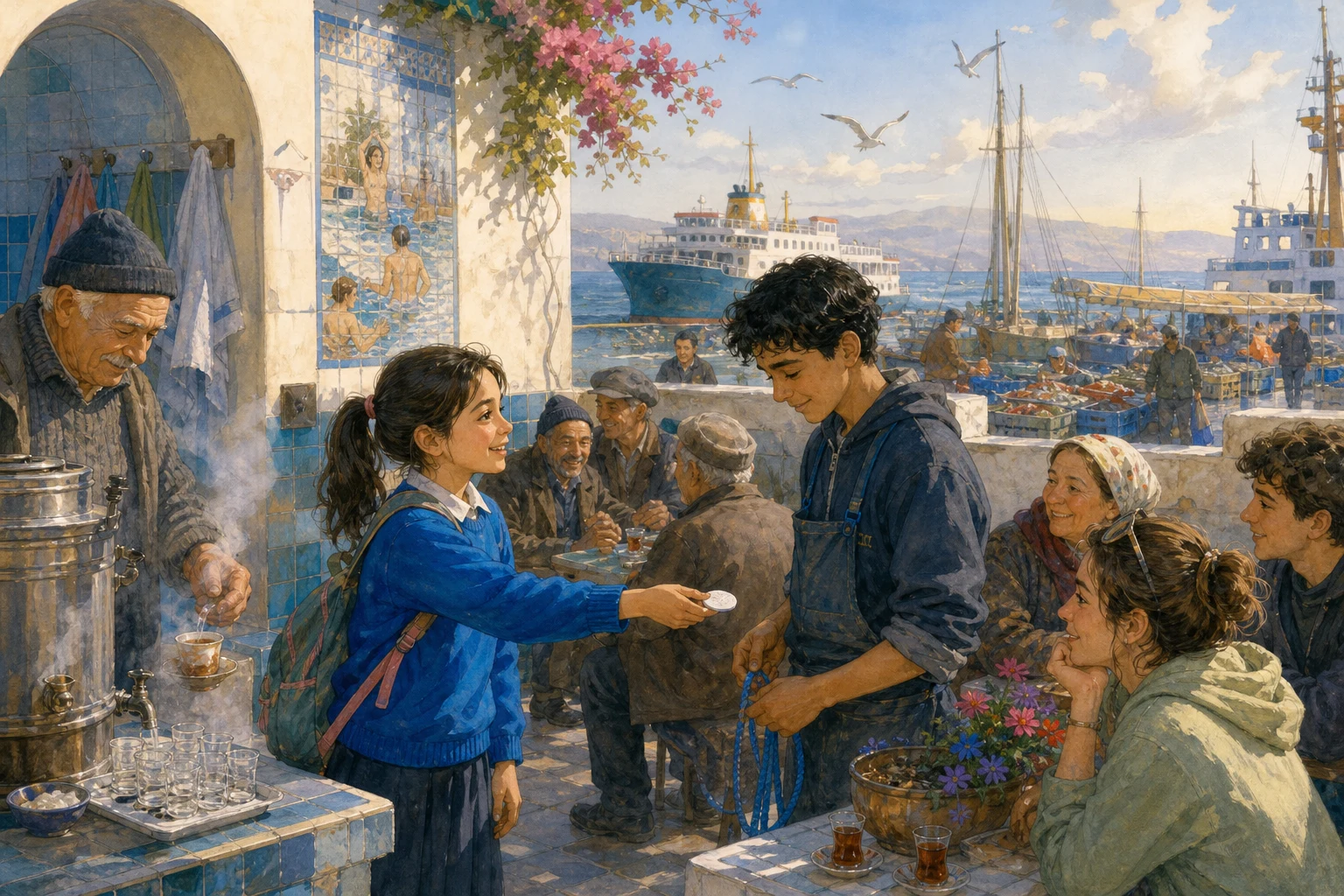
The Hour Nobody Owned
Mina’s first community hour is lively, crowded, and almost entirely controlled by the loudest guests. A ferry cleaner, a brass token, and one patient adjustment teach her what true hospitality requires.
Read Story →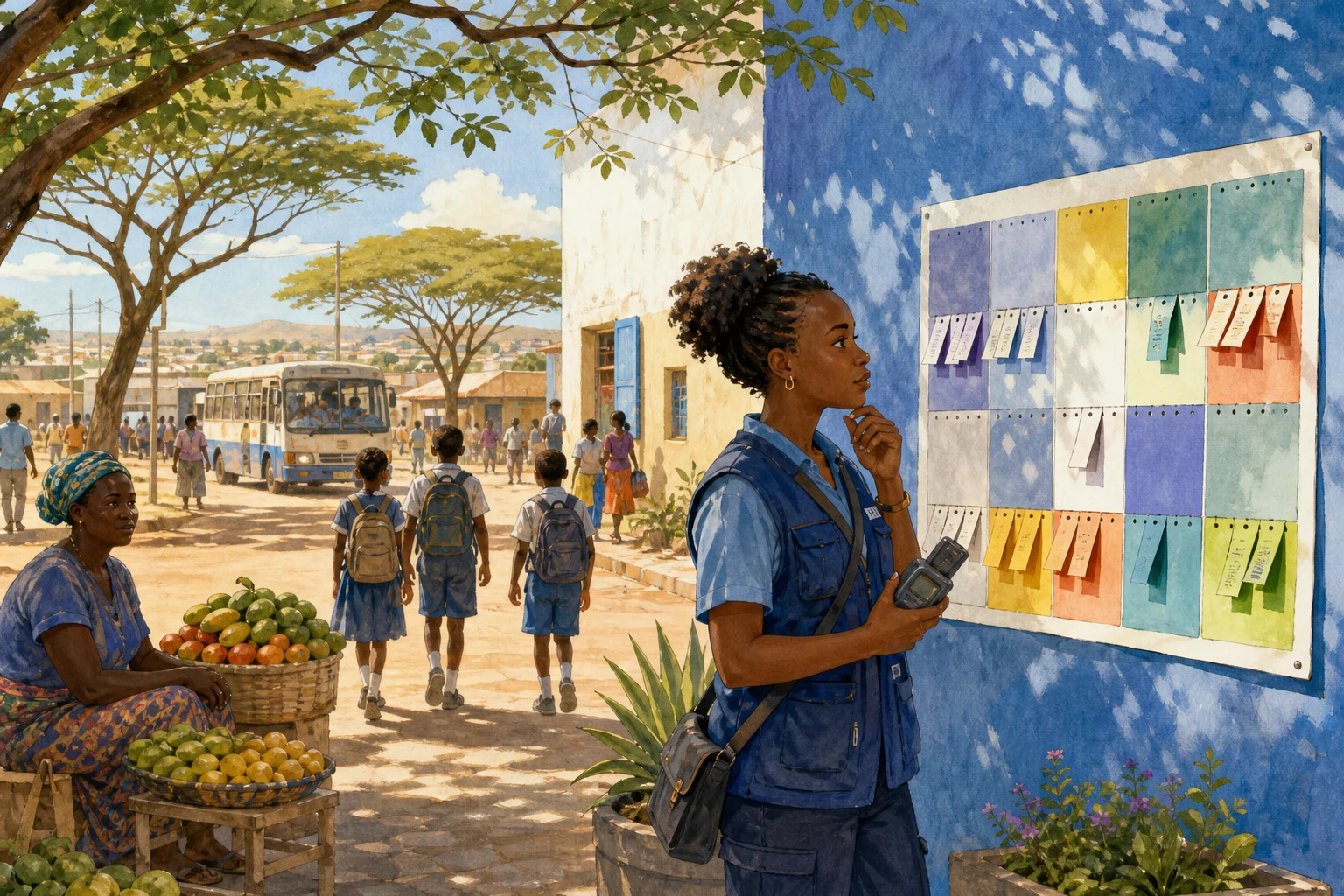
Tabs in the Wind
Kito’s first calendar was neat, accurate, and almost useless. The second one belonged to everyone.
Read Story →