
Quote Stories
Where the Shade Falls
An old orchard finds new life when tradition makes room for experiment.
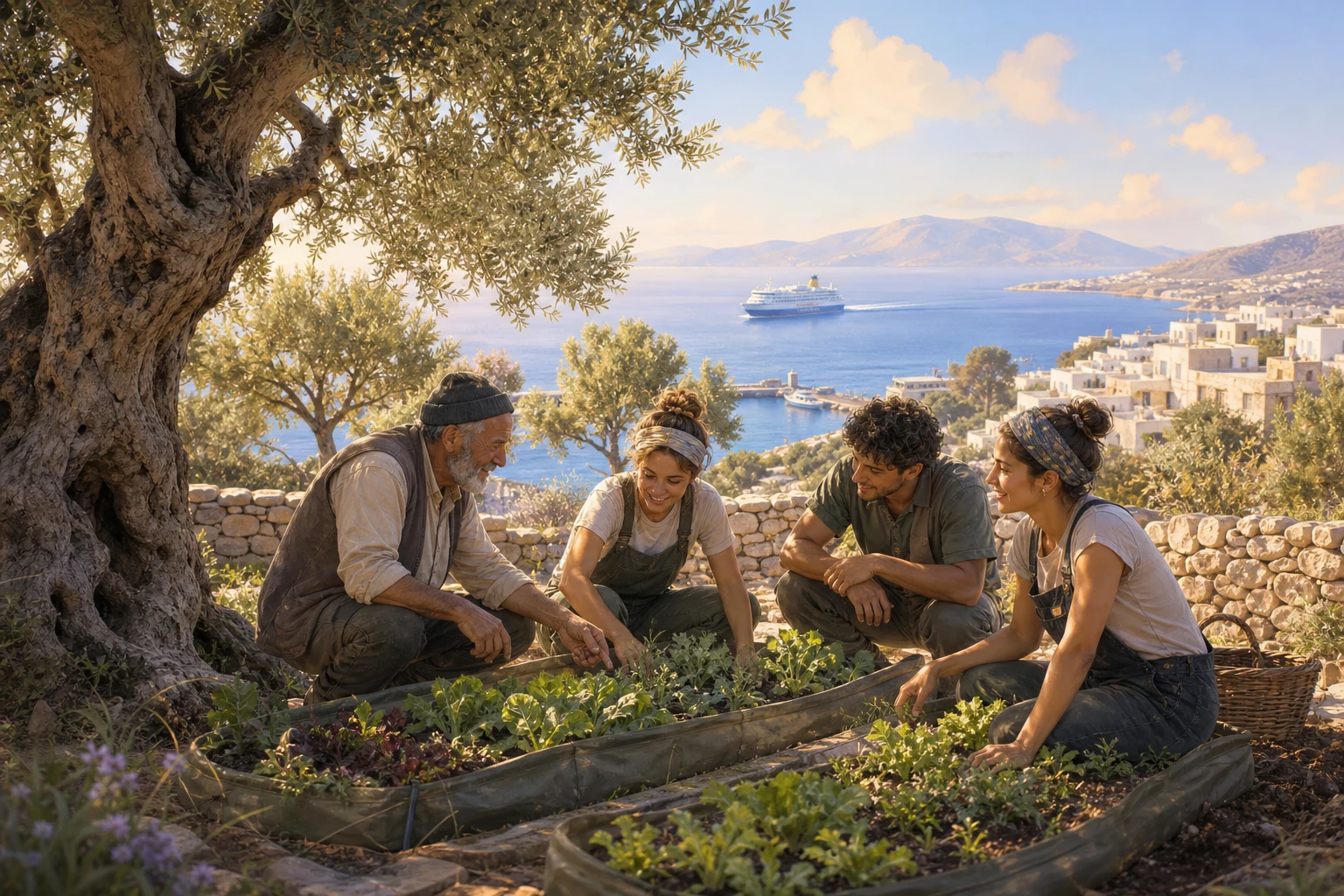
Tomas had already measured the orchard for sale when three young workers asked whether they could borrow it for one afternoon.
“Borrow an orchard?” he said.
“Just the empty part,” said Lina, pointing beyond the oldest olive trees. “We want to try vegetables for the evening market.”
For years, the terraces had given Tomas little more than fallen olives and weeds. Two poor harvests had worn down his patience. The ferry carried in cheaper produce, the hills demanded more water, and his knees no longer welcomed every steep path. A buyer from the mainland had offered a fair price.
Still, he handed Lina the gate key.
The workers cleared stones, stretched twine, and planted beans, lettuce, and small red peppers in tidy rows. They followed a planting calendar printed in a glossy booklet. Tomas watched from beneath an olive tree, saying nothing.
A week later, the lettuce wilted in the afternoon heat. The beans struggled in hard soil. The peppers sat in a strip of shade that lasted almost the entire day.
“It failed,” Lina said, staring at the beds.
“It obeyed your plan perfectly,” Tomas replied.
She looked up, unsure whether he was teasing.
He took his walking stick and crossed the terrace. He showed them where winter rain collected, where the limestone held warmth, and where the branches cast moving shadows. He taught them to test soil by hand and to read an olive tree’s leaves before deciding where water belonged.
The workers listened. Then Lina showed Tomas their shared-tool board, made from a painted packing crate. Each person could borrow a hoe or basket by sliding a wooden marker. Another worker, Beni, suggested narrow beds that could be shifted when the shade changed. They began planting smaller amounts in several places instead of trusting one perfect row.
Their second attempt was modest. A few baskets of greens, herbs, and peppers filled the stall they shared at the evening market. It did not repay the orchard’s debts, but customers returned the next week asking for the bitter greens grown under the old trees.
Tomas kept the buyer’s number in his pocket. He also kept walking the terraces with Lina, who now asked questions before opening the planting book.
At the end of the season, Tomas marked off one section with white stones.
“This stays,” he said.
“For you?” Lina asked.
“For whoever comes next.”
They built a simple shed for tools and painted a sign for the gate: LEARN HERE. Tomas insisted the letters be large enough for tired eyes. Lina added a second line beneath them: BRING A METHOD.
When the ferry horn sounded that evening, Tomas stood among the young plants. The orchard was not restored to its old abundance. It had become something less certain and more useful: a place where knowledge could be handed over, tested, changed, and handed back.
He folded the buyer’s number into a paper boat and set it on the irrigation channel. Lina laughed as it drifted downhill.
“Are you sure?” she asked.
Tomas watched the boat turn around a stone and continue toward the lower terrace.
“No,” he said. “But I know what I want to grow.”
Related Quote Stories
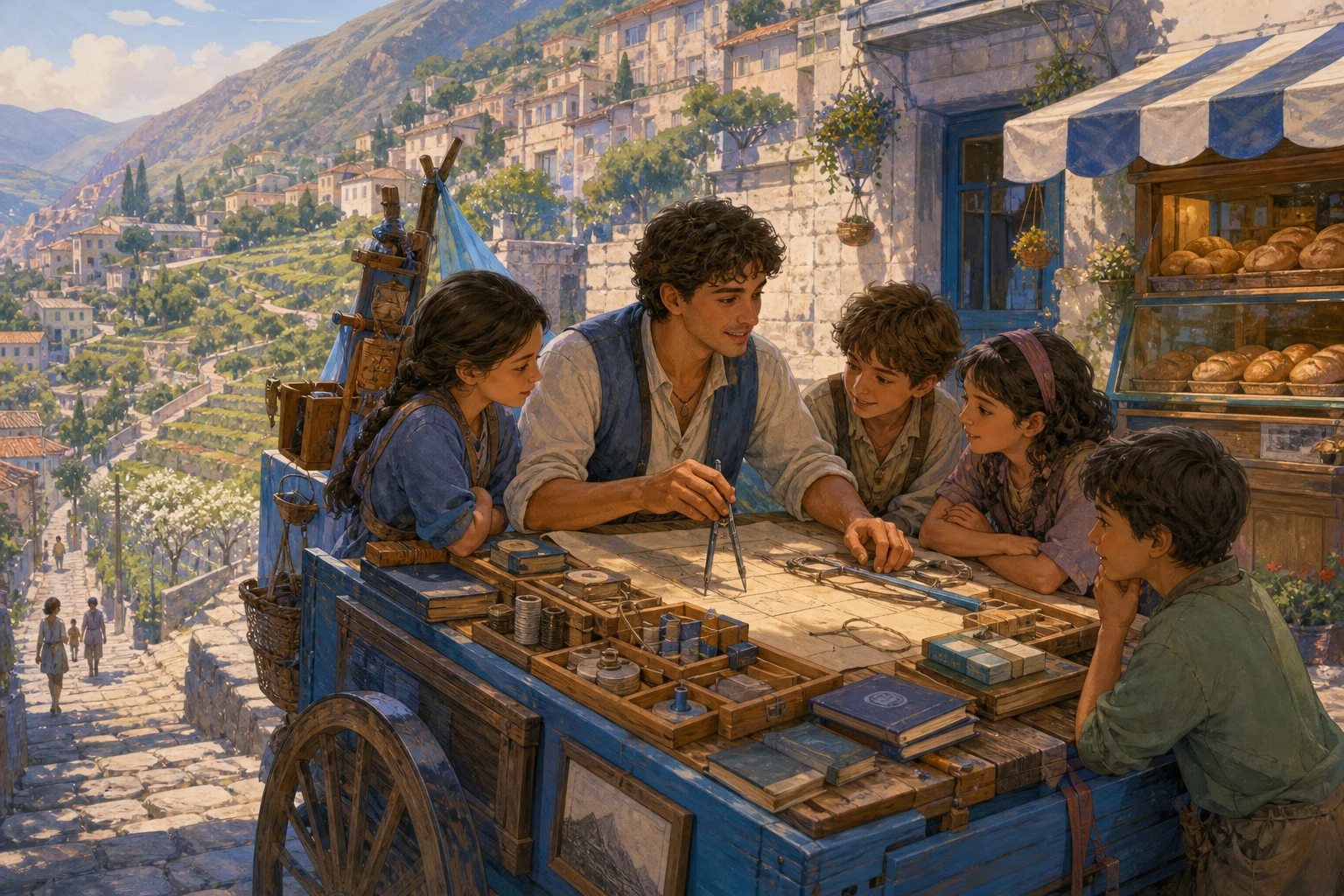
Lessons on Four Wheels
After losing his mapmaking contract, Elian rebuilds a handcart and fills it with puzzles, measuring tools, and books. The first lessons fail—until the people he hopes to teach show him how learning can begin with ordinary things.
Read Story →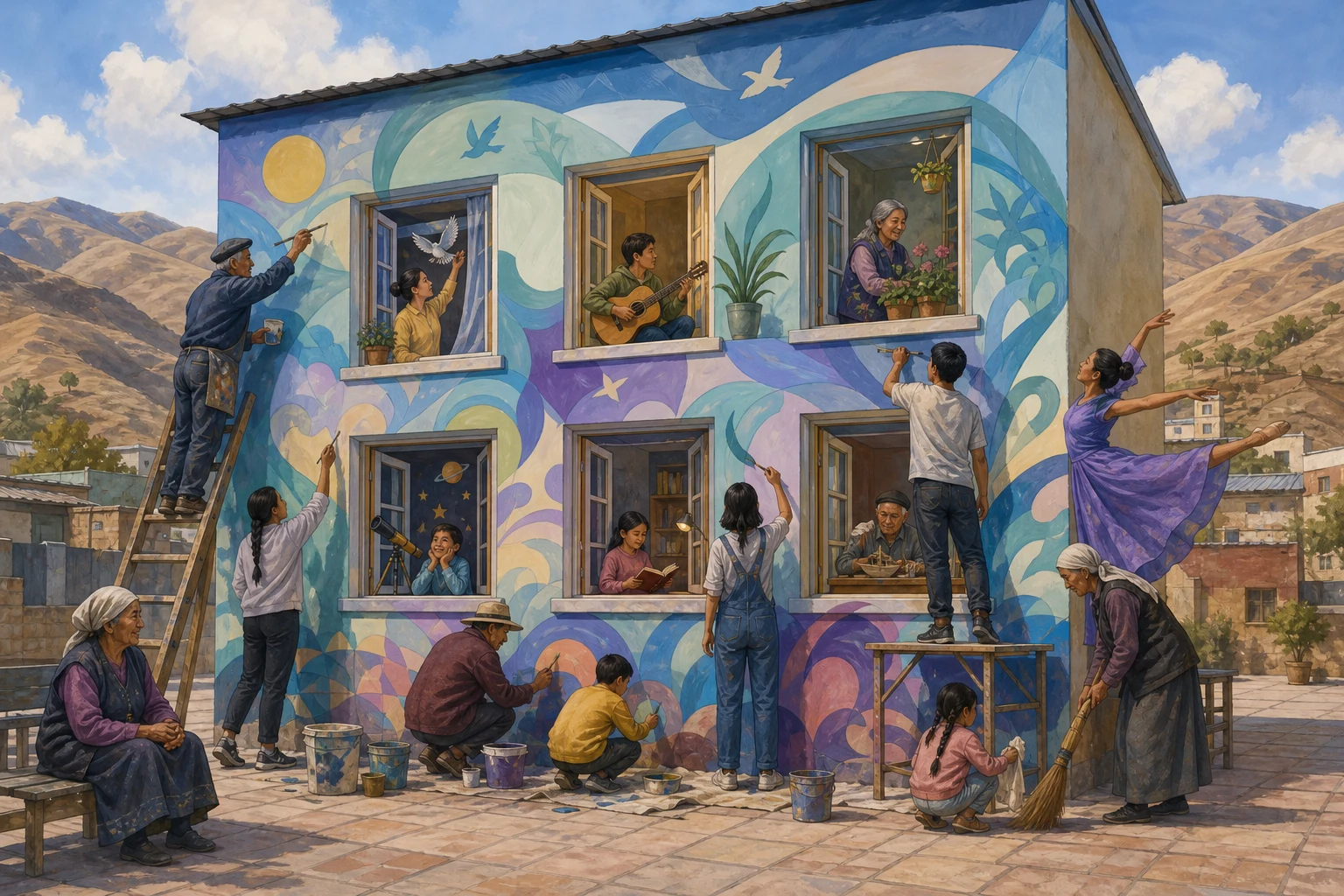
Leave One Window Open
Daro had brought six old photographs, three sharpened pencils, and a plan that left no space for anyone else.
Read Story →
When Every Mark Meant Something
Imani’s first ledger could tell you who borrowed three coils of rope on the second Tuesday of the wet season. It could not tell you where the rope was now.
Read Story →