
Quote Stories
A Rhythm of Many Hands
Tavi learns that keeping a craft alive may mean letting it travel.

The bellows wheezed like a sleepy animal beneath Tavi’s elbow.
She tightened one brass screw, pressed the keys, and listened. A clear, bright note slipped into the workshop’s humid air. Outside, rain drummed on the market roof while river boats called to one another beyond the awnings.
“Again,” Aunt Luma said from the next bench. “Not louder. Truer.”
Tavi adjusted the reed. She had spent three weekends sweeping wood shavings, sorting buttons, and watching her aunt repair the accordion-like instruments carried by dancers from villages along the river. Soon, she hoped, Luma would let her tune one without supervision.
Then the school music club arrived in a panic.
Their instruments had been packed onto the wrong river launch. The community performance was two weeks away, and the students had nothing to practice with.
Tavi glanced at the row of repaired instruments hanging from the wall. Luma was delivering them to their owners the following morning. If the club could borrow them just for a few days, everyone would be saved.
She did not ask.
By sunset, the instruments were wrapped in old flour sacks and carried through the rain to the school. Tavi felt brave until the first rehearsal began.
One accordion wheezed in the wrong key. Another had a button that belonged to a different model. A dancer’s instrument produced a cheerful squeak whenever anyone played a low note. By the end of the evening, parts and cases had been mixed together, and no one could remember which instrument belonged to whom.
Aunt Luma stood in the workshop doorway, holding a damp inventory card.
“You wanted to help,” she said.
Tavi stared at the floor. “I made it worse.”
“You moved things without learning how they were connected.”
Tavi expected anger. Instead, Luma handed her a small screwdriver.
“Then learn.”
The next afternoon, Tavi returned to the school with a plan. She drew a chart showing every instrument, its owner, its tuning, and the parts it needed. She asked the students to label their cases. Then she invited two dancers who had come to collect their instruments to show the club how they kept reeds dry during river journeys.
At first, the musicians only wanted their own instruments back. But when one dancer demonstrated a quick repair using waxed thread, a student offered a better way to mark the keys. Someone else discovered that the squeaking instrument sounded wonderful when played in a fast rhythm.
The rehearsal turned into a repair evening.
The following night, more people came: owners, students, dancers, and curious neighbors sheltering from the rain. Aunt Luma taught everyone how to test a bellows for leaks. Tavi explained her chart. In return, the dancers taught patterns that had never been written down, passing them across the room by clapping, humming, and tapping spoons against the worktables.
The instruments were still imperfect when performance day arrived. One button was a different color. Two accordions had been tuned to suit newer songs. The squeaky one had become the evening’s comic surprise.
Under strings of market lights, the students began cautiously. Then the dancers joined them. A river rhythm met a schoolyard melody; an old hand pattern found its way into a new song. Tavi played beside Aunt Luma, listening not for flawless sameness but for the moment each sound made room for another.
Afterward, Luma placed the workshop key in Tavi’s palm.
“Tomorrow,” she said, “we make more inventory cards.”
Tavi smiled. “And more instruments?”
“Those too.”
From the courtyard came a final burst of music—uneven, lively, and already changing. Tavi turned toward it, carrying the key and the screwdriver together.
Related Quote Stories
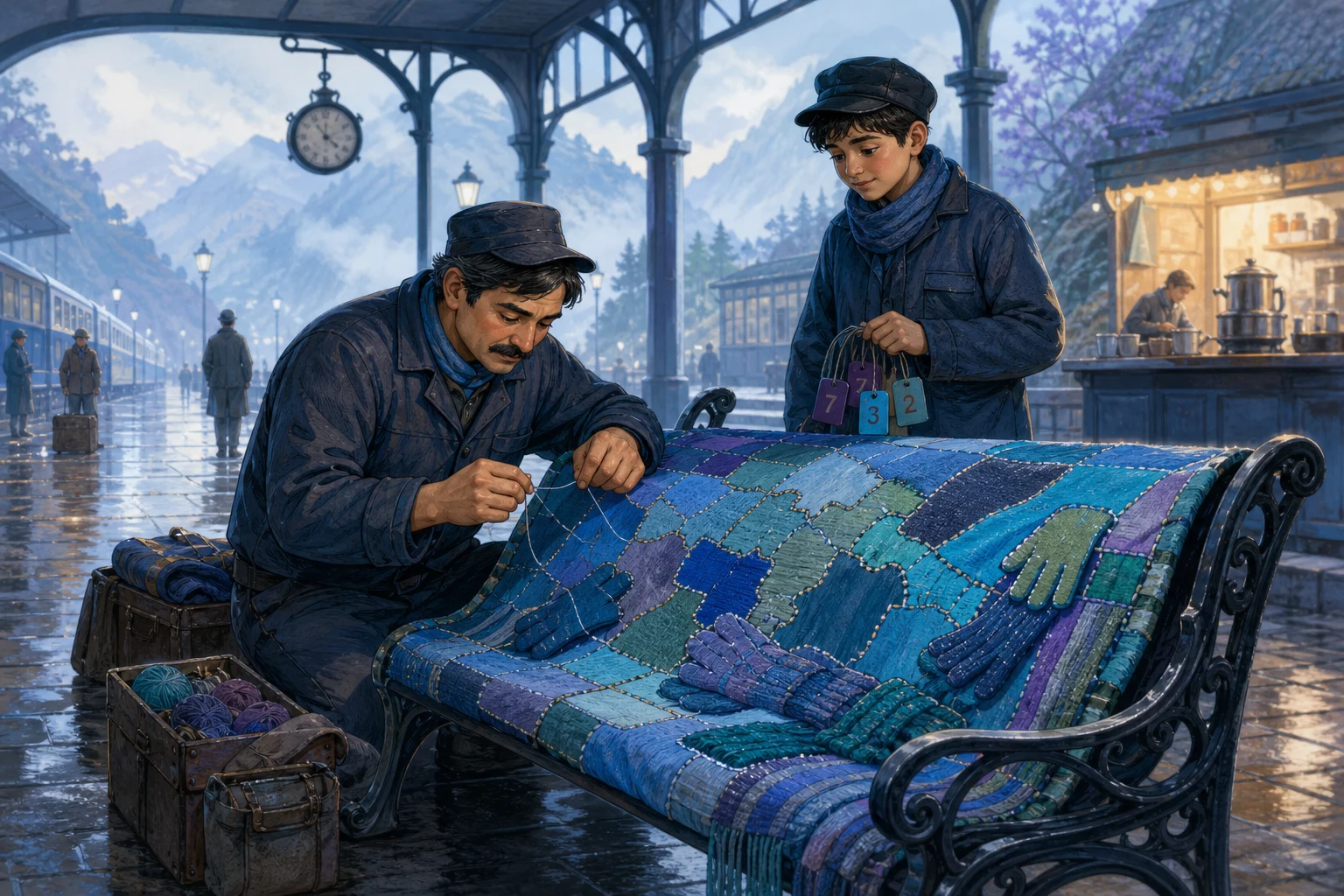
A Map Woven in Blue
Ilya’s patchwork bench covers began with lost gloves and ended as a map everyone could help complete.
Read Story →
Where the Shade Falls
Tomas had already measured the orchard for sale when three young workers asked whether they could borrow it for one afternoon.
Read Story →
A Tune for Every Pocket
Celia could repair almost anything with a spring, a screwdriver, and enough patience. Her niece’s silence in music class required something different.
Read Story →