
Quote Stories
Soles for the Evening Tide
Niko learns that a craft can grow stronger when it has more than one pair of hands.
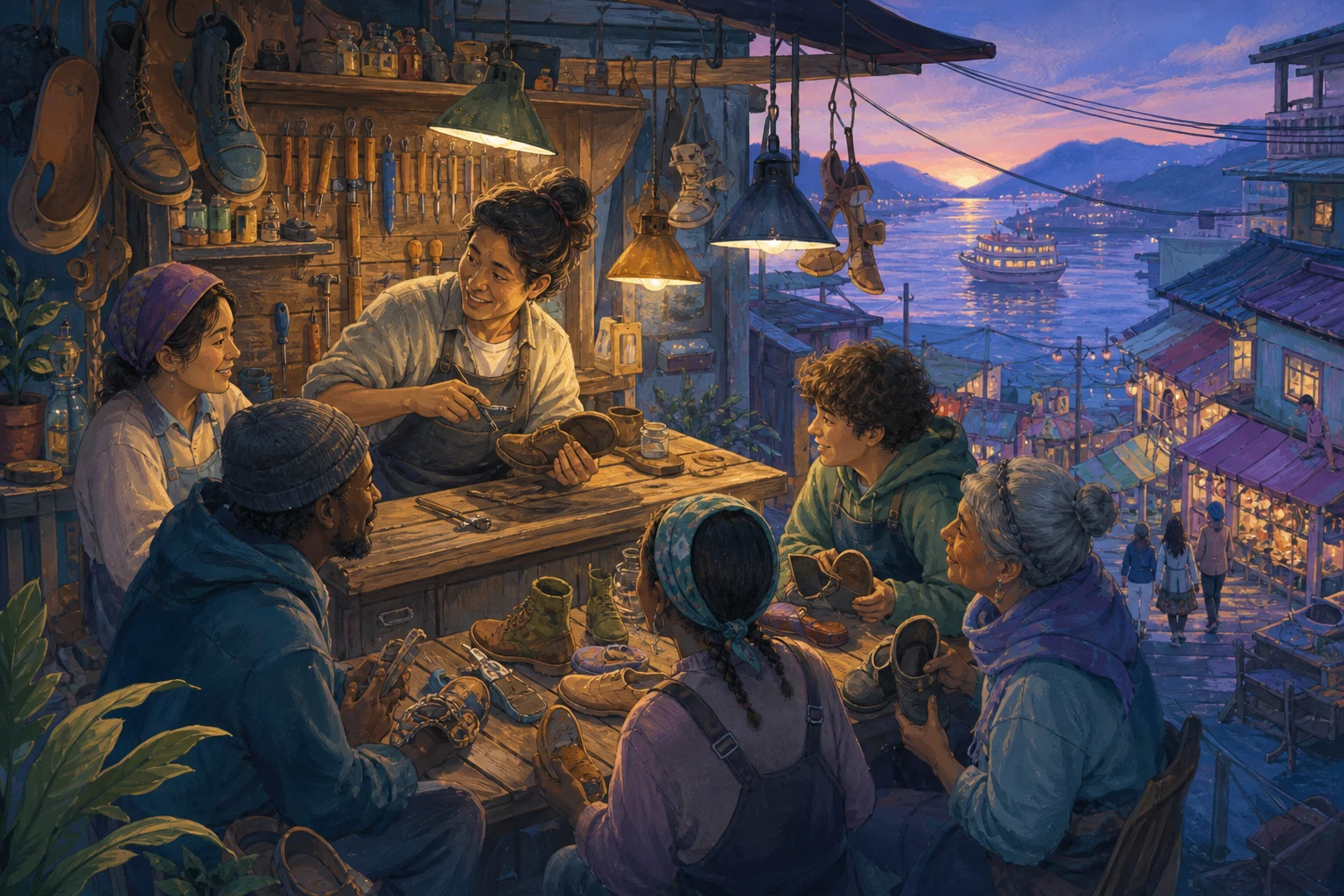
Niko kept the odd shoes in a wooden crate beneath his workbench.
One had a heel worn flat as a coin. Another was stitched with blue thread and smelled faintly of fish. There was a child’s sandal with a buckle shaped like a moon, a dancer’s slipper softened by hundreds of turns, and one enormous dock boot that had been repaired so many times it seemed to have developed opinions.
He collected them after closing, when the harbor market emptied and the steep lanes filled with the sound of dishes being washed. Each shoe presented a puzzle. Niko liked puzzles. He liked the clean pull of thread through leather, the small click of a new eyelet, the moment a cracked sole accepted glue and became useful again.
What he did not like was the empty chair outside his stall.
People had begun buying cheap shoes from the ferry market. When the soles peeled or the straps snapped, they often threw them away. A few still visited Niko, but not enough to cover rent, materials, and the tea he drank while waiting.
So he made a sign.
BRING ME YOUR WORST SHOE.
He expected curiosity. He did not expect the crowd.
By sunset, the stall was surrounded by dancers, dock workers, schoolchildren, and older residents carrying bags that clattered with buckles and buttons. Everyone wanted something different. A dancer needed a slipper quiet enough for rehearsal. A fisherman wanted a boot that could survive wet decks. A schoolboy wanted his only pair of shoes to last until the end of term. An elderly neighbor brought two mismatched shoes and asked whether they could be made into one comfortable pair.
Niko looked at the growing pile and felt his confidence shrink.
“I can examine them one at a time,” he said.
“Tonight?” asked the schoolboy.
“Perhaps by Thursday,” Niko replied.
The crowd laughed, and then everyone began talking at once.
The dancer demonstrated a foot movement beside the glue pot. A dock worker tested a repaired sole by stomping on a crate. Three children passed tools without being asked, though one handed Niko a spoon instead of a leather punch. The older neighbor sat in his chair and quietly sorted the fasteners by size.
By the time darkness settled over the harbor, Niko had fixed two straps, worsened one boot, spilled glue on his sleeve, and learned that six people could give six entirely different meanings to the word comfortable.
He closed the stall without finishing anything.
For several days, he considered taking down the sign. Then he noticed the sorted fasteners still waiting in their little rows. Beside them lay a scrap of paper covered in notes: soft sole, wide opening, strong heel, no squeak.
The notes were not his handwriting.
Niko returned to the neighbors with a plan. Instead of promising to repair every shoe himself, he would open the stall for two evenings each week. He would demonstrate one technique, then let people practice on old materials before touching their own footwear. The tools would stay on a shared shelf. Anyone who borrowed one would write down where it went.
“People will ruin things,” said the dancer.
“They might,” Niko answered. “I already do that occasionally.”
The first lesson concerned patches. It went badly. A child glued a leather square to his sleeve. The dock worker cut a patch too narrow. The elderly neighbor improved Niko’s method by suggesting a softer backing material made from discarded sailcloth.
The second lesson concerned stitching. It went better.
By the fourth, people had begun arriving early to help arrange the lamps. The schoolboy learned to replace eyelets. The dancer discovered that she could reinforce a slipper without making it stiff. The dock worker designed a rough drying rack from broken crate boards. Someone painted a new sign: REPAIR, LEARN, RETURN.
Niko still repaired shoes for money. Now he also sold small repair kits, taught evening lessons, and accepted shared work from people who wanted to trade time for materials. The stall grew crowded, but no longer lonely.
One rainy evening, the ferry horn sounded through the shutters while Niko watched the group work. The schoolboy was showing a newcomer how to hold the awl. The dancer was testing a quiet sole across the boards. At the back, the older neighbor had claimed the sorting table and was judging everyone’s knot technique with great seriousness.
Niko reached beneath the bench and pulled out the enormous dock boot.
“Still giving you trouble?” the dock worker asked.
“No,” Niko said. “I think it was waiting for a committee.”
They laughed. Together, they turned the boot over and examined its layers: old leather, sailcloth, rubber, and a careful row of stitches added by three different hands.
Outside, the tide rose against the harbor steps. Inside, the tools moved from person to person, each repair leaving the stall a little more capable than before.
Niko placed the boot on the finished shelf. Beneath it, he made room for the next difficult pair.
Related Quote Stories
Names for Every Turn
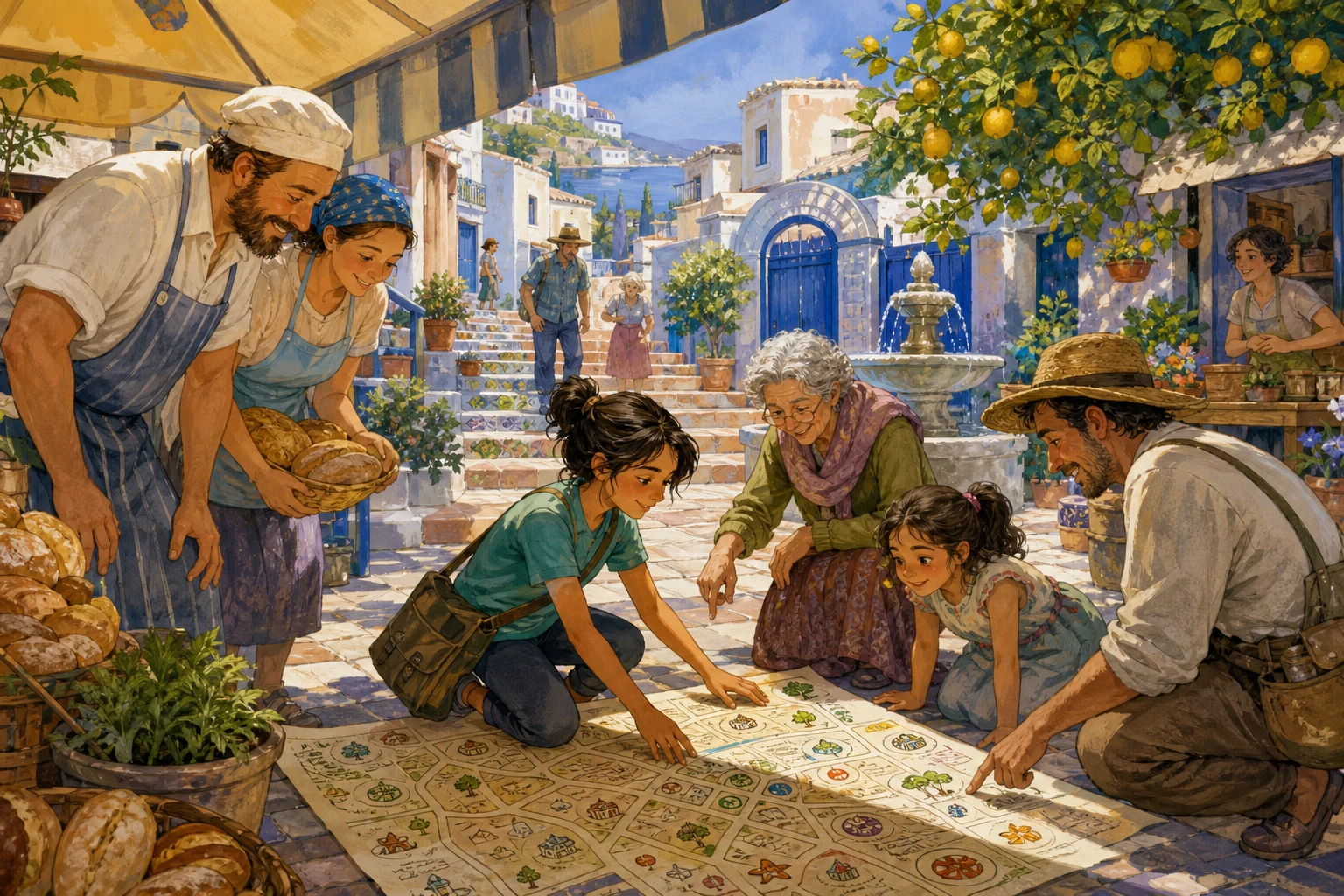
Lina’s first map was neat, confident, and wrong. Her second was crowded with fountains, fig trees, shortcuts, and the knowledge of everyone who called the hillside home.
Read Story →
Keep the Lane Open
Keo knows exactly how to win a race. He does not yet know how to keep a teammate from leaving one.
Read Story →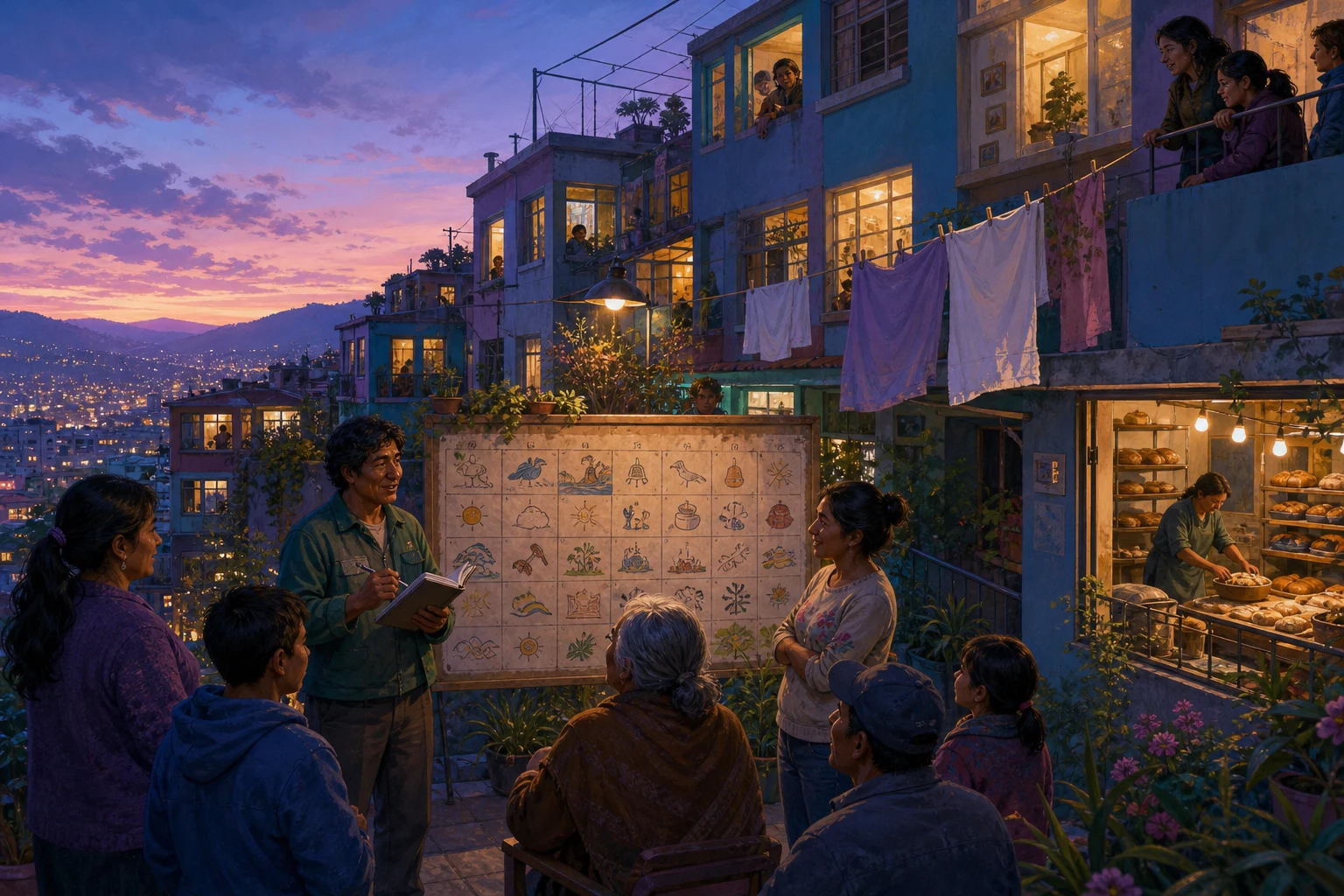
When the Building Learned to Listen
Lidia thought quiet could be enforced until a building full of strangers showed her that peace begins with knowing what everyone else is carrying.
Read Story →