
Quote Stories
Turn at the Red Gate
Salma learns that a good route can carry more than a basket.

The first basket slipped from Salma’s bicycle before she reached the canal bridge.
Three pears rolled into the grass. A jar of honey wobbled against her ankle. By the time she stopped, the morning train of clouds had covered the sun, and the road ahead looked longer than it had on paper.
Salma gathered the pears and checked her watch. The central market had changed its hours, leaving the growers who sold beyond the orchard lanes with only a few passing customers. As a produce buyer, she knew how to plan deliveries, compare prices, and make six crates fit where five had been expected. Surely she could solve a road.
That afternoon, she produced a guide.
It had arrows, distances, alternate turns, estimated cycling times, symbols for shade, water, steep slopes, and the best direction for viewing the hills. She printed it on thick cream paper and placed copies at the market entrance.
By noon, visitors were holding the guides upside down.
“This mark means a footbridge,” Salma explained.
“I thought it meant a goat,” said a visitor.
“It could be a goat,” admitted Salma, looking at the symbol. “From a distance.”
The next morning, a boy named Ilyan studied the guide without turning it upside down. He wore a faded helmet and carried a notebook full of tiny maps.
“You’ve drawn the route as if people are trying to escape,” he said.
Salma folded her arms. “They are trying to find the farm stands.”
“Then show them what to look for.”
Ilyan pointed toward the road. At the red gate, one turn. At the willow tree, another. At the stone well, a place to rest. The route did not need every measurement. It needed a rhythm people could remember.
Salma brought the idea to the growers. At first, they disagreed about everything: which symbols were clearest, where cyclists could refill water, whether tasting tables would attract wasps, and who would repaint a sign after rain.
Then Mara, who grew beans beside the old mill, brought a brush. She painted a red circle on her gate.
“People can understand this,” she said. “Even hungry people.”
Others added their own marks: a yellow sun near the melon stand, a green leaf beside the herb garden, and three blue strokes at the canal crossing. The signs were simple enough for a child to follow and bright enough to catch the eye of someone arriving by bicycle.
Salma arranged the first route for a Saturday. She placed water at the stone well, benches beneath the walnut trees, and small tasting tables that rotated between growers. Ilyan checked every turn, while Salma checked every crate.
At the red gate, the route worked beautifully.
At the willow tree, it failed completely.
A gust of wind spun the arrow backward. Six cyclists followed it toward a muddy field, where they met a patient cow and no vegetables at all. Salma found them, apologized, and carried the sign back herself.
“I knew we should have used a triangle,” she said.
Ilyan wiped mud from his shoes. “Or we could put the arrow on both sides.”
Salma stared at the sign. The answer was so obvious that she laughed, first quietly, then hard enough that the cyclists began laughing too.
They returned to the route. By late afternoon, people had visited every stand. The bean grower sold out. The honey seller ran back to refill her jars. At the last table, a child traded a sketch of the blue canal symbol for a slice of pear.
The route did not make the road shorter. It made the road legible.
When the market opened again the following week, Salma did not bring another complicated guide. She brought a blank ledger and a box of paint. Each grower recorded what had worked, what needed changing, and which neighbor might help next time.
Salma still planned carefully. She still counted crates. But she no longer tried to hold the whole route in her head.
At sunset, she leaned her bicycle against the red gate. From there, the painted symbols stretched across the meadowland like a bright, unhurried sentence—one that invited everyone to keep reading.
Related Quote Stories
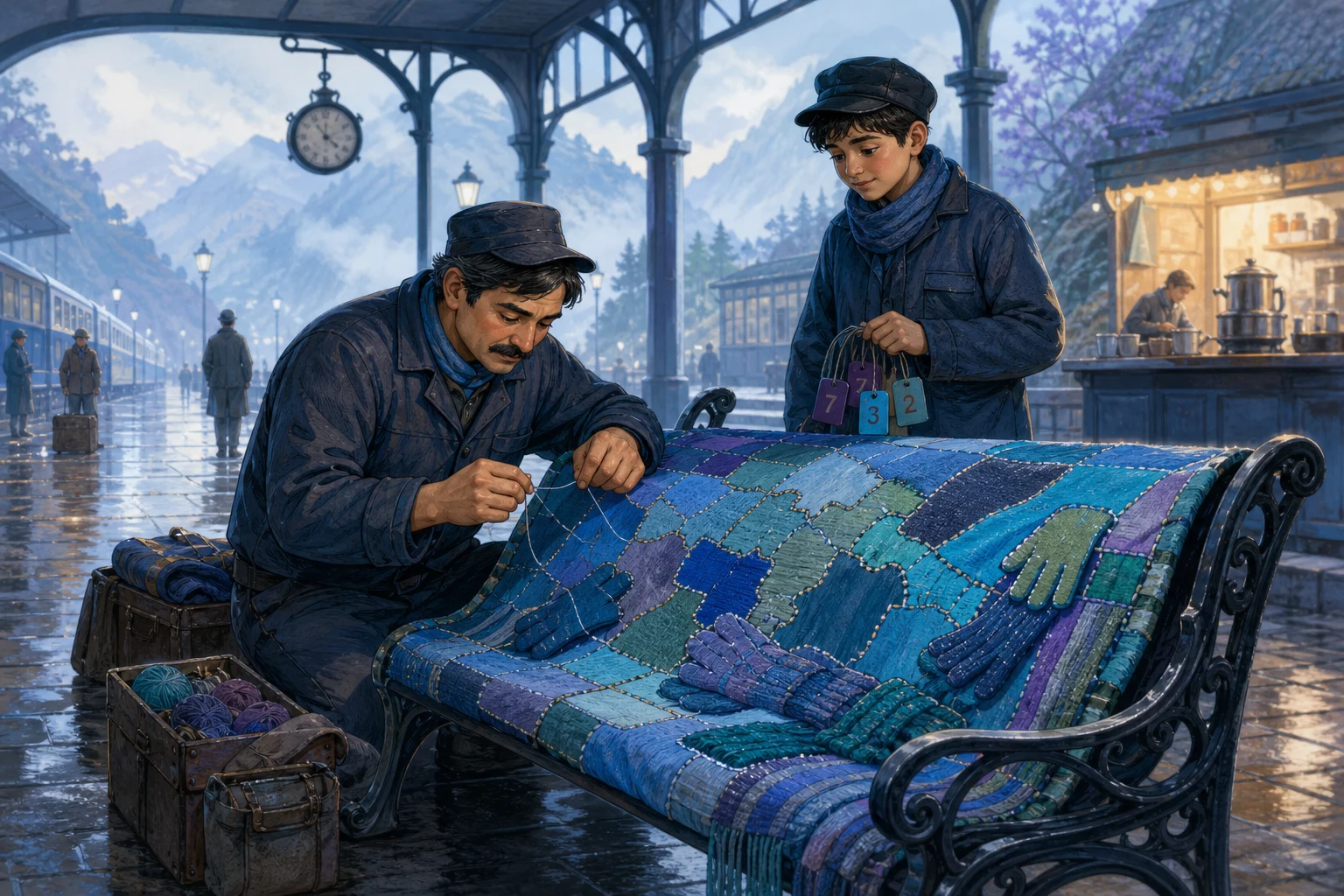
A Map Woven in Blue
Ilya’s patchwork bench covers began with lost gloves and ended as a map everyone could help complete.
Read Story →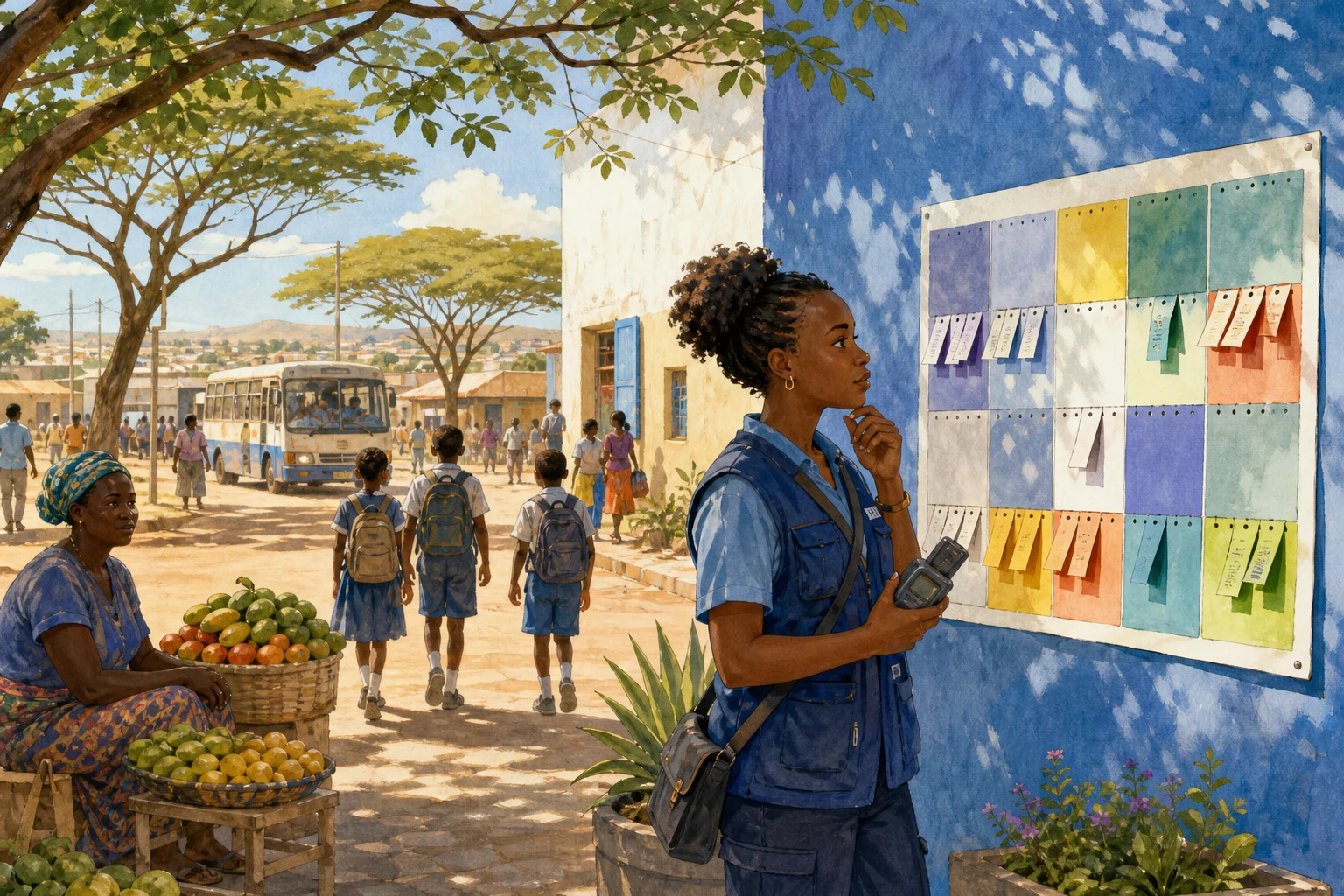
Tabs in the Wind
Kito’s first calendar was neat, accurate, and almost useless. The second one belonged to everyone.
Read Story →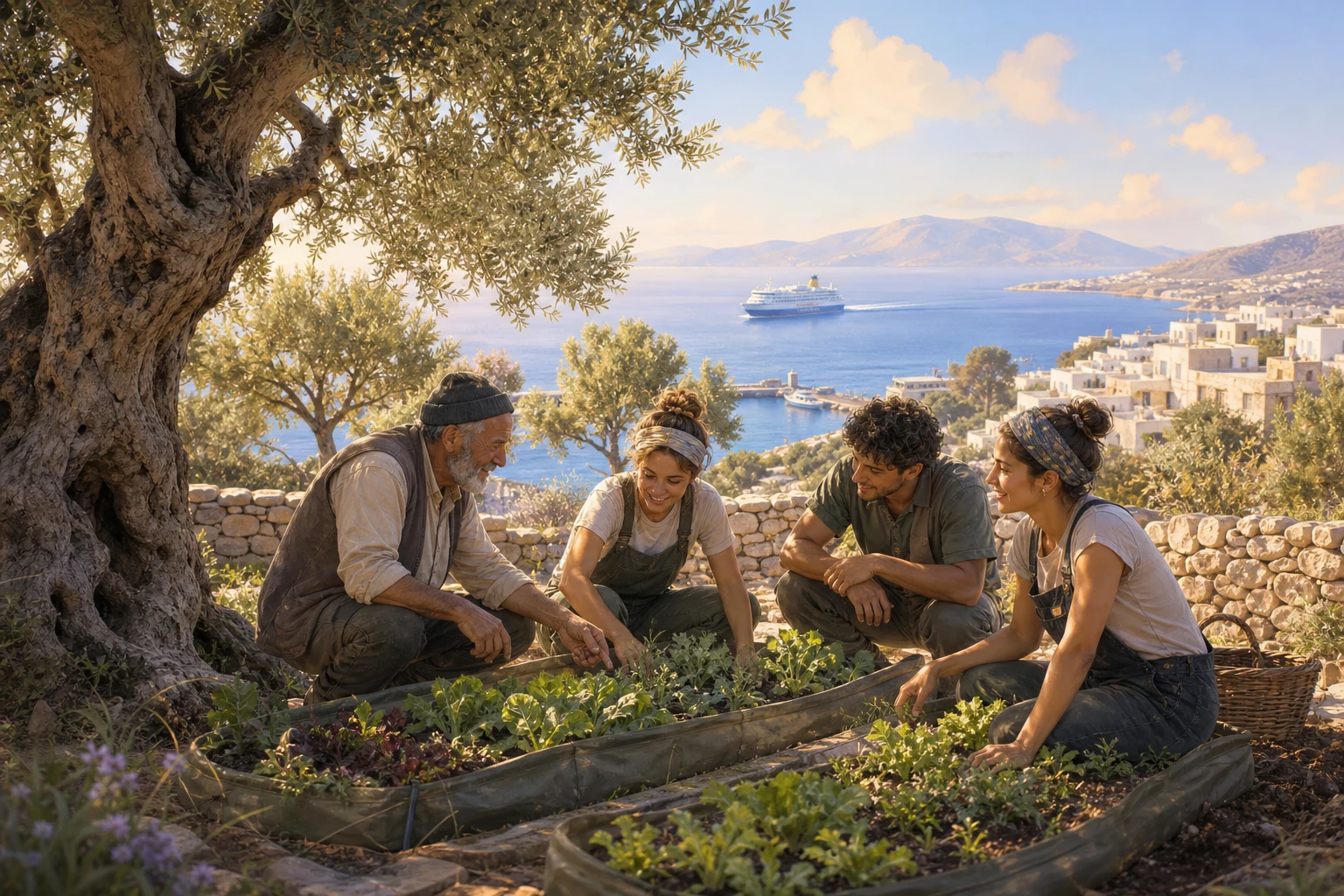
Where the Shade Falls
Tomas had already measured the orchard for sale when three young workers asked whether they could borrow it for one afternoon.
Read Story →