
Quote Stories
What the Wind Hasn’t Told Us
A field guide begins with room for uncertainty.
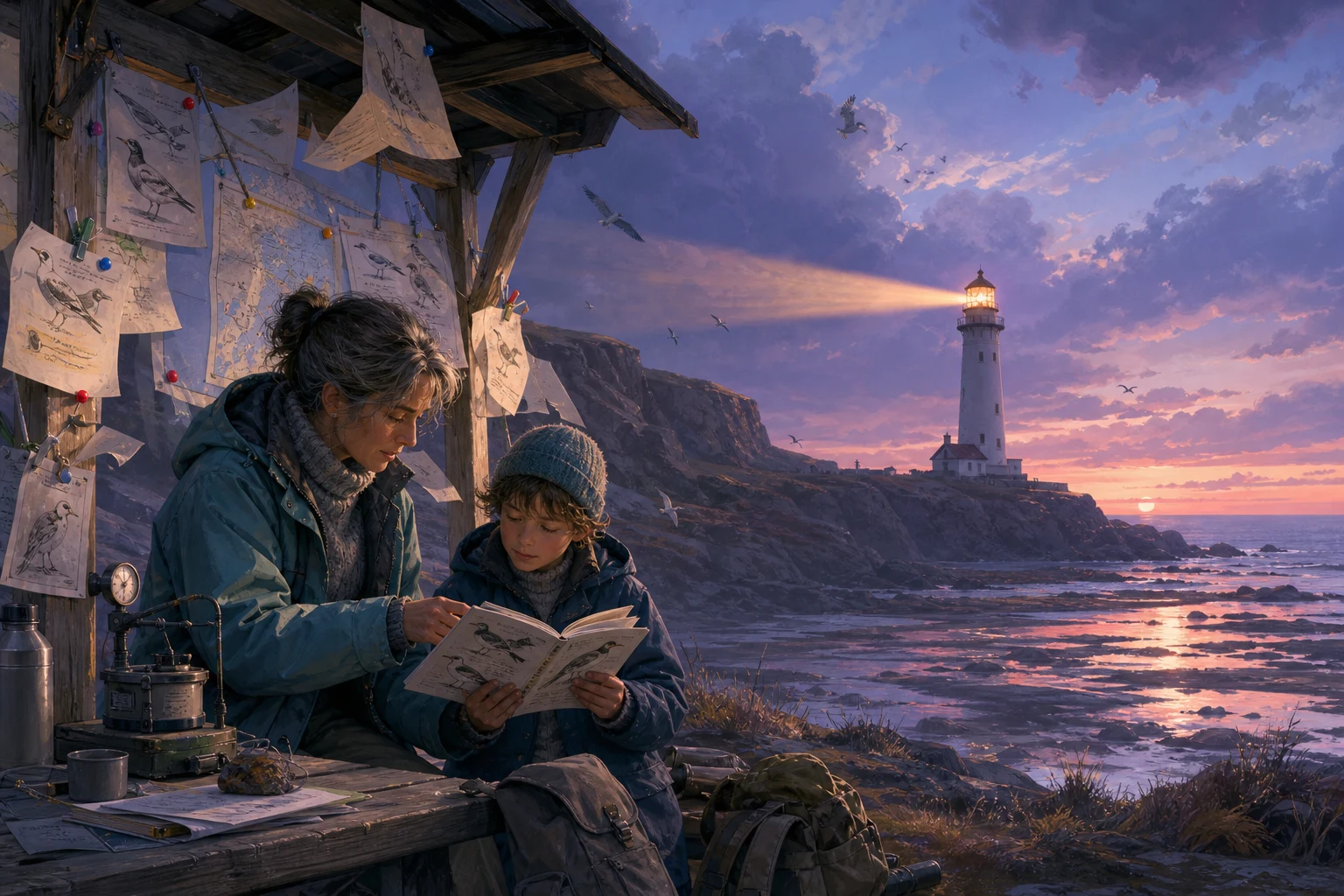
The key to Elian Voss’s drawer was shaped like a fish.
She turned it twice, lifted the lid, and found three notebooks, a brass compass, and a gull feather caught between the pages of a tide chart.
“Why did you cross out the bird?” asked a voice behind her.
Elian looked over her shoulder. Juniper Vale stood in the lighthouse doorway, rain dripping from the yellow hood of her coat. She had moved into the cottage below the hill two weeks earlier and had already discovered the bell rope, the emergency biscuits, and the fact that Elian drank tea strong enough to float a spoon.
“It wasn’t the bird,” Elian said. “It was my guess about the bird.”
“Was your guess wrong?”
“Possibly.”
Juniper leaned closer. “Then why keep it?”
Elian glanced at the notebooks. For nine years, she had recorded wind speed, cloud cover, tide height, and every seabird she could identify from the lighthouse windows or the shore path below. Her notes were careful. Her handwriting was small. Her conclusions were usually softened by words such as perhaps, likely, and uncertain.
She had never sent the records anywhere.
A useful observation, she believed, should arrive polished. It should not contain blank mornings, smudged names, or a line that read: Three dark shapes beyond the reef. Could be guillemots. Could be rain.
Juniper pointed to the page. “That one sounds exciting.”
“It sounds unhelpful.”
“It sounds honest.”
The next morning, Juniper returned with a wooden board, six drawing pins, and a piece of blue paint left over from a bedroom wall. Together they carried the board down to the notice shelter beside the ferry pier.
At the top, Juniper painted:
WHAT HAVE YOU SEEN?
Below it, Elian wrote four questions:
Where?
When?
What did you notice?
What are you unsure about?
The first reply came from a fisherman named Orren, who reported a bird with a white flash on its wing near the western rocks. He added, in a different color of ink, “Could have been sunlight.”
A child named Tavi drew something with enormous feet and wrote, “It stood still for a long time and looked offended.”
A walker reported hearing a call before dawn but seeing nothing at all.
Elian began checking each note against the tide tables and her own records. Juniper carried the board through the village, asking questions without making anyone feel tested. Even the ferry captain contributed a sighting from the upper deck, though he insisted that “bird-shaped” was the most accurate description available.
By the end of the month, the notice shelter held a map covered in colored pins. Red marked confirmed sightings. Yellow marked possible sightings. Blue meant someone had seen or heard something but could not identify it.
“Blue is the biggest group,” Juniper observed.
“It usually is,” said Elian.
Then the nesting season began.
Birds arrived along the cliffs in numbers Elian had never seen. Some settled on familiar ledges. Others appeared in places usually empty except for grass and salt spray. Reports multiplied, and so did disagreements.
Orren claimed the birds near the western rocks were black-headed gulls. Tavi insisted they were “the same offended ones.” A school group recorded a call that matched no sound in Elian’s reference books. Three walkers reported nests on the north face, while Elian found only broken shells and windblown feathers.
The town council asked Elian for a guide before the summer visitors arrived.
She spent two evenings at her desk, trying to turn uncertainty into certainty. Each time she wrote a sentence, she found herself reaching for the eraser.
Juniper sat on the floor, sorting sketches by beak shape.
“What if the guide says we don’t know?” she asked.
“People expect guides to know things.”
“Then it can guide them to the things we don’t know.”
Elian looked at the blank page beside her lamp. Outside, the lighthouse beam swept across the dark water, revealing the sea in brief, silver pieces.
The next day, she began again.
The finished guide had drawings, tide marks, listening points, and a foldout map. It also had a page titled STILL UNDER STUDY. On it, Elian described the disputed nests, the unidentified call, and the conflicting reports. Beside each question, she listed what evidence would help: a clear sketch, a timed recording, a photograph from a safe distance, or another observer willing to compare notes.
At the bottom, she wrote: “A careful question is part of the record.”
When the guide was placed in the notice shelter, people gathered around it. Orren read the page twice. The schoolchildren argued cheerfully over which drawing belonged in the next edition. The ferry captain added a new sighting before anyone asked him.
Juniper found Elian standing apart, watching the pages lift and settle in the sea wind.
“Are you worried?”
“A little.”
“Because it isn’t finished?”
“Because it is.”
Juniper considered this. “That doesn’t make sense.”
“It does to me now.”
A bird crossed the evening sky above them, its wings briefly catching the lighthouse beam. Elian reached for her notebook, then paused.
Juniper held out a pencil.
Elian wrote the time, the direction, the weather, and what she could see.
Then, after a moment, she added: “Identity uncertain.”
Juniper smiled. “Good.”
Elian looked toward the dark water, where more wings might be waiting just beyond the reach of the light.
“Good,” she agreed, and left the line uncrossed.
Related Quote Stories
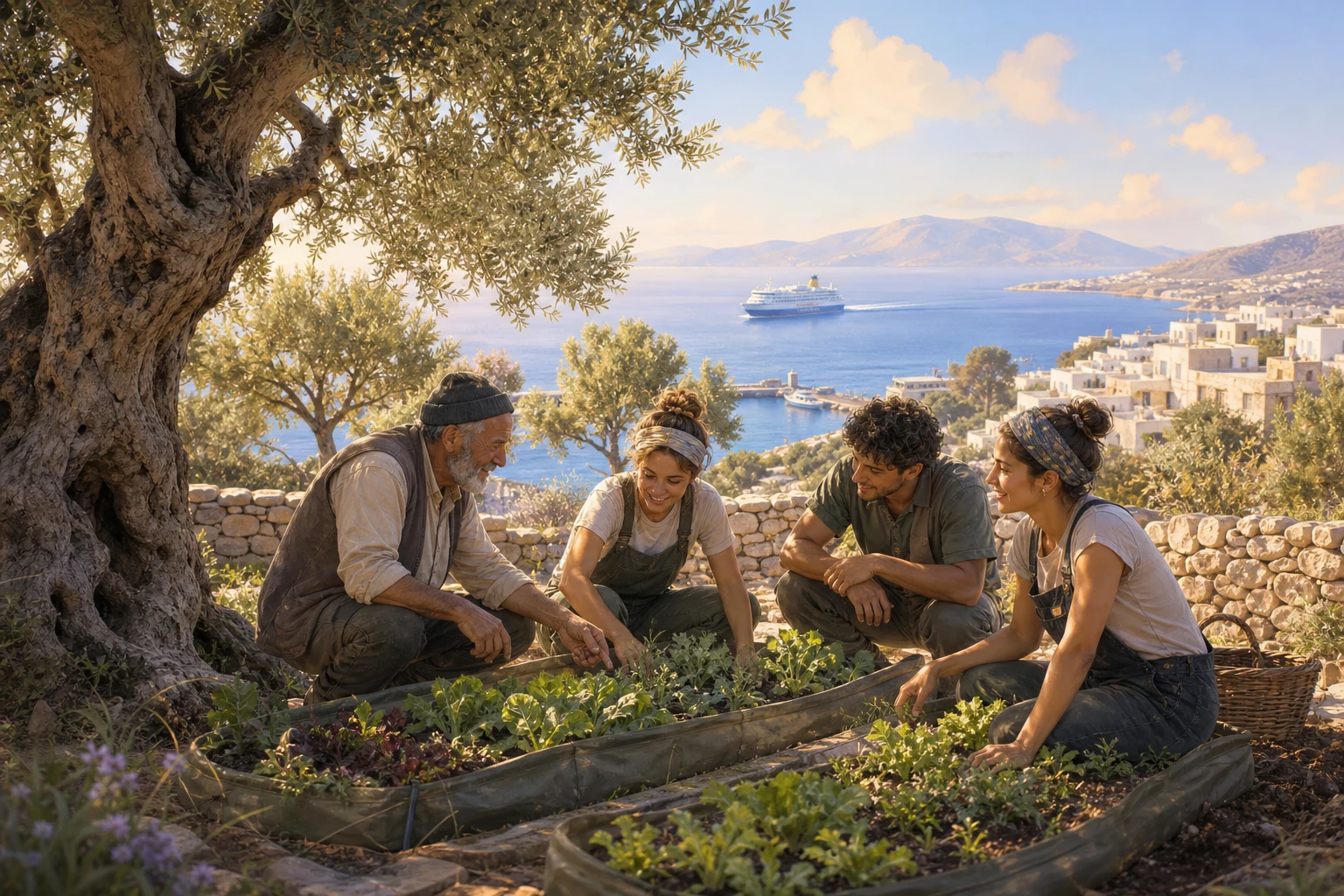
Where the Shade Falls
Tomas had already measured the orchard for sale when three young workers asked whether they could borrow it for one afternoon.
Read Story →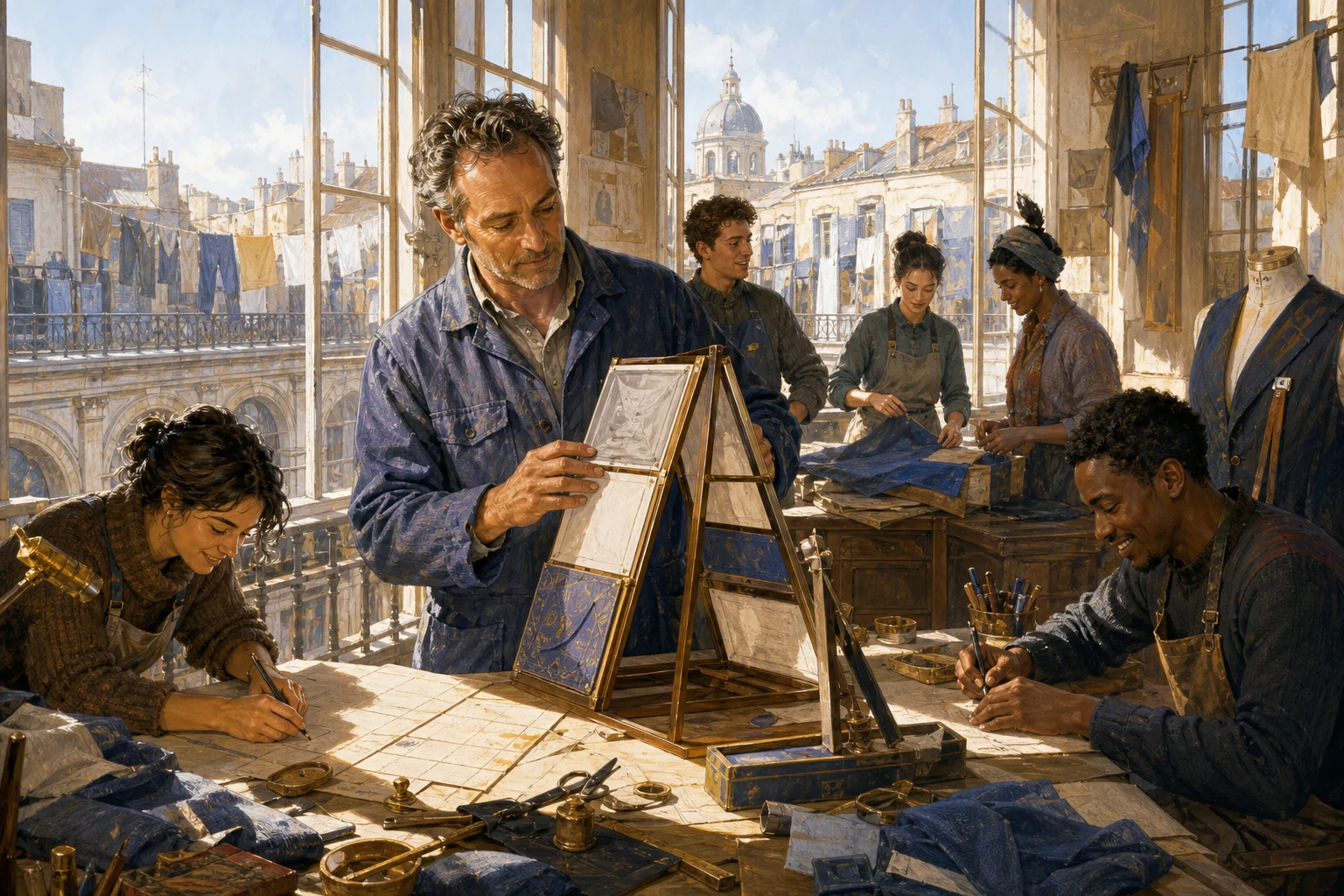
A Table for Starting Over
Soren wanted the room above the tailoring arcade for himself. Then a broken model, a dented floor, and several determined apprentices persuaded him to unlock the door.
Read Story →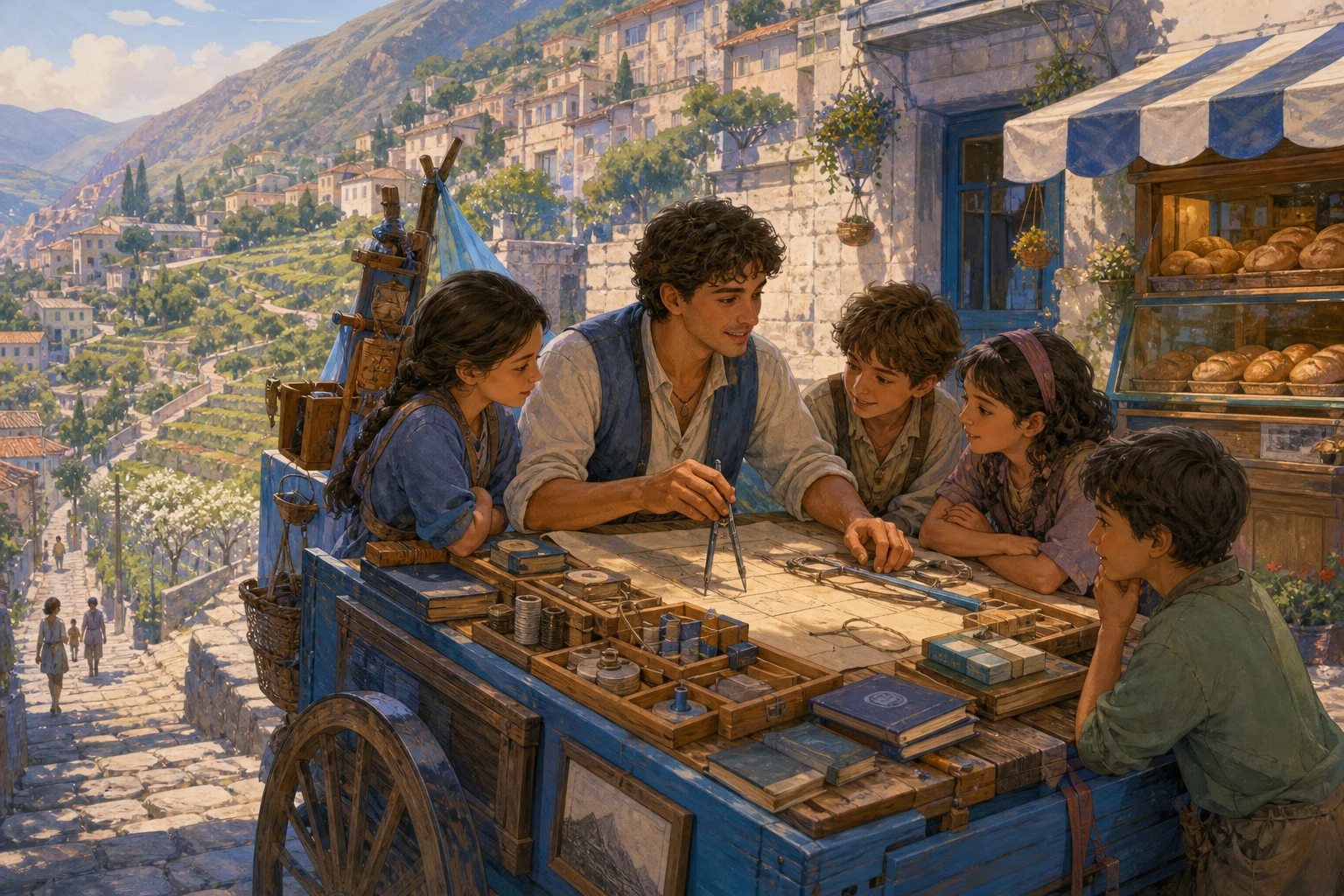
Lessons on Four Wheels
After losing his mapmaking contract, Elian rebuilds a handcart and fills it with puzzles, measuring tools, and books. The first lessons fail—until the people he hopes to teach show him how learning can begin with ordinary things.
Read Story →