
Quote Stories
When Everyone Gets the Floor
Yara learns that a better conversation begins before anyone speaks.
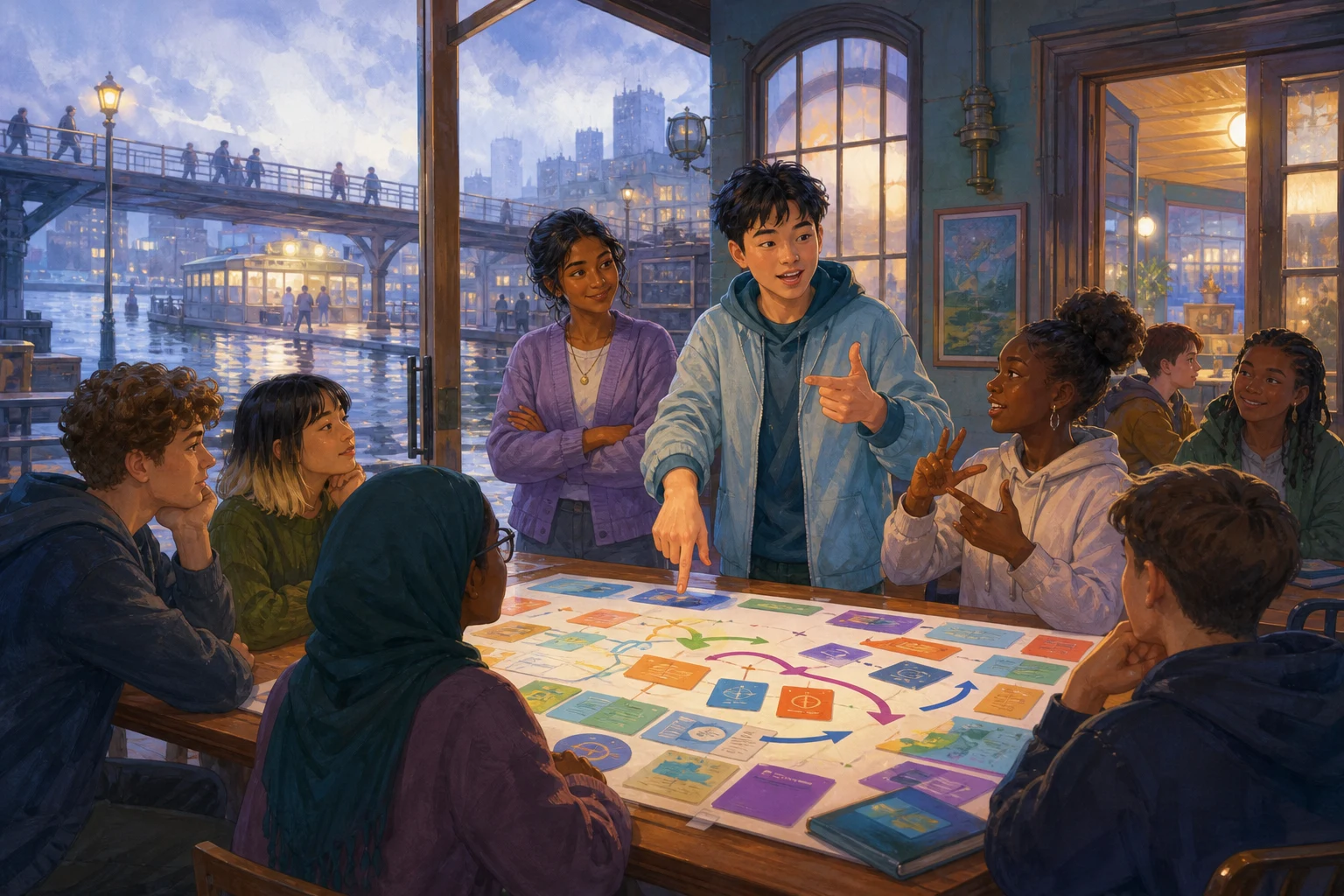
Yara’s neatest summaries were useless by the time the debate ended.
She knew this because Jun kept looking down at his tablet while the other students argued across the room. By the time Yara finished typing a sentence, someone had already changed the subject, answered an invisible question, or laughed at a joke she had missed too.
The club met every Thursday in a converted ferry office above the river. Rain tapped the tall windows. Beyond them, pedestrian bridges shone under streetlamps, and barges moved like dark shelves through the mist.
Yara had volunteered to caption the sessions because editing words was her profession. She worked quickly, quietly, and usually alone. Her first idea was simple: record everything, polish it afterward, and give Jun a complete written account.
Jun read the first summary in the stairwell.
“This is excellent,” he said, then pointed to the final page. “It just arrives after I needed it.”
Yara felt the familiar urge to improve the document. “I can make it shorter.”
“You can,” Jun said. “But maybe the document isn’t the whole problem.”
The next meeting was worse. The students practiced a debate about whether the riverfront warehouses should become public studios. Hands shot up. Voices overlapped. The club leader, Sela, tried to keep order, but even she lost track of who had answered whom.
Jun raised his hand twice. Both times, another student spoke before Sela noticed.
Afterward, Yara spread her notes across the table. The pages were full of arrows, abbreviations, and unfinished sentences.
“I’m sorry,” she said.
Jun shook his head. “Don’t apologize for a room designed to move faster than one person can follow.”
That sentence stayed with Yara on the walk home. She passed the public reading room, its windows glowing gold against the rain, and imagined the debate as a machine: quick, impressive, and built with one missing gear.
At the next session, she arrived with a roll of butcher paper, colored cards, and a thick black marker.
The students were skeptical.
“I’m not asking you to debate more slowly forever,” Yara said. “I’m asking us to make the turns visible.”
They tested a board with four columns: claim, evidence, response, question. Each speaker placed a card on the board before talking. Sela used a small lamp to signal the beginning and end of a turn. Anyone could request a pause by placing a blue card in the center of the table.
The first practice collapsed into confusion. Students forgot the cards, talked over one another, and complained that the system felt stiff.
“It is stiff,” said Ravi. “Like debating inside a cupboard.”
Jun smiled. “Then let’s make the cupboard bigger.”
He suggested that each team prepare its strongest points on the board before the discussion began. Another student proposed a visible queue. Sela volunteered to summarize each exchange in one sentence before moving on. Yara stopped taking charge of the design and began recording what worked.
Over three weeks, the room changed.
The students learned to leave space without treating silence as failure. They discovered that a pause could sharpen an argument instead of weakening it. Jun began challenging evidence, not scrambling to reconstruct the conversation. The others started asking him questions directly, then waiting for his answer.
At the exhibition, parents and neighbors filled the old ferry office. Rain blurred the bridges outside. On the wall, the preparation board held a bright arrangement of cards, arrows, and handwritten questions.
The final topic was whether public spaces should be designed around the fastest users or the widest range of needs.
Jun delivered the closing argument.
He spoke, signed, and pointed to the board while his teammates followed each part in their own ways. Sela repeated one key sentence. Ravi held up the evidence card. A younger student added a written question. No one rushed to rescue the silence between them.
When Jun finished, the room did not erupt at once. For a heartbeat, everyone simply looked at him.
Then the applause began—not loud at first, but coordinated. Hands lifted and waved. Palms met. Voices joined. The sound moved around the room like light across water.
Yara watched Jun laugh.
She had thought access meant adding a service at the edge of a conversation, something prepared afterward and delivered neatly. But the students had built access into the conversation itself. They had not made room for one person by shrinking everyone else’s voice. They had made the whole room think more clearly.
On Monday, Yara returned to her editing desk. Before opening her first file, she moved the keyboard slightly aside and placed a blank card beside it.
Claim. Evidence. Response. Question.
She began with the question.
Related Quote Stories

The Pace We Carry
Devika came to the relay hoping to prove she could run alone. Instead, her team taught her how to move with one another.
Read Story →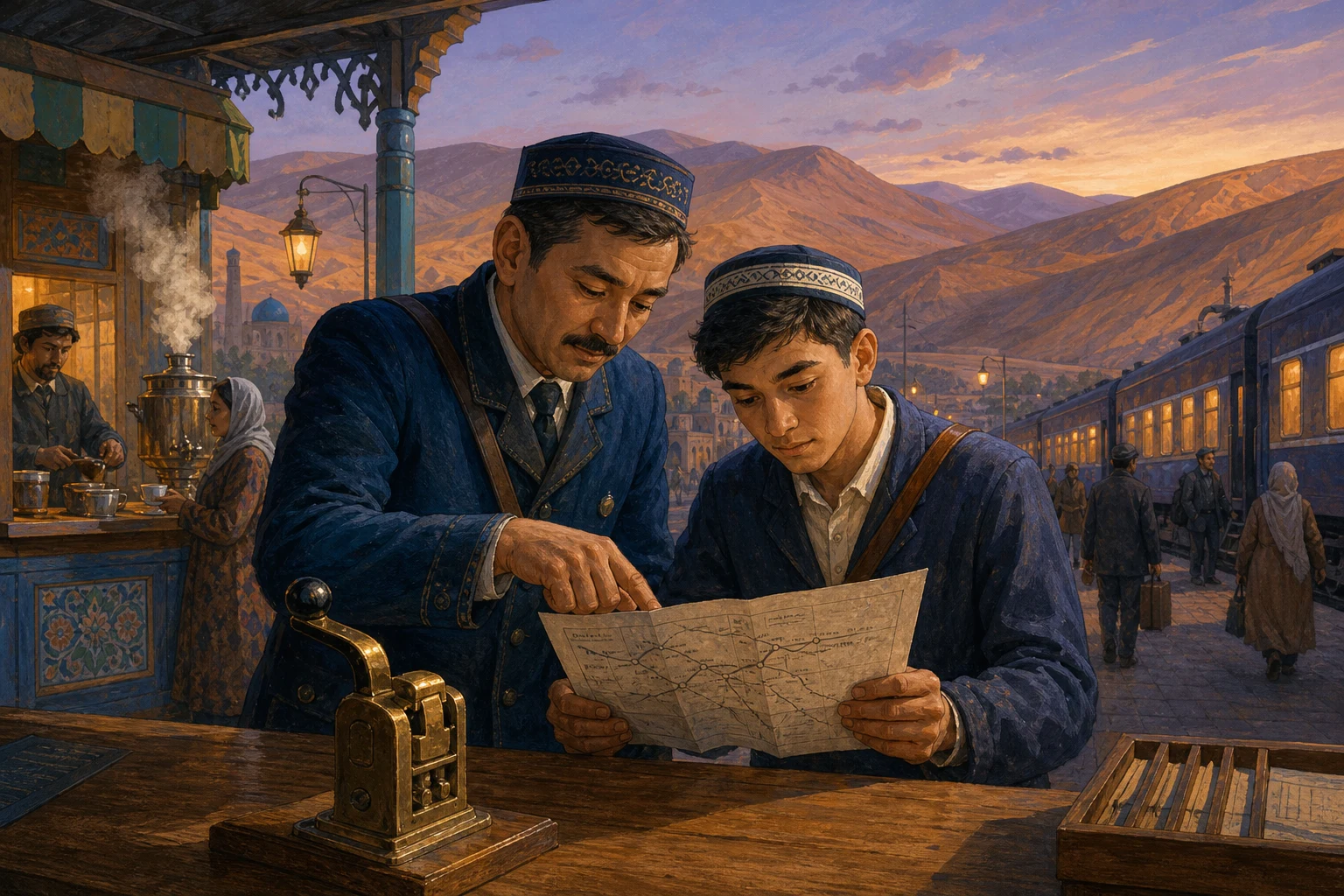
Routes by Memory
Anik can recite every departure by number. Laleh remembers them by the people and landscapes along the way. When her family responsibilities make memorization difficult, the station’s strictest inspector must learn a new way to teach.
Read Story →
Wind Has a Way of Answering
After a crosswind tears apart her contest kite, Mara stops decorating and starts listening—to the wind, to an old weather watcher, and to the children whose kites fail beside hers.
Read Story →