
Quote Stories
Where the Notes Meet
Noor learns that belonging can be something an ensemble builds together.
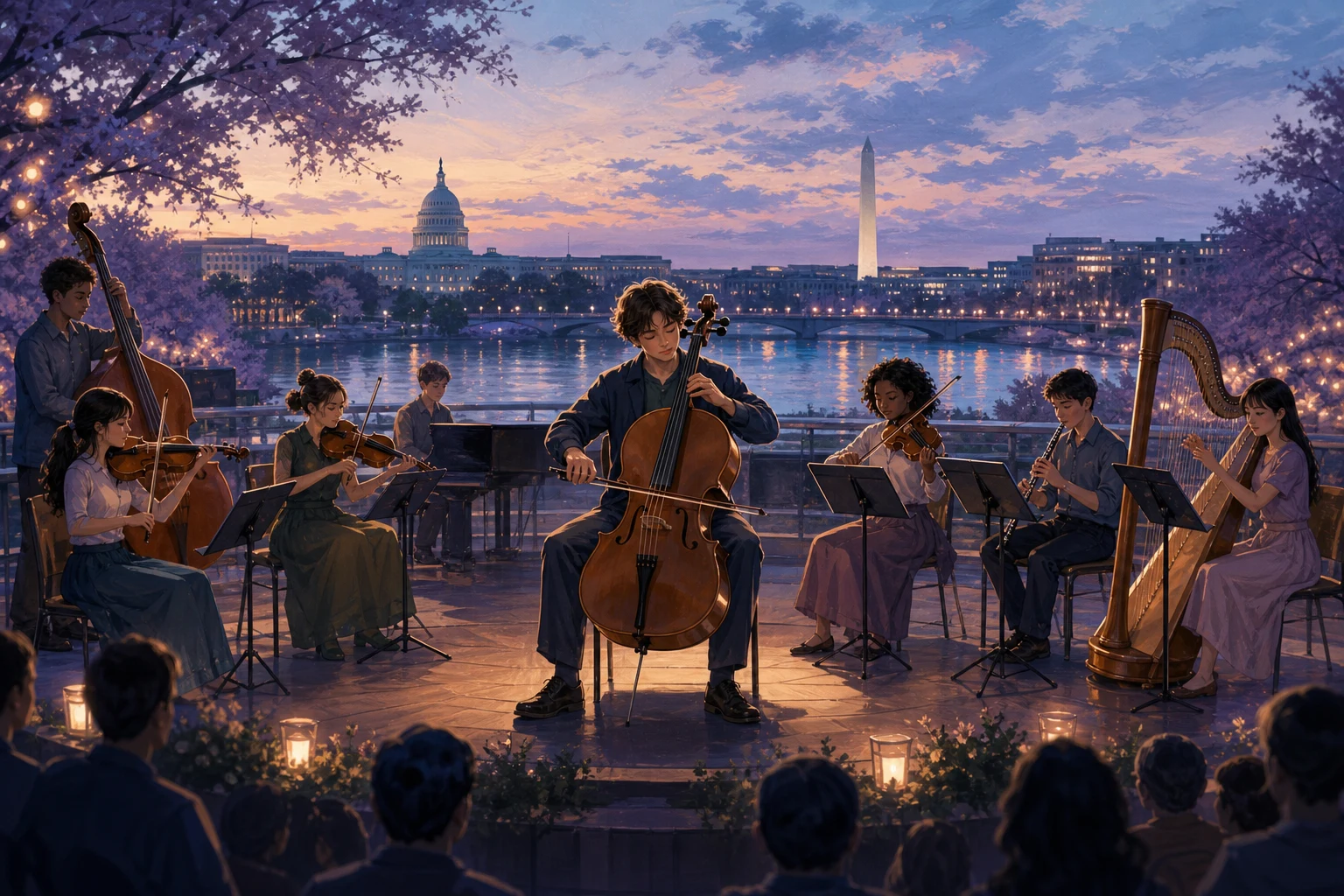
The first note came out bright and hard, like a spoon struck against a glass.
Noor stopped playing.
In the practice room, dust floated through the afternoon light. Her cello rested between her knees, newly repaired and polished, its varnish glowing amber beneath the high windows. The instrument had once answered her with a deep, patient warmth. Now every note seemed to leap ahead of the others.
Across the corridor, the youth ensemble was rehearsing for the spring concert. Violins climbed, flutes shimmered, and the basses laid down a steady floor. Noor had been chosen to lead the cello section, but she had not attended rehearsal in three weeks.
Her conductor, Irena Vask, had sent two messages.
Are you all right?
Then: We miss your sound.
Noor had answered neither. She told herself that silence was better than explaining. The repair shop had replaced the cello’s bridge and adjusted its soundpost. They had done everything correctly, the technician said. But correctness did not make the instrument feel like hers.
On Thursday, Noor carried the cello case to the conservatory and stopped outside the rehearsal hall. Through the door came a passage she knew by heart. The cellos entered together, but the low phrase felt empty without her.
She almost turned around.
“Are you going to stand there until summer?” asked Sami, the ensemble’s percussionist, appearing with a triangle under one arm.
Noor looked at the case. “I’m not sure I can play with them anymore.”
Sami did not offer reassurance. He only opened the door.
Irena saw Noor and lowered her baton. No one clapped or asked where she had been. That kindness made Noor’s throat tighten.
“I thought you’d lost interest,” Irena said.
“I thought you’d hear that something was wrong.”
“I heard you were gone.”
Noor opened the case. “The cello changed after the repair. I tried to make it sound like before, and everything became worse.”
Irena leaned over the instrument without touching it. “Then perhaps we should stop asking it to sound like before.”
The next rehearsal became an experiment. Noor moved from the center of the cello row to the far end, where the hall’s wooden wall softened the sharper notes. The violins played more quietly around her. The horn player changed one entrance. Sami placed a small frame drum behind Noor, giving her phrases somewhere to settle.
It was awkward. The first attempt unraveled after four measures. The second was too slow. During the third, Noor missed an entrance and covered her face.
“Good,” Irena said.
Noor stared at her. “Good?”
“Now we know where the music resists.”
They rearranged the piece again. Instead of carrying the melody, Noor began with a low pulse, letting the violas answer. A younger cellist shared the higher countermelody. The ensemble sounded less grand than it had on the original score, but more alert—as if every musician had begun listening with both ears.
On the evening of the concert, wind swept across the riverside amphitheater and rattled the music stands. Noor’s hands were cold. Behind the curtain, she nearly returned the leadership pin to Irena.
“I’m not leading the section,” she whispered.
“You helped us find its shape,” Irena replied. “That counts.”
The lights rose. The first movement began softly, with the ensemble seated in their new uneven arc. Noor drew her bow across the strings.
The sound was still brighter than before. It was still hers.
When the final note faded, the audience waited a breath longer than expected, then filled the amphitheater with applause. Noor looked down the row. The younger cellist was grinning. Sami tapped the side of his drum. Irena lifted her baton toward all of them.
Afterward, Noor packed the cello carefully. She no longer wished the repair undone. The instrument had not returned to its old voice, and neither had she. Together, they had found another way to be heard.
Related Quote Stories
After the Last Train
Oren thought belonging could be organized with a stamp, a schedule, and a modest discount. Then a crowded food night taught him to leave room for strangers to become hosts.
Read Story →
Keep the Kites Close
Ema wants to rescue her town’s kite festival with one daring flight. Instead, listening to her neighbors leads her toward a celebration that belongs to everyone.
Read Story →
Hinges in Winter
Anja inherits a repair shed she intends to close, but a broken gate—and a child’s careful drawings—opens a different future.
Read Story →