
Quote Stories
When the Trays Went Still
A baker learns that a better rhythm can make room for better work.
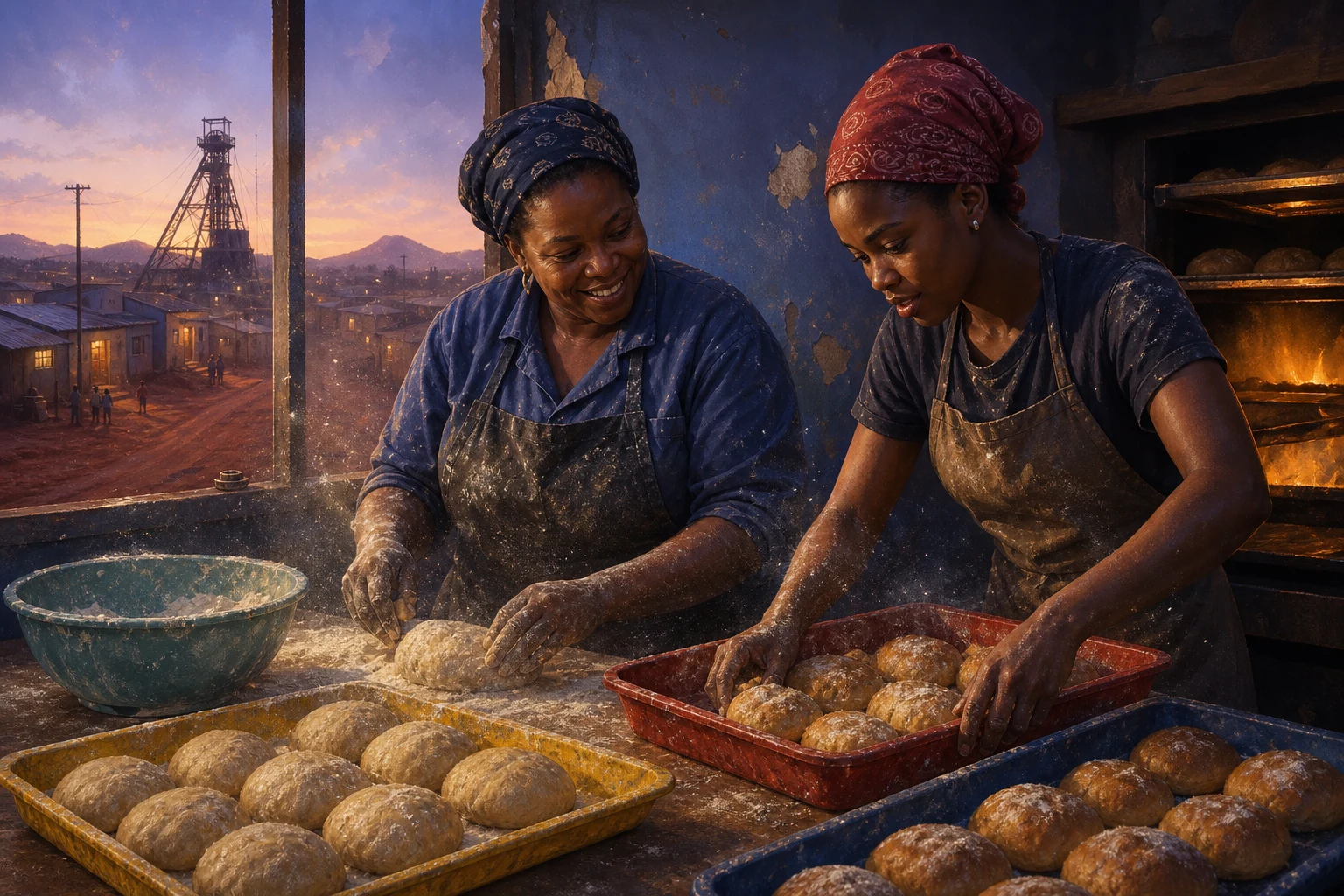
At 3:42 a.m., Suri pulled the first tray from the oven and heard the mine siren answer across the red-dust road.
The bakery woke in layers: the hiss of steam, the clack of metal tins, the timer’s sharp chirp, and the boots of dawn-shift workers crossing the front room for bread. Suri moved through it all quickly, weighing dough with one hand and marking orders with the other.
“Watch the spiral,” she told the new apprentice. “Fold, turn, pinch. Again.”
Maro nodded. He was careful, broad-shouldered, and painfully slow. By sunrise, he had shaped only six rolls, two of which had opened like little white flowers in the oven.
Suri gave him a written list the next night. Fold. Turn. Pinch. Proof. Bake.
He followed it, but the timers rang together, a delivery cart rattled past the back door, and someone dropped a stack of trays. Maro froze. When Suri found him, he was staring at a row of misshapen rolls as if they had betrayed him.
“I can do it,” he said.
“I know,” Suri replied, though she was not yet sure how to help him do it here.
The next morning, she changed nothing. Maro missed the salt in a batch of dough. A senior baker complained that he was slowing everyone down. Suri nearly agreed.
Then she noticed the flour on Maro’s fingertips. He had arranged three small mounds beside his board: dough ready to fold, dough ready to rest, dough ready for the oven. He had built himself a system no one had asked to see.
Suri picked up a blue tray and placed it beside him.
“Show me,” she said.
Maro hesitated, then set one shaped roll on the tray. Suri placed a yellow cloth beside the next stage and a red one beside the oven-ready dough. They worked without speaking until the colors made a quiet path across the bench.
The following night, Suri moved two timers farther apart. She hung a card above the mixing table with drawings of each stage. Before the rush began, she called the team together for three minutes.
“What makes this shift harder than it needs to be?” she asked.
At first, nobody answered. Then Lindiwe, who packed the orders, suggested numbering the trays. The delivery driver asked for a bell instead of shouted instructions. Maro proposed tasting one roll from every batch before the whole tray went into the oven.
Suri wrote every suggestion down.
The new arrangement was not peaceful. Flour still flew. Trays still clanged. A timer still shrieked whenever someone forgot it. But the work became legible. The colors showed what words could not. The pauses caught mistakes early. Maro stopped flinching at every sound and began watching the dough.
A week later, he shaped twelve rolls in the time it had taken him to shape six. Their tops were even, their seams tucked neatly underneath. Suri tasted one while it was still warm.
“Too much cardamom,” Maro said.
She looked at him. “You’re right.”
He smiled, surprised by his own certainty.
By the end of the month, the bakery’s best-selling rolls followed Maro’s method. Customers asked for the ones with the careful spiral. Suri kept the colored trays, even though she could now work without them.
Before the morning shift, she stood beside Maro at the long bench. Outside, the mine siren faded over the roofs, and the town began another day.
“Ready?” she asked.
Maro glanced at the trays, the cards, and the quiet space they had left between the timers.
“Ready,” he said. “But let’s leave the blue one here. It helps everyone.”
Related Quote Stories

When Everyone Gets the Floor
Yara’s first solution was a stack of perfect summaries. Jun showed her why perfect and useful were not always the same thing.
Read Story →
The Pace We Carry
Devika came to the relay hoping to prove she could run alone. Instead, her team taught her how to move with one another.
Read Story →
Wind Has a Way of Answering
After a crosswind tears apart her contest kite, Mara stops decorating and starts listening—to the wind, to an old weather watcher, and to the children whose kites fail beside hers.
Read Story →